5th August 2025 marked the 6th anniversary of the illegal abrogation of Article 370 in Jammu and Kashmir by the BJP government and the beginning of months of communication shutdown and over a year without high-speed internet for the people of Kashmir. The state assembly was arbitrarily dissolved, and an undemocratic, unelected authority was imposed upon the people. This was not only a blatant and shameful violation of the asymmetrical federal structure of the Indian constitution but also of the democratic rights, will, and consent of the people of J&K who were locked in their homes and cut off from the rest of the world. A people, already filled with scars and wounds, were again divided, disempowered, and downgraded without even considering the opinion of its people. To date, despite all hue and cry of "normalcy" by the BJP government, the atmosphere in Jammu, Kashmir, and Ladakh remains turbulent. Democratic rights remain suspended in J&K with continuous security lapses despite the heavy militarisation for which the LG Manoj Sinha has taken "responsibility". The students of Kashmir have been protesting again and again on the streets for a rationalisation into the unfair reservation policy in J&K that is not at all in line with the population demography and has only been used as a political tool pitting the students against each other amidst raging unemployment in the region.
In Ladakh, which was promised development, not a single gazetted officer post has been released for the local population since the abrogation. The people who earlier had 4 elected representatives in the state assembly, along with representation in the Lok Sabha, have now been reduced to only 1 MP in the parliament. Sajjad Kargili, an important leader of the Kargil Democratic Alliance, while addressing a public meeting demanding immediate restoration of statehood, had rightly remarked that Ladakh, the largest constituency in the entire territory of J&K, has been reduced to a place with the least representation. The demand for a 6th schedule has to date not been fulfilled, and the people of Ladakh suffer while the BJP refuses to fulfill any of its promises to them.
In the first session of the parliament, where discussions roared with chauvinism hailing Operation Sindoor and many political statements were made, the speeches of the two Kashmiri MPs, Agha Ruhullah Mehdi and Engineer Rasheed, got minimal coverage. The speeches did not ask for anything radical; the content was a watered-down appeal for the will of the Kashmiri people and their lives to be taken into account. But the tyranny of numbers, once again, overpowered the voices from the very grounds where the mighty battles were fought, where blood was shed, where tears had fallen.
On the night of 7th August 2025, the LG of J&K issued a notification banning around 25 books, which included academic and historical literature, citing "secessionism" as the reason behind the ban. The authors of these books include Booker prize-winning author Arundhati Roy and Professor A.G.Noorani. The timing of the book ban was quite interesting, since at the same time in Srinagar, a government-mandated "Chinar Book Festival" was in full swing, showing pictures of literary engagement and development. Just days after the book ban, Narendra Modi also launched a book that was published by the acclaimed Penguin publishers, titled "370: Undoing the unjust". There is now a very clear and open attempt at rewriting the history, redrawing the boundaries, reshaping the imagination, and the idea of J&K in the continuation of an integrationism that is left unchallenged even by the majority of the parliamentary opposition. Everything has been made justifiable and above the line length of ethics and laws when it comes to integrating Kashmir - demographic change, cultural/historical erasure, extreme militarisation, and with all of this, an unflinching iron fist, all has been deemed not only acceptable but also necessary in this new normal.
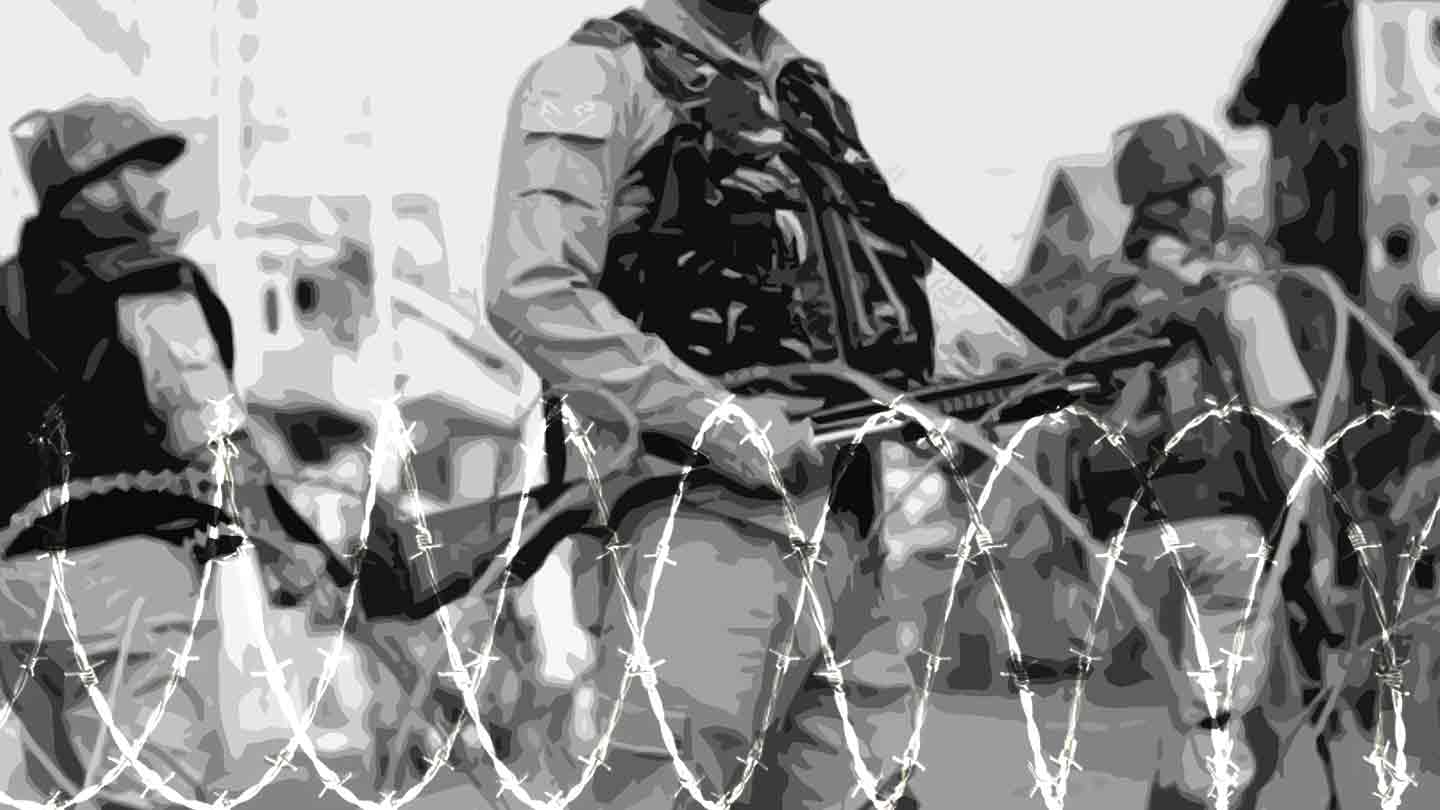
Fascists have always seen intellectuals and history as their enemies; the act of banning books is not a new occurrence in history. The order to ban the 25 books states "promotion of alienation" amongst many other reasons as the justification behind the move. The only problem is that alienation is neither caused nor promoted by words written on papers, but rather by the checkpoints, the barbed wires, the stifling of dissent, and the militarisation that the people of Kashmir live as an experience every day. Banning academic literature and history books does not answer the question of alienation, but further deepens the wounds. Collective memories and oral histories have survived longer than the existence of books and papers.
The solution to this alienation lies not in police raids but dialogue, not in book bans, but in the freedom to a dignified life and choice for the people of Kashmir. The call for a human approach aside, what does this anxiety of banning books, this continuous failed attempt at constructing "normalcy," indicate? It indicates the failure of a model of military integrationism, the painful silence of threats and coercion, the fragility of a house of cards that is named peace in Kashmir. It also indicates the utter failure of the Sangh’s agenda on the ground level in J&K despite the success of its narratives on TV channels, newspapers, etc. Perhaps the greatest example of this was the period that immediately followed the Pahalgam attack, while the IT cell and media channels were blazing with the narrative of “local involvement”, the streets of Kashmir were filled with common people denouncing the attack and proclaiming en masse that Kashmir has for long stood against targeting innocent civilians.
This year also marked an extremely important intervention through the completion of the rail line connecting Kashmir now to Delhi by the Vande Bharat train. The very imagination and basis advertised of this connection has been solely “integration” and “tourism” by the government. Roads, buildings, railways and even education in Kashmir exist in service only for the purpose of “Indianisation” and smooth functioning of the military and tourism institutions. Very recently a video had created a stir where a mother was pleading in front of army personnel for being allowed to take her sick child to the hospital but they were stopped due to the Amarnath Yatra, right there and then a car filled with yatris was allowed to pass from the very same road in the video. The above issue was also mentioned by one of the elected MPs through his social media, but again received no coverage at all except some local Kashmiri newspapers.
Manto, in his acclaimed article “Surkh Inqilab” had written, “the winds of tyranny may be able to extinguish flickering lamps, but against the flames of revolution they hold no might”. A forced normalcy that's built upon barbed wires and censorship, propaganda and plain denial that anything is wrong at all is not eternal, has never been in the history of humanity. Its eventual fall against the will of the people is a matter of time. But till then what must not be forgotten is that everyday, every notice, every order in Kashmir is a laboratory of the fascist offensive. What is happening in Kashmir, is the blueprint for what will happen tomorrow outside and must be nipped in the bud through solidarity and resistance. The six years of the abrogation of Article 370 only marks the continuation of the fight of a people against one of the most repressive crackdowns in the history of postcolonial world.