Long branded “anti-national” by the BJP-RSS nexus, JNU has historically resisted privatisation, fee hikes, attempts to dismantle affirmative measures such as the deprivation point system and made those sitting in power uncomfortable through its bold discourse on caste, gender and hierarchies. Since November 2025, JNU students have been fighting not only for their rights but also for the survival of student democracy and the space for dissent on campus.
The immediate flashpoint is the installation of facial recognition technology (FRT) and metro-style gates in the Central Library. Presented as security measures to keep away ‘illegal students’, these installations have raised concerns about surveillance and shrinking democratic space. The administration’s response to student opposition has only intensified the controversy. All four JNUSU office-bearers, along with the former union president, were rusticated and fined ₹20,000 each. Out-of-bounds orders followed, photographs of the rusticated students were pasted at all the campus gates, their names removed from hostel records, mess facilities shut, scholarships blocked and academic futures jeopardised.
Eight more students were fined ₹19,000 each. Their notices shamelessly cited their presence at the protest site, where they were seen clapping, smiling and raising slogans. In this curious interpretation of discipline by the JNU admin, even applause became punishable. One wonders whether the next circular will prohibit raised eyebrows or require prior permission to smile.
These arbitrary measures have been made possible through the draconian Chief Proctor’s Office (CPO) Manual, which the union considers an instrument of repression. Restrictions on protests within 100 metres of administrative buildings and residential spaces effectively renders much of the campus off-limits. Its provision concerning “anti- national activities” raises an obvious question: who defines what falls under this category, and under what safeguards? Vague rules become especially dangerous when those interpreting them also have the mindset to criminalize dissent and student politics at large.
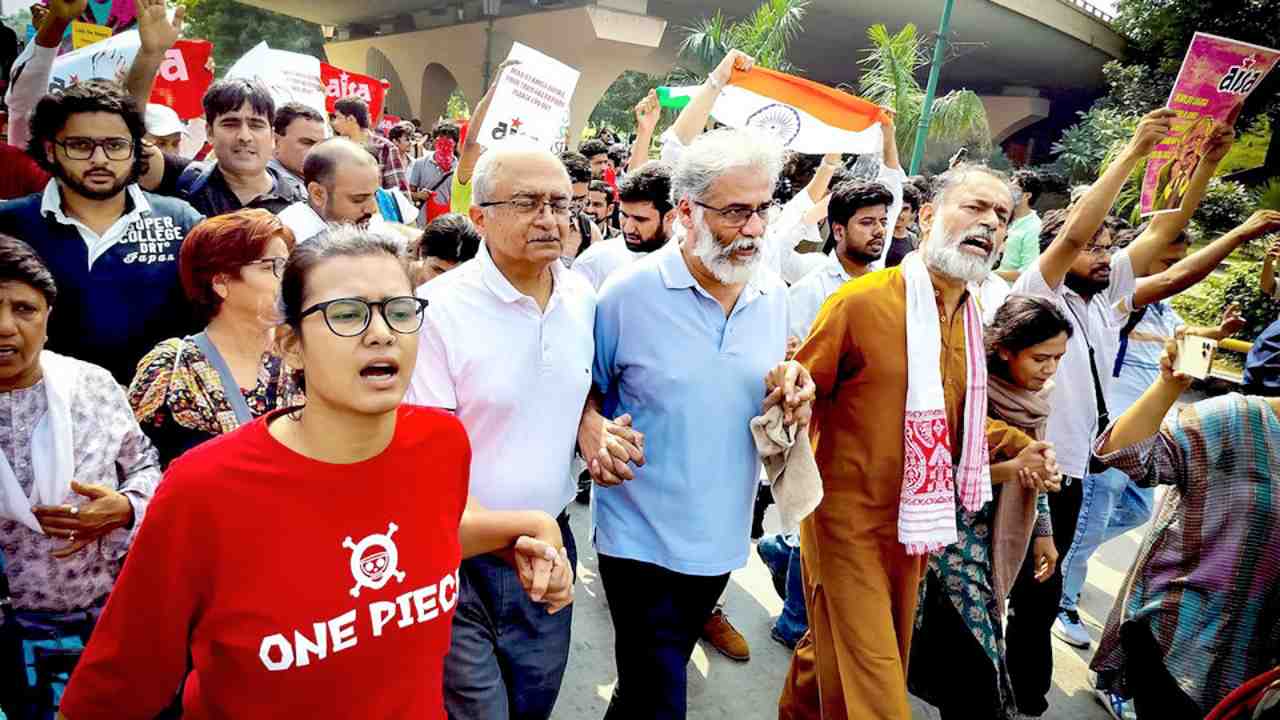
The crackdown escalated when a march from the university gates towards the Ministry of Education on February 26 resulted in an FIR against students. In total, 14 students including the AISA President Neha, JNUSU President Aditi, Vice President Gopika, fromer JNUSU President Nitish and myself were sent to Tihar Jail for three days. It’s tragic how our country’s government offices which are meant to listen to the concerns of the masses have become so inaccessible and students are criminalized and jailed just because they dared to take a March towards them.

Hunger Strike
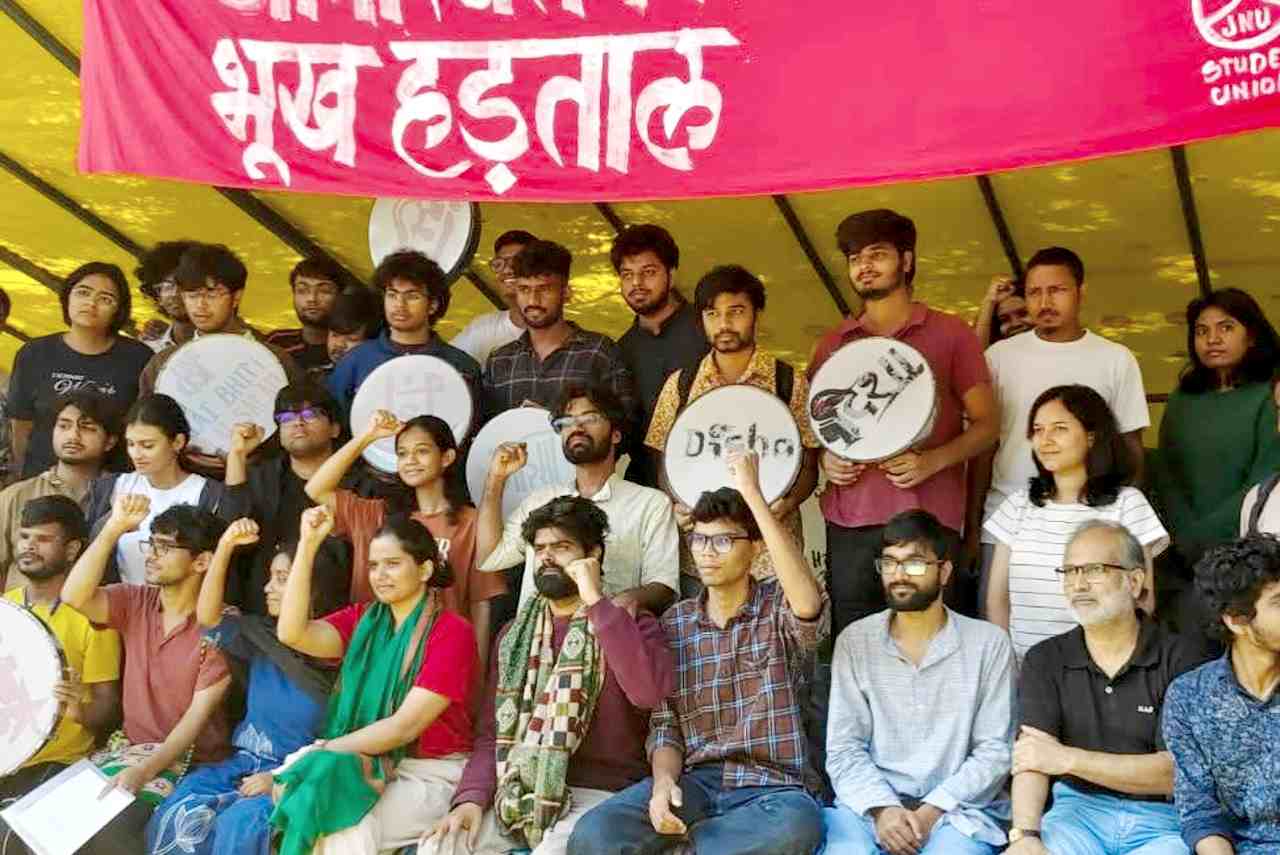
JNUSU and 15 other students began a hunger strike on 3rd October, demanding an end to rustication and addressing a wider set of campus related issues. For several days, the administration made no attempt to initiate a dialogue. Medical check-ups for rusticated students on hunger strike were also denied reflecting how inhumane the JNU admin can act with its own students.
Surveillance and Gates
The demands extend far beyond surveillance. The recent building collapse in Satya Niketan, which claimed so many student lives, has highlighted the precarious living conditions many students face in Delhi. JNU, despite its substantial hostel capacity, is not immune. Students have reported ceilings and fans falling in hostels and library spaces, which has sometimes caused serious injuries. The only response to our consistent demand for repairs has repeatedly been that funds are unavailable. Barak Hostel, opened following a student hunger strike, still lacks mess and Wi-Fi facilities which raises a question: what good is a hostel if basic amenities remain out of reach?
Whenever the union raises these questions, the admin has one response to all these i.e. scarcity of funds. Fund cut is a systematic way through which public universities are being destroyed which leads to infrastructure collapse and this is the way through which public universities are being privatised.
Students of JNU were also demanding reform of the Equal Opportunity Cell (EOC) along the lines of the Rohith Act. Caste discrimination remains a serious concern across universities, and JNU has witnessed its share of such cases despite being a progressive campus. Very shamefully, the Vice-Chancellor earlier this year made a comparison of Dalits’ experiences with an ingrained “victimhood mentality” which further sharpened concerns. In such a context, a functional, independent and accountable EOC is essential to address discrimination inside the campus.
The Struggle for Inclusive Education
Students are demanding the restoration of JNU’s own entrance examination, the JNUEE, arguing that the National Testing Agency’s (NTA) examination irregularities have significantly undermined confidence in centralised testing. They believe that the university's entrance system was better suited to its academic requirements. The restoration of GSCASH, JNU’s elected mechanism for addressing sexual harassment, is another longstanding demand. Abolished in 2017 and replaced by a body called ICC, it remains central to students’ call for an independent, representative body that ensures timely and fair action on complaints of sexual harassment. At a time when students, especially young women across Delhi are taking to the streets of Delhi for gender justice, it is crucial that JNU leads its own movement for GSCASH.
Economic justice matters, too. The slogan “Do hazaar mein dam nahi, paanch hazaar se kam nahi”( ₹2,000 is not enough; nothing less than ₹5,000), captures frustration over the stagnant merit-cum-means fellowship amid rising living costs. Other demands include more Central Library seating, functional 24-hour lifts in hostels allocated to students with disabilities, transgender reservation and appropriate accommodation, repaired roads, and renovation of the stadium and union office. .
Student Unity Forces Administration to Backtrack
The sustained and united resistance of JNU students, culminating in a 17-days long hunger strike, has forced the university administration to commit to revoking the rustication of JNUSU office-bearers and a former JNUSU president, withdrawing FIRs against protesting students and dropping proctorial enquiries related to student movements, among other demands.
This commitment marks an important victory for the students’ collective struggle against the administration’s attempts to suppress dissent and undermine democratic representation on campus. The hunger strike brought together the fight against punitive action on elected student representatives with wider demands for equitable access to education, safe and dignified hostel facilities, and a democratic and inclusive university.
The fight was never merely about cameras and gates in a library, but about the right to dissent, the defence of public education, and the democratic character of the university itself.