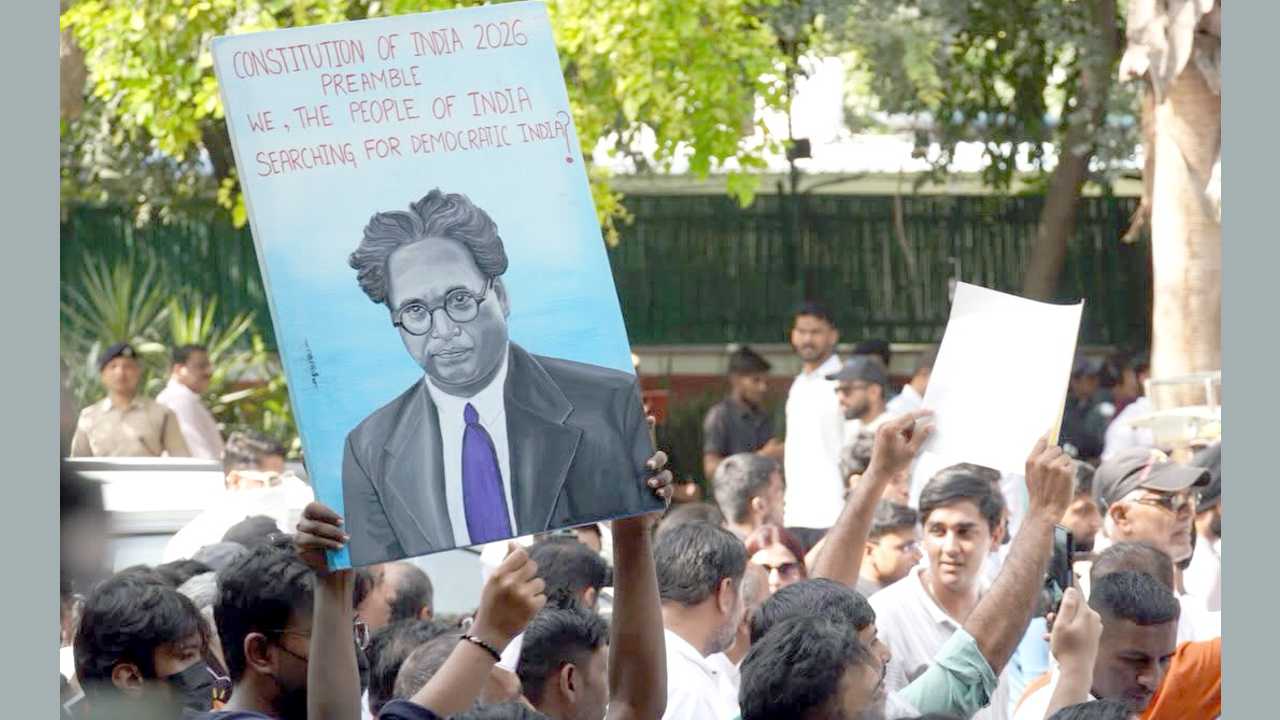
Protesters demanded an end to disenfranchisement and the restoration of people’s right to vote. The regime responded with barricades, mass detentions, lathicharges and police violence. Delhi was repeatedly turned into a fortress to prevent people from exercising their democratic rights. Yet every attempt to crush the protests brought more people onto the streets.
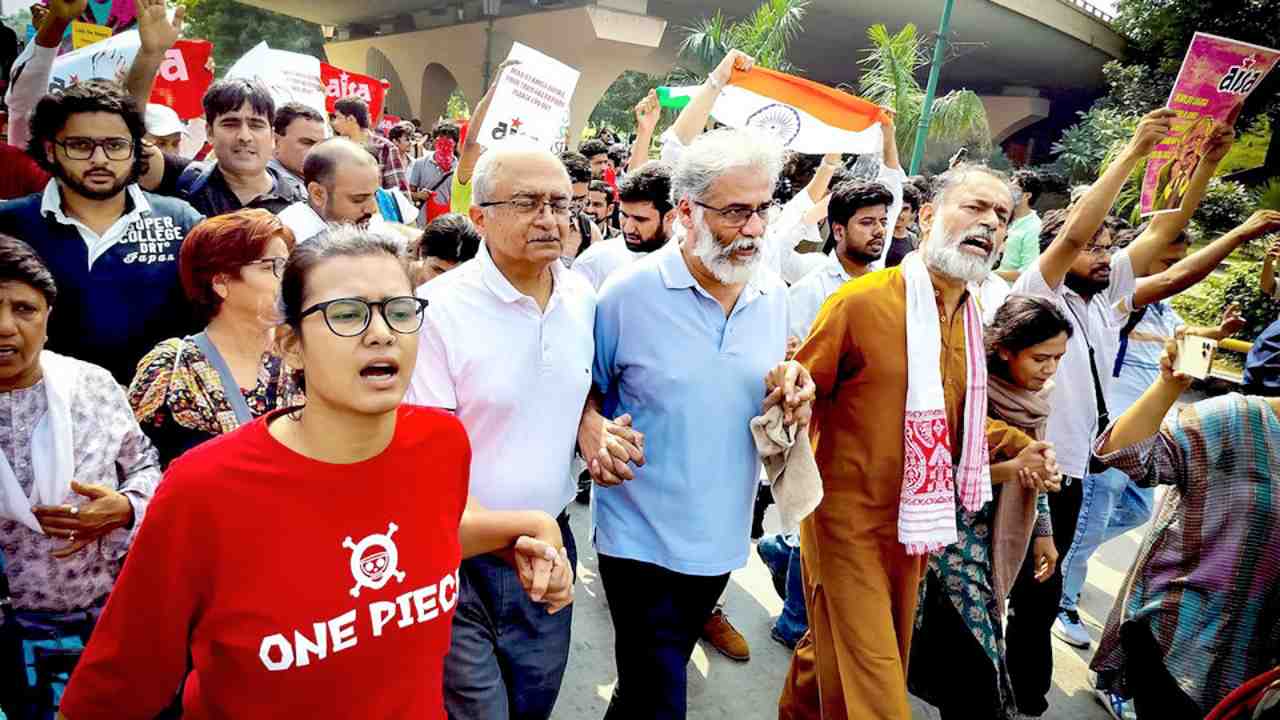
On September 25, a citizens’ protest was held at Jantar Mantar in Delhi demanding Gyanesh Kumar’s arrest over vote chori. Protesters raised the slogan, “Vote Chori is Deshdroh”. Hundreds participated in the demonstration, including CPI(ML) General Secretary Comrade Dipankar, Yogendra Yadav, advocate Prashant Bhushan, AISA President Neha, Anjali Bharadwaj, CPI(ML) Central Committee member Purushottam Sharma, AICCTU General Secretary Rajiv Dimri, CPI(ML) Politburo member Ravi Rai and other activists.
On September 29, Left parties jointly organised a demonstration outside the ECI headquarters at Nirvachan Sadan. The Delhi Police detained several Left party leaders and protesters at the barricades.
At their crucial meeting in Delhi on September 30, INDIA bloc leaders agreed on a joint action plan to defend democracy and voting rights. This included ‘Save Democracy’ marches across districts from October 2 to 8, a march by Opposition MPs to the ECI on October 6, and an effort to secure an appointment with the President of India in the second week of October. The plan also included five mass rallies across the country, a massive public rally in Delhi on November 1, and an appeal for an early resolution of cases related to SIR and electoral matters pending before the Supreme Court.
Student-Youth Protests and Police Repression
October opened with a growing assertion of democratic rights on the streets. On October 2, Gandhi Jayanti, students, youth and citizens mobilised in Delhi in response to the call for resistance against the trampling of democracy. Near Jantar Mantar, protesters demanding justice were met with police violence and detentions. CPI(ML) Liberation activists, AISA members, Left party activists and Opposition leaders were among those detained. In Mumbai, a large peaceful protest was held at Shivaji Park in Dadar, with Cockroach Janta Party (CJP) leaders and activists from several Opposition parties participating.
On October 4, during a citizens’ march from India Gate to Jantar Mantar, the police specifically targeted AISA President Neha and whisked them away in an unmarked car. They were later released from Narela Industrial Police Station.
The Delhi Police’s repression also targeted women demanding justice and journalists standing in solidarity with them. Journalist Rosy, a survivor who had filed a complaint against ACP Vivek Bhagat for molestation, faced police repression while demanding registration of an FIR. Instead of registering the FIR, the police detained Rosy and the journalists and activists protesting in solidarity with her. Several journalists were also manhandled in detention. Later, police filed a counter FIR against the survivor.
On the night of October 5, the police arrested several journalists and activists protesting against the refusal to register the FIR, using trumped-up charges. They were granted bail later that night. Earlier that day, the All India Progressive Women’s Association (AIPWA), along with other women’s organisations, had protested at the Delhi Police Headquarters demanding registration of an FIR against ACP Vivek Bhagat. The episode exposed the impunity enjoyed by those accused of sexual harassment and the coercive machinery deployed against those demanding accountability.

On October 6, Opposition MPs marched from Parliament to the ECI as part of the INDIA bloc’s call for action. CPI(ML) MPs Raja Ram Singh and Sudama Prasad joined other Opposition MPs in demanding the removal of Vote Chor Gyanesh Kumar and an end to the unconstitutional SIR. A heavy deployment of police and paramilitary forces stopped the march near the ECI office, and several MPs were detained. CPI(ML) MPs and other Opposition MPs also condemned the police violence against students, youth and journalists during the preceding days of protests.
The message from the streets was unmistakable: the right to vote cannot be separated from the right to question the Election Commission, expose electoral fraud and resist the arbitrary exclusion of voters. The regime’s response was to intensify repression.
October 10: Delhi Turned into a Fortress, but Protests Continue
October 10 marked a dramatic escalation in the crackdown. The Modi-Shah regime turned the national capital into a militarised fortress ahead of a protest called by the CJP, AISA and other Left student organisations at Jantar Mantar. More than 40,000 security and paramilitary personnel, in addition to a large contingent of Delhi Police, were deployed across central Delhi. Barricades were erected across the capital and its borders, 45 Metro stations were temporarily closed, and more than 200 trains to and from Delhi stations were cancelled or rescheduled.
More than 1,000 people were detained before the protest itself. Organisational leaders were tailed, while offices and residences were placed under surveillance. CJP leaders were detained aboard a flight, with a large police contingent entering the plane and taking them to an undisclosed location and were only released the next day.
The extraordinary mobilisation of security forces was intended to prevent protesters from reaching Jantar Mantar. Yet the blockade did not succeed in keeping people off the streets. As contingents of students and youth attempted to reach the protest site, police and paramilitary forces unleashed brutal repression, detaining hundreds and taking them to distant detention centres.
At AISA’s call, a massive flash protest was organised in the INA-Delhi Haat area. CPI(ML) General Secretary Comrade Dipankar, Politburo member Ravi Rai, AISA President Neha, students and activists from various organisations, members of civil society and hundreds of citizens marched towards Jantar Mantar, crossing several police barricades. Neha, Ravi Rai and several others were attacked and detained. They were released only late that night.
CPI(M) General Secretary Comrade M. A. Baby and several Central Committee members were also brutally attacked by the police during a protest from Harkishan Singh Surjeet Bhavan.
Reports of custodial torture emerged during the day. In one such incident, AISA leader Saurabh and several others were allegedly taken to a bathroom at Sanjay Colony Police Station in Maidan Garhi and beaten. They were released only the following morning after public pressure.
Delhi’s transformation into a fortress, the mass preventive detentions and the violence against protesters exposed the lengths to which the authorities were prepared to go to suppress dissent. The capital was barricaded against its own people. Protesters were detained before they could even assemble, leaders were targeted, and those who managed to reach the streets faced police violence.
Yet the crackdown failed to extinguish the resistance. The flash protest at INA-Delhi Haat and the attempts to reach Jantar Mantar demonstrated that the people would not surrender their democratic rights simply because the regime had deployed overwhelming force. The events of October 10 became a powerful assertion that the streets belong to the people, not to the police barricades erected to silence them.
Jantar Mantar Denotified, Protest Space Under Attack
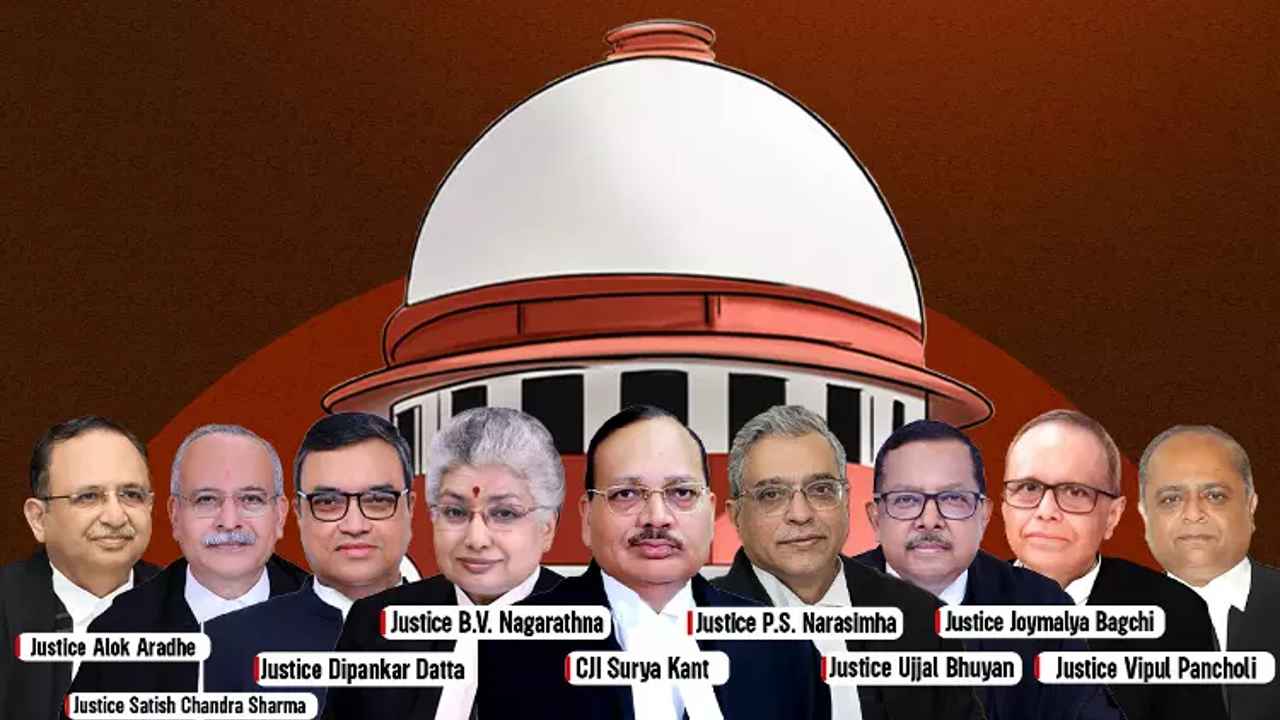
On October 11, the authorities moved to shut down one of the last remaining major spaces for popular democratic protest in the national capital by denotifying Jantar Mantar as a designated protest site. The move came two days after a Supreme Court bench headed by the Chief Justice of India had called for an alternative venue for protests in Delhi.
From Boat Club to India Gate, from the Red Fort to Jantar Mantar, successive restrictions have pushed democratic protests farther away from Parliament, the very centre of people’s representation. But the events of the preceding days had already shown that repression could not contain the resistance.
The attempt to close Jantar Mantar could not close down the struggle. In the days that followed, students, youth and democratic forces continued to mobilise, declaring: “If the regime shuts down one space for protest, thousands of Jantar Mantars will emerge everywhere.” And they did.
October 12: Opposition Leaders and Students March Towards Supreme Court
In response to the militarised blockade and police violence of October 10, the INDIA bloc called for a mass protest on October 12 to submit a petition to the Supreme Court. Leader of the Opposition Rahul Gandhi, Congress President Mallikarjun Kharge, CPI(ML) General Secretary Comrade Dipankar, AISA President Neha and other INDIA bloc leaders, along with student organisations, took to the streets and marched towards the Supreme Court.
AISA President Neha marched at the forefront alongside Rahul Gandhi and Congress leader and MP Priyanka Gandhi. The stretch from Mandi House towards the Supreme Court filled with protesters opposing Vote Chori and demanding justice. The march brought together Opposition leaders, students and youth in a joint assertion against electoral disenfranchisement and the suppression of democratic protest.
The march was significant in the context of the October 10 crackdown and the move to denotify Jantar Mantar. The demand for accountability from the Election Commission and the restoration of voting rights continued to bring people onto the streets despite the growing restrictions on peaceful protest.
The October 12 mobilisation demonstrated that the struggle against electoral disenfranchisement could not be contained through police action or the closure of protest sites. Opposition leaders, students and youth continued to assert their right to question the Election Commission and demand protection of the democratic right to vote.

October 13-17: Tiranga March and Further Arrests
On October 13, CJP leaders Saurav Das and Ashutosh Ranka defied the denotification of Jantar Mantar by unfurling the national flag at the protest site. They were detained and sent to judicial custody and were released only after spending seven days in custody.
On October 16, thousands of students, youth, activists and members of civil society took to the streets carrying the national flag in a Tiranga March called by AISA, CJP, SFI, the All India Students’ Federation (AISF) and other democratic organisations and voices. The march, from Mandi House to Connaught Place, demanded the defence of democracy and voting rights and opposed the move to denotify Jantar Mantar as a designated protest site.
Comrade Dipankar joined the march alongside hundreds of students, youth and activists. As the march began, Delhi Police and paramilitary forces launched another crackdown. AISA President Neha was specifically targeted and detained along with other protesters. CJP leader Abhijeet Dipke had been detained even before the march began, when police picked him up from outside his place of stay.
Despite the barricades and police repression, thousands gathered at Connaught Place and surrounding areas, carrying the Tiranga and raising their voices against electoral disenfranchisement. Protesters demanded the resignation of Chief Election Commissioner Gyanesh Kumar, the scrapping of SIR and restoration of voting rights to those deleted from electoral rolls.
Addressing the march, Comrade Dipankar asked, “Is this the capital of barricades or the capital of freedom? No barricade can stop the people’s assertion of their rights and their struggle for democracy!”
The police crackdown continued beyond the streets. Following their detention, Delhi Police refused for several hours to disclose to lawyers where Neha and Abhijeet were being held. Neha’s whereabouts became known only late that night, while Abhijeet’s were established the following morning, when he was produced before an SEM. Neha was released from R.K. Puram Police Station at around 6.30 am on October 17, after spending the night in detention. Abhijeet was released on bail after being produced before the SEM.
The targeted detention of Neha and Abhijeet, and the refusal to disclose their whereabouts to their lawyers for hours, constituted a grave attack on democratic rights and the right to peaceful protest. The continued incarceration of Saurav and Ashutosh further exposed the coercive character of the crackdown. Arbitrary detention and police violence cannot be allowed to intimidate those defending democracy and voting rights.
The Tiranga March carried a clear message: the national flag cannot be reduced to a symbol used by those in power while citizens demanding their constitutional rights are met with barricades, detention and police violence. The right to vote, the right to protest and the right to hold those in power accountable are integral to the democratic freedoms the flag represents.

Protests Across the Country
The resistance against electoral disenfranchisement and the Modi-Shah regime’s assault on democratic rights was not confined to Delhi. Protests and mobilisations across the country brought together Left parties, student and youth organisations, INDIA bloc constituents and democratic forces.
In Bihar, an INDIA bloc protest was organised in Patna on October 7. On October 13, Left student and youth organisations, including the All India Students’ Association (AISA) and the Revolutionary Youth Association (RYA), organised a march to Lok Bhawan in Patna. Both mobilisations formed part of the wider opposition to electoral disenfranchisement and attacks on democratic institutions.
In Chennai, the INDIA bloc organised a protest rally on October 15. West Bengal witnessed a rally by Left student organisations, including AISA and SFI, at Dharmatala on October 11. Protests were also held in Jharkhand, Maharashtra and Kerala, alongside mobilisations in other states.
In Bengaluru, a Tiranga March was held at the Quit India Memorial, with democratic forces joining the opposition to electoral disenfranchisement. Comrade Clifton D’Rozario, CPI(ML) Liberation Karnataka State Secretary and Central Committee member, addressed the gathering and demanded the rollback of SIR, the resignation of Gyanesh Kumar and restoration of voting rights to those deleted from electoral rolls.
The Struggle to Defend Democracy Will Continue
The events of September and October have laid bare the Modi-Shah regime’s response to growing opposition to electoral fraud and disenfranchisement: militarisation of the capital, restrictions on protest sites, mass detentions, police violence and the targeting of student leaders, activists, journalists and citizens. The attempt to suppress dissent has extended from the streets to police stations, where the whereabouts of detainees have been concealed from their lawyers.
Yet the people have refused to retreat. The regime may erect barricades, shut down protest sites and unleash police repression, but it cannot extinguish the people’s struggle for their democratic rights. The fight against fascist disenfranchisement and electoral fraud is inseparable from the broader struggle to defend democracy, and that struggle will continue.
CPI(ML) Liberation salutes the students, youth, activists, journalists, women protesters and members of civil society who have stood up to repression in defence of democracy.