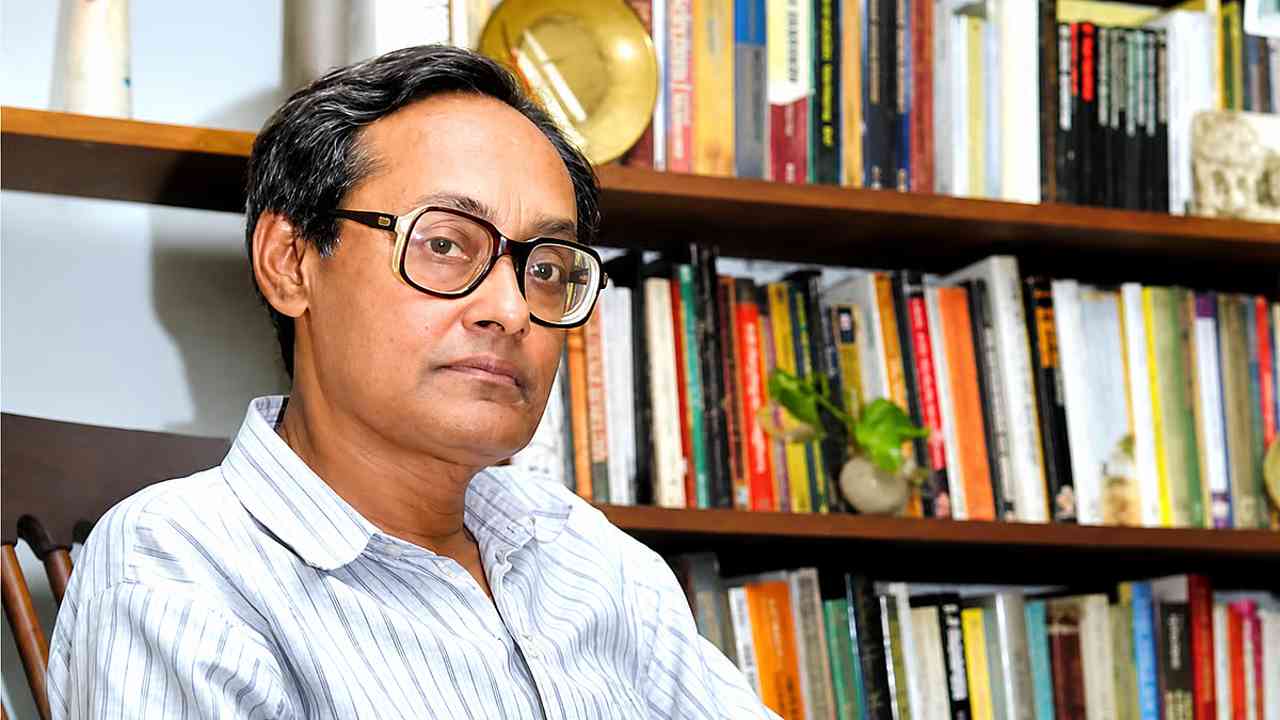
Amidst tears, hugs & soulful renditions of ‘We Shall Overcome’ & ‘Bol ke Lab Aazad Hai Tere’, we bid goodbye to this gentle giant at the Green Park Crematorium on 15 August. Ironical that the man who theorized the making of modern Indian better than anyone else turned into ashes on Independence Day.
Over more than five decades of dedicated scholarship, he reshaped how the history of colonial rule, anti-colonial nationalism and social reform is researched, taught and understood around the world.
Born in 1939, Sarkar grew up in a family steeped in history. His father, Sushobhan Chandra Sarkar, was a renowned historian. An alumnus of Presidency College, Sarkar earned his master’s and PhD from the University of Calcutta, where he later taught. He also taught at the University of Burdwan and Oxford.
Sumit Sarkar altered South Asian historiography with his first major monograph, The Swadeshi Movement in Bengal, 1903–1908, published in 1973. Moving away from elite, top-down narratives, Sarkar used meticulous archival research and down-to-earth descriptions to analyse nationalist mobilisation, student involvement, peasant participation, and internal tensions between moderate and extremist factions.
In ‘Modern India’ he analysed British colonial exploitation, including the drain of wealth, deindustrialization, and agrarian distress, alongside what he termed the ‘politics of the people’. By documenting peasant rebellions, labour strikes, Dalit movements, and gender roles, he demonstrated how mass movements with radical economic agendas continually kept nationalist leaders under pressure and influenced them.
Professor Sarkar was a founding member of the Subaltern Studies collective research project, which sought to bring non-elite history to the forefront. However, he later became one of its most critical voices. Sarkar distanced himself from the group, cautioning against an absolute separation between elite and subaltern domains, and criticising post-modernist trends that blanketly rejected Enlightenment values, secularism, and the nation-state in ways that converged with indigenist and right-wing critiques.
Sarkar turned the shorter essay form into a miniature monograph and textbook. He produced landmark essay collections, including Writing Social History (1998), Beyond Nationalist Frames: Postmodernism, Hindu Fundamentalism, History (2002), Modern Times: India 1880s–1950s (Environment, Economy, Culture) (2014), and Essays of a Lifetime: Reformers, Nationalists, Subalterns (2017). Together with Tanika Sarkar, he co-edited multi-volume readers such as Women and Social Reform in Modern India and Caste in Modern India.
Prof Sarkar stood firmly against the rising tide of fascism during the 1990s. In 1993, he co-authored Khaki Shorts and Saffron Flags: A Critique of the Hindu Right, presenting a sharp historical critique of majoritarian politics.
His commitment to historical truth was demonstrated during his editorship for the Indian Council of Historical Research (ICHR) project, Towards Freedom: Documents on the Movement for Independence in India, 1946. Publication of his volume was blocked in 2000 by the ICHR under the BJP-led government, before being cleared and published in 2007 under a new administration.
In 2004, the West Bengal government awarded him the Rabindra Puraskar, awarded for his book Writing Social History. In 2007, Sarkar returned the award in protest against the expulsion of farmers from their land in Singur and Nandigram by the CPI(M)-led Left Front state government, reaffirming his independence and moral integrity.
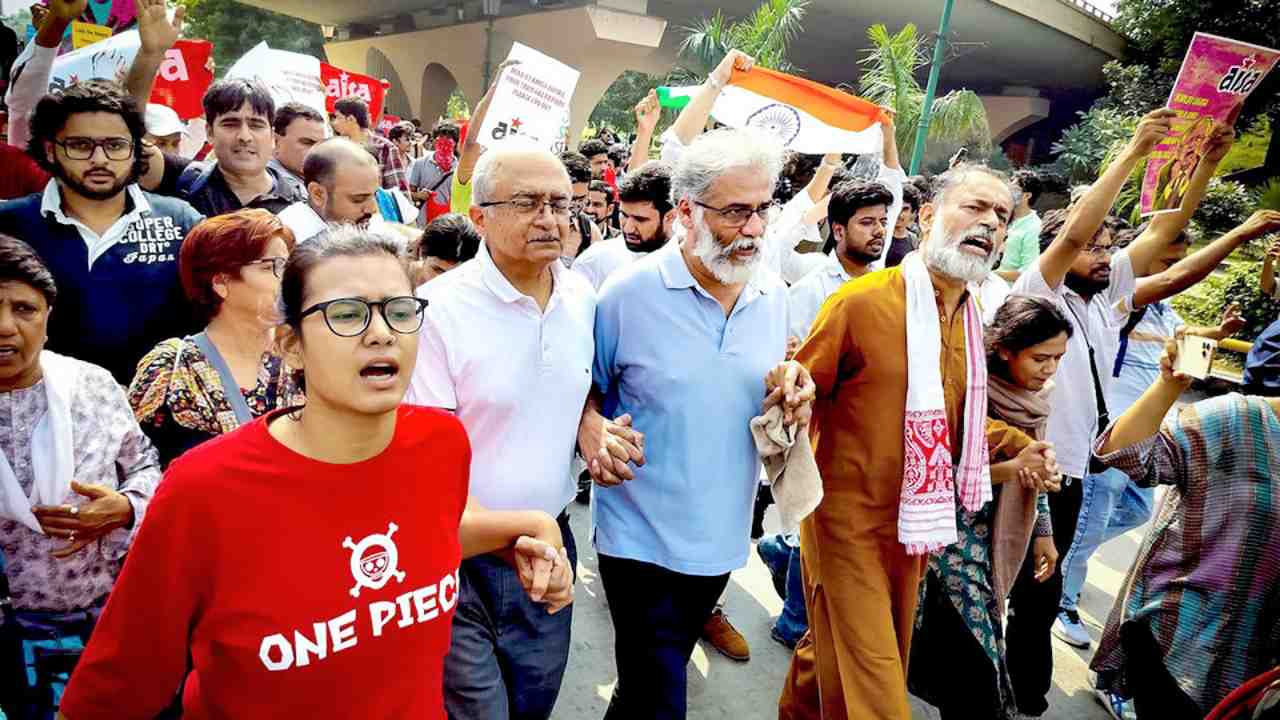
His colleagues and contemporaries point out how he represented the unusual unity between intellectual and personal modesty. His student and historian Charu Gupta writes: ‘At demonstrations, one often saw him standing quietly somewhere in the crowd, almost anxious not to be noticed. Yet he was there, during some of the darkest moments, including protests after the anti-Sikh violence and against communal mobilisation. Moral courage, for him, required neither volume nor self-display. This is perhaps what I shall remember most.’
Professor Sumit Sarkar leaves behind an extraordinary legacy that continues to define South Asian history courses, competitive examination syllabi, and academic debates. Generations of historians, teachers, and students owe their understanding of India’s past to his lucid prose, empirical thoroughness, and commitment to social justice.