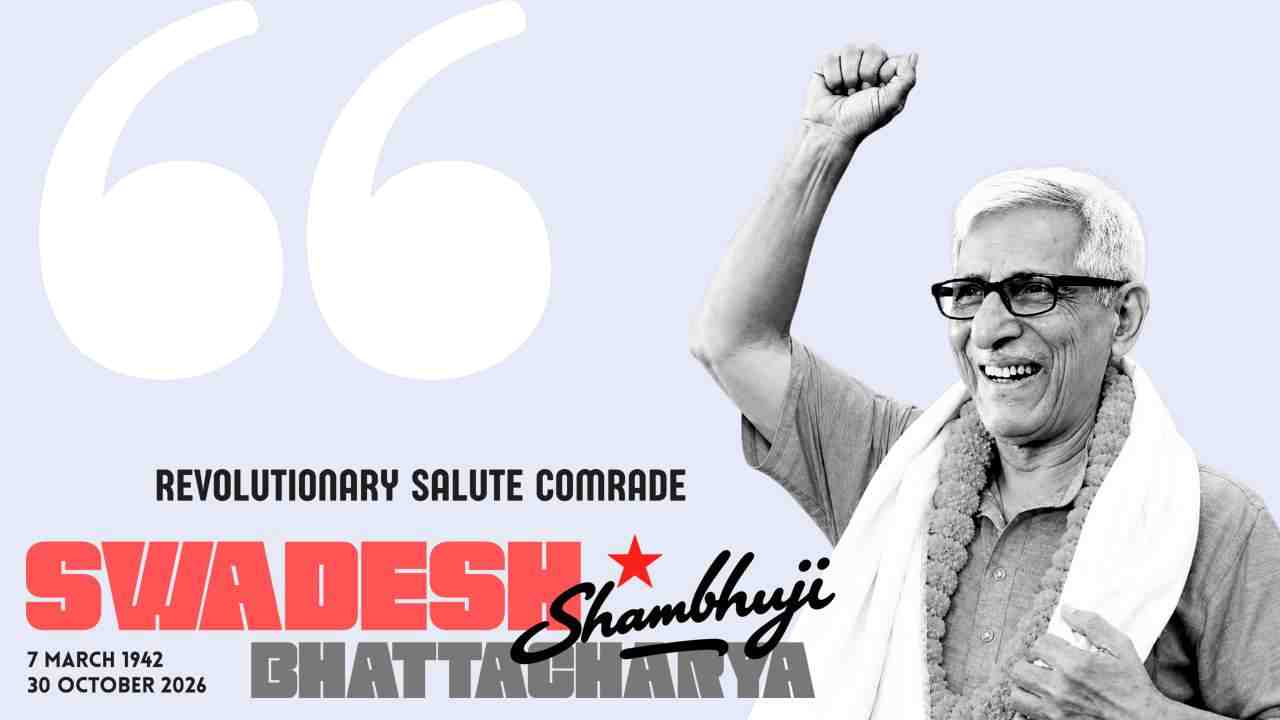
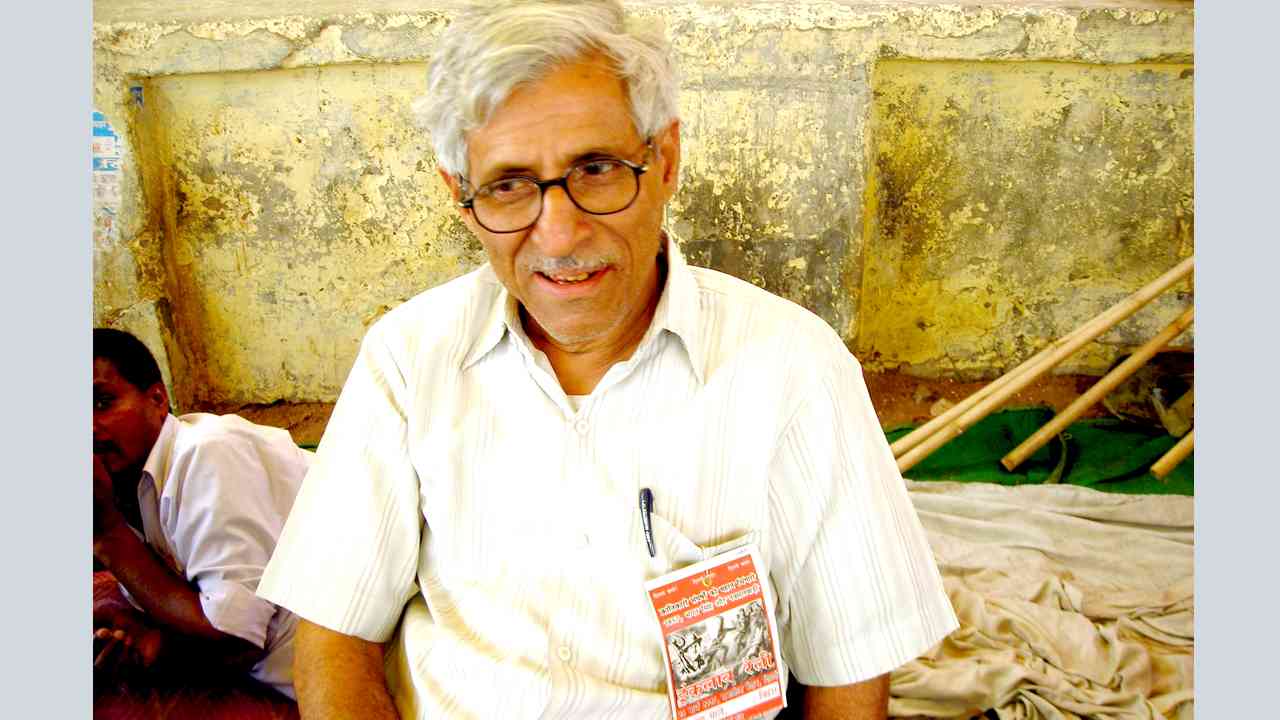
Swadesh Bhattacharya
The following article presents excerpts from the first part of a video interview with Comrade Swadesh Bhattacharya (Shambhuji), conducted in Bengali by Mitali Biswas in 2018. In this interview, Shambhuji reflects on his journey into the communist movement, the revolutionary legacy of Naxalbari, the rebuilding of CPI(ML), and the historic peasant struggles in Bhojpur. The interview has been transcribed and translated into English by Suryo.
When I was young, my maternal uncle was involved with the Communist Party. To tell the truth, it was through him that I became attracted to the communist movement. He was an honest and dedicated man who lived for the struggle. I felt that there was substance in what the communists were saying, and I was inspired by people who dreamt of a new world. Around 1967, the Naxalbari movement began to make its impact felt. Though Naxalbari was only the seed of a broader revolutionary movement, it unleashed tremendous upheaval across the country, as if it were a raging storm. In villages and cities, farms and factories, schools, colleges and universities, and among the intelligentsia, I witnessed an extraordinary revolutionary enthusiasm. I was particularly struck by the enthusiasm among the peasantry for establishing a rule of workers and peasants in place of the existing rule of the elites. Even today, I consider the revolutionary fervour, sacrifice, martyrdom, and determination to build a world without injustice unprecedented in Indian history.In 1969, the same year that the Communist Party of India (Marxist-Leninist) was formally constituted, I joined the Heavy Engineering Corporation in Ranchi, a semi-government enterprise. While working there, I sought to participate in political activities in Ranchi and the surrounding areas, and became more involved with the recently formed CPI(ML). The call for change represented by the Naxalbari movement had such tremendous power that people were willing to give up their personal comforts and security. After working for barely a year and a half, I left my job to devote myself to the movement. I had a good, stable job, but I had no difficulty leaving it behind for the people's movement.
After the setback suffered by Naxalbari, comrades of the CPI(ML) in different places began trying to unite again, rebuild the Party and develop the movement anew. Comrades in Bihar, West Bengal and eastern Uttar Pradesh, including Jauhar, Vinod Mishra, Kartik Pal and Dhurjati Bakshi, established contact with one another. Alongside rebuilding the struggles in our own areas, we sought to bring together the scattered forces of the movement and the Party. Through a series of meetings, we felt the need to establish a centre. In 1974, we formed a reorganizing Central Committee, which included Comrade Jauhar, Comrade Vinod Mishra and myself. Comrade Jauhar was martyred shortly afterwards, and Comrade Vinod Mishra subsequently became the General Secretary and led the Party until 1998. For us, this process of rebuilding the Party went hand in hand with rebuilding the revolutionary movement, which would emerge in a new form in Bhojpur, Bihar.

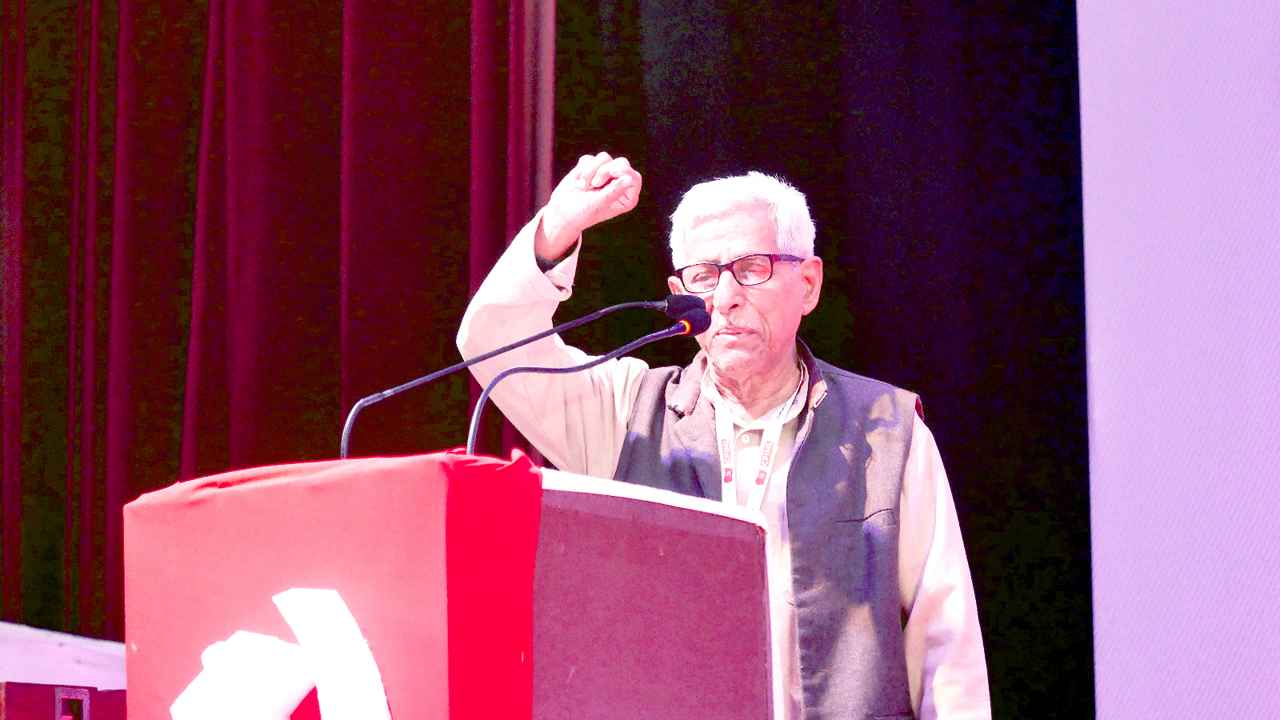
Swadesh Bhattacharya paying revolutionary tribute to Karl Marx at the CPI(ML) Liberation Central Committee meeting in Chennai on May 29, 2026.
In Bhojpur, I witnessed a tremendous awakening among the peasantry. A backward district in an underdeveloped state, Bhojpur was a predominantly agricultural region with overwhelming feudal oppression. When the peasants found a path to struggle against this domination, it generated a tremendous momentum in the peasant movement, something I had previously only read about in history. Those whom the landlords had long regarded as people destined to remain beneath their feet—Dalits, marginalized people, labourers and agricultural workers—emerged as a tremendous political force. Not merely the feudal powers, but the state machinery itself became terrified. The movement generated a tremendous wave of struggle to break the existing structures of social and economic domination. Across Bhojpur and the surrounding districts, peasants occupied government lands, ponds, fallow lands and lands forcibly seized by landlords, planting their red flags upon them.
For me, Bhojpur demonstrated a truth of Marxism: revolutionary movements and class struggles develop their own revolutionary forms, irrespective of the wishes of individuals. When a revolutionary movement begins to rise, the elements necessary to sustain it emerge from within the movement itself. These cannot be artificially created according to the wishes of a few individuals. Movements take their own form according to the prevailing material conditions. The task of a revolutionary party, then, is to give organized expression and political direction to what emerges spontaneously. In turn, this organized movement generates even larger spontaneous responses among the people. Following the setbacks suffered by Naxalbari and the division of the CPI(ML) into numerous groups, we sought to unite the scattered revolutionary forces and rebuild the Party across the country. The Bhojpur movement provided an example through which we could rebuild the Party in different states. We did not consider ourselves merely a group, but part of a revolutionary party that had to be rebuilt throughout India.
Like the revolution itself, state repression against the Naxalbari movement had been unprecedented. Many young revolutionaries and villagers lost their lives at the hands of the state machinery and reactionary forces. Yet I have always believed that their sacrifices did not go in vain. The movement's impact remained, emerging again under new conditions and in new forms, again and again in history. Revolutionary movements necessarily pass through different stages and suffer setbacks, but the struggles that give rise to them remain. Naxalbari had presented the dream of a new India, and the forces against which we had struggled continued to exist. For me, Naxalbari was not merely an event but a revolutionary communist movement for the transformation of society, a struggle that would necessarily be prolonged. Naxalbari had not died and would not die. But neither would it return in exactly the same form.
The primary difference between the CPI(ML) Liberation and other revolutionary groups has been in the analysis of the changing material conditions, and how the Party can organize itself according to those conditions. One must understand that the Naxalbari movement was ultimately a communist movement based on a Marxist-Leninist understanding of social relations. If the Naxalbari movement is abstracted from its Marxist-Leninist character and not understood as a revolutionary stream within the broader ongoing communist struggle, the movement will not be able to occupy a national presence. The CPI(ML) Liberation’s practice of understanding the movement from a Marxist-Leninist lens, to engage in the analysis of changing material conditions, and to evolve the Party with the evolving material conditions has been a fundamental difference between us and other communist groups and parties. As a consequence, we have seen many developments in the Party’s strategy over time, and rather than these changes weakening the Party organization, the evolution has only strengthened our unity and enabled us to establish a national presence of the revolutionary communist movement.