This is an abridged version of Niraja Gopal Jayal’s speech delivered at a conclave of the Constitutional Conduct Group in New Delhi on 4 July 2026, published by The Wire.
Both the Constitution and the Citizenship Act 1955 enshrined the principle of unconditional jus soli, citizenship based on birth on the soil of the country. However, slowly and incrementally over the last few decades, we have been moving away from the principle. The foundational conception of universal equal citizenship in our constitution and in the law on citizenship was underpinned by a presumption of citizenship. That presumption of universal citizenship is being replaced by a presumption of universal alienage.The presumption of alienage is the principle underlying the NRC, it is the principle underlying the SIR, it is also the principle underlying the latest salvo against passport-holders, who can be excused for wondering if they might have been considered citizens if they didn’t have passports that don’t certify their citizenship.
But who gets the memo and who doesn’t is for the most part a function of one’s identity – religion, caste, class, gender, tribe, and so on. Occasionally, there is a black swan event – such as the story of the journalist R. Rajagopal – but, for the most part, it is precision targeting.
There are two critical aspects of the citizenship question: first, the question of who is/can be an Indian citizen; and second, how equally (or not) are rights of citizenship distributed across the citizenry? The influence of both RSS ideology and BJP policies and practices on the first aspect – i.e., who is/can be a citizen – is more significant, but in the present, this also has consequences for the second. In both aspects, the RSS vision fundamentally contradicts the constitutional vision.
Who is/can be/ought to be an Indian citizen?
The RSS vision of this question is fundamentally anchored in Savarkar’s Essentials of Hindutva (1923), especially his distinction between punyabhumi and pitribhumi. The RSS sees the work of the Partition as incomplete and Indian Muslims as a blot on the body politic who can, at best, be treated on sufferance as second-class citizens. It construes Indian citizenship as faith-based, in consonance with the idea of a Hindu majoritarian nation (Hindu Rashtra), of which Hindus are natural citizens, while Muslims belong to Pakistan or Bangladesh. Perfecting this congruence between religion and territory is the object of their project of reinventing citizenship, which has obviously received a fillip with the BJP coming to power.
This ideology has been the inspiration for the two most important amendments to the Citizenship Act 1955 in 2003 and 2019, the first enacted by the Vajpayee government and the second by the Modi government.
The 2003 amendment did three things. First, it did away with even conditional jus soli and made ineligible for citizenship any person born in India who had one parent who was an “illegal migrant” at the time of their birth. The term illegal migrant was code for Bangladeshi – ergo Muslim – migrant. Second, the Rules of the Act were amended such that the stigma of the term ‘illegal migrant’ would no longer attach to Hindu migrants who had come in from Pakistan, into the border states of western India, Gujarat, and Rajasthan. If the amendment to the Act smuggled in a religious category covertly by the term “illegal migrant”, the amendment to the Rules did so explicitly by exempting Hindus from this category. Third, the National Population Register and the National Register of Indian Citizens were introduced.
The 2019 amendment, as everyone knows, offered fast-track citizenship to ‘migrants’ other than Muslims, and introduced a formal religion-based differentiation into secular law.
The cumulative effect of these amendments has been to stigmatise and exclude Muslim citizens, in a way that abandons the constitutional vision of universal equal citizenship in favour of the RSS ideal of a hierarchy of citizenship in the Hindu Rashtra.
So, if we are to envision the possibility of more propitious circumstances, how might we think about the reconstruction of citizenship?
- India should once again affirm and restore the principle of unconditional jus soli, as in the original, pre-amendment version, of the Citizenship Act 1955. This would require the repeal of amendments, especially those of 2003 and 2019.
- Undoing the 2003 Amendment may be tough, because it is part of a complex web that now includes the Assam NRC and the Foreigners’ Tribunals. Lawyers would need to weigh in on how and to what extent this can be undone, perhaps using a legislative instrument akin to the Repealing and Amending Act, 2025.
- NRC and NPR should definitely be scrapped, as should the SIR which has become a proxy for these.
- The Supreme Court has yet to pronounce on the legality of CAA 2019, but this amendment should be repealed.
- The nomenclature of ‘illegal migrants’ needs to be changed in the language of the Citizenship Act and its Rules. The insidious distinction between ‘illegal migrants’ (code for Muslims) and ‘refugees’ (code for Hindus) must go.
The distribution of the rights of citizenship: inclusion and exclusion
Social and economic rights, even to the modest extent they were available, are presently under threat. Two aspects of this attrition are notable: first, the philosophy of welfare, which is a philosophy of welfare as charity rather than entitlement or right; and, second, access to welfare getting tied to the question of who is an Indian.
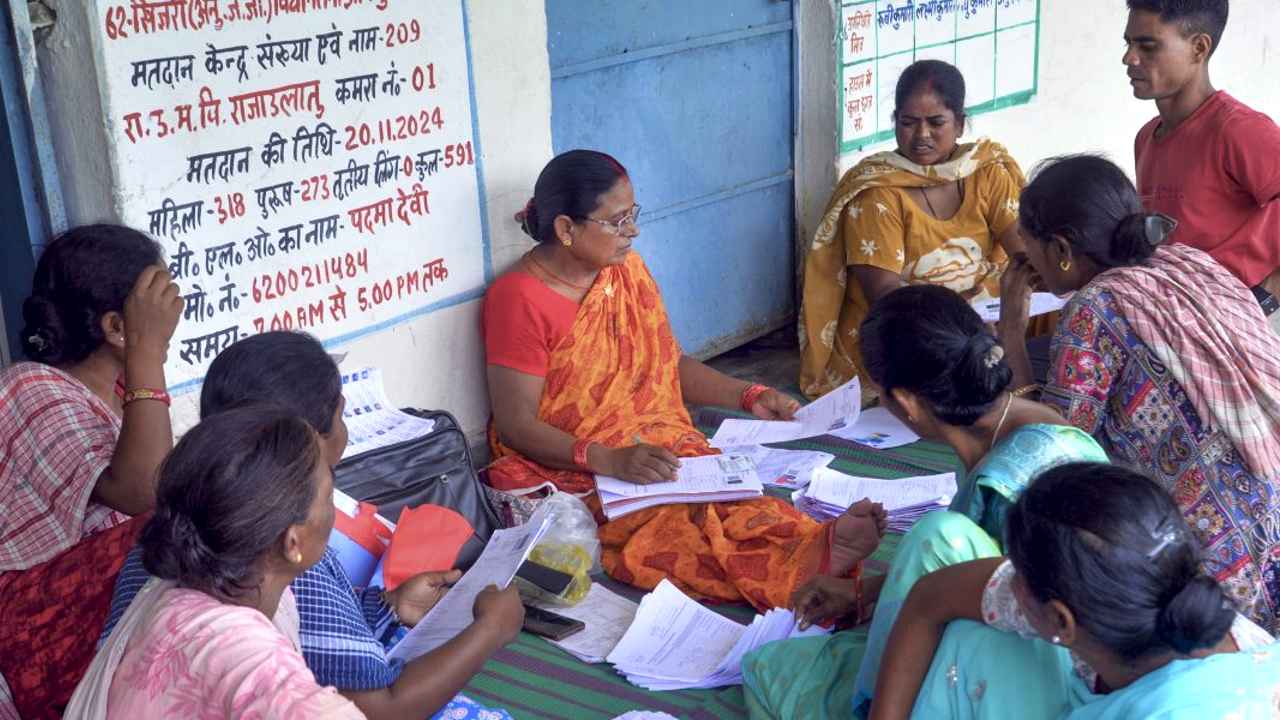
The SIR has implications for both the civil and political rights of Indian citizens – in the form of mass disenfranchisement – as also for their social and economic rights. Up until now, one’s registration as a voter was limited to determining one’s eligibility to vote. Today, the electoral rolls that have become decisive in determining an individual’s citizenship status and in determining their access to welfare provisioning.
The relationship between citizenship and the vote is being inverted: from citizenship being the condition of the vote to the vote becoming an instrument for sifting citizens, for inclusion and exclusion, and for casting doubt on the citizenship of citizens, especially those who bear identities that are increasingly, at the behest of majoritarian politics, being disparaged in society.
So, what is to be done?
- First, and most urgently, the delinking of the voter list and welfare provisioning to mitigate the worst effects for those excluded by the SIR.
- The BJP’s citizenship project is not a state-directed project alone. It is as much a societal project, underwritten by a concerted ideological campaign and grass-roots mobilisation, with impunity for vigilante violence and hate crimes. Hence the redress cannot be directed entirely at institutions and laws; it must also involve civil society. The toxicity that has been systematically made to penetrate society is outside the domain of institutions, laws and policies. Civil society must focus on (a) the restoration of civil liberties and freedoms; (b) the restoration and the expansion of social and economic rights; and (c) the fostering of inter-community relations, the removal of inter-community distrust.
Undoing the damage implies not just a staccato recognition of the multiple and discrete ways in which constitutional democracy is being undermined on a daily basis, but in making the connections between what appear to be unrelated issues but are actually not.
The question of citizenship is one such. Apparently innocuous developments are occurring in different, ostensibly distinct, domains but they are all converging on a common purpose: to make Muslims into de jure second-class citizens. Their de facto second-class citizenship has already been achieved through the normalisation of everyday discrimination, through the emboldening of vigilante violence, and impunity for these. Now, the [BJP has turned their attention] to render India’s largest minority as not just de facto, but also de jure, second-class citizens.
Niraja Jayal is a political scientist. She is the author of four books, including, most recently, Citizenship Imperilled: India’s Fragile Democracy.