Suppressing Terrorism or Suppressing Dissent?
‘Terrorism’ referring to the indiscriminate killing of people in order to strike terror among the people at large, in order to force certain political outcomes, is a scourge. There are not two ways about it. However, UAPA’s effectiveness in rooting out terrorism has increasingly come under question. Less than 3% of the arrests made under the Unlawful Activities Prevention Act between 2015 and 2020 have resulted in convictions, the People’s Union for Civil Liberties said in a report in September 2022. Instead, UAPA has facilitated the long-term incarceration of political dissenters.
Citizens for Justice and Peace (CJP) have pointed out that while the NCRB reported a 13% decrease in ‘Offences against the State’ in 2023, independent monitoring revealed a starkly different reality. States like Uttar Pradesh, Assam, Manipur, and Jammu & Kashmir accounted for over half of all Unlawful Activities (Prevention) Act (UAPA) cases, despite the NCRB’s lack of disaggregated data. Sedition cases rose by 165% from 2016 to 2019, with only 3.3% conviction rate.
Field reporting by the CJP tells a darker scenario. In Uttar Pradesh, over 260 people were booked under UAPA between 2020-2023 for affiliations with alleged banned organizations or protests. In Assam, about 240 UAPA cases were filed, most against ordinary villagers for alleged “extremist sympathies.” In Jammu & Kashmir, local officials confirmed over 400 preventive detentions under the Public Safety Act (PSA) in 2023, but the NCRB reported zero sedition or communal violence cases.
Prisoners’ Testimonies
The 1 February issue of The Outlook drew the reader’s attention to these worrying trends by dedicating the issue to voices of political prisoners imprisoned under UAPA and their relatives. Titled Thou Shalt Not Dissent, the issue features first-person accounts from political activists imprisoned under India’s anti-terrorism laws, including Anand Teltumbde, Gautam Navlakha, Umar Khalid, and others.
The issue explores the trauma of incarceration, the weaponization of laws like UAPA, and the enduring power of dissent despite systemic suppression. It highlights how activists continue to speak out even in captivity, with voices like Sidhique Kappan and Sudha Bharadwaj reflecting on the long-term impacts of detention and surveillance. The cover story underscores the human cost of political dissent in India, particularly in cases involving long legal battles and unjust trials.
The issue contains analytical pieces highlighting the long history of preventive detention in the post-colonial legal framework (Snigdhendu Bhattacharya), imprisonment of Adivasis of Jharkhand under charges of being ‘Maoist’ (Asghar Khan), and testimony of the wife of Lt. Colonel Srikant Purohit who was imprisoned in the Malegaon Blast case only to be acquitted after 17 years. All these testimonies reflect not only on the inhumanity of being assumed to be guilty unless proved innocent, but also the challenges faced after coming out of prison – challenges in getting a job, rebuilding a social life, and getting rid of the social stigma.
Anthology Challenges the Victim Narrative
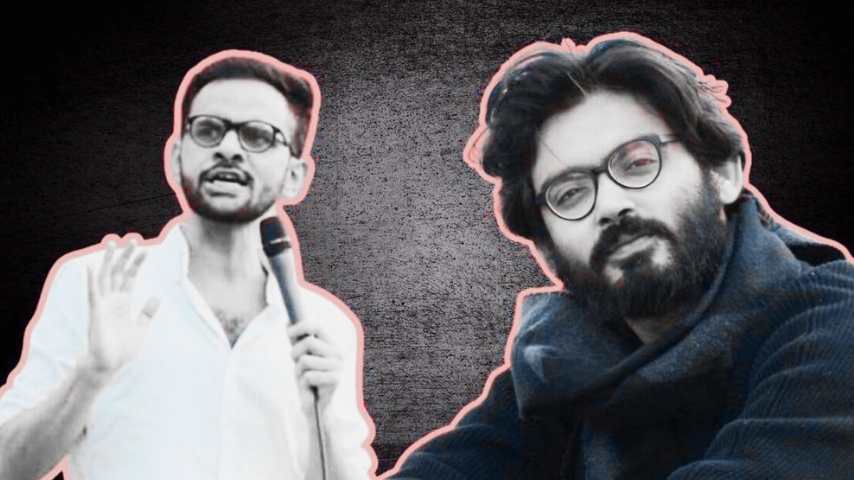
On 19 February 2026, an anthology titled ‘Umar Khalid and His World’ was released. The book offers a profound look into the life of jailed activist Umar Khalid during his five years in prison, following his arrest in connection with the 2020 Delhi riots. The anthology, compiled by researcher and activist Anirban Bhattacharya, artist Shuddhabrata Sengupta, and writer Banojyotsna Lahiri (Khalid’s partner), features previously unpublished letters from Khalid, reflections from prominent public figures, and contributions from fellow activists and scholars.
The book opens with Khalid’s own writings, in which he reflects on the rise of ‘21st-century Indian fascism’ and the erosion of democratic ideals in India. It includes essays by historians Romila Thapar and Ramachandra Guha, comedian Kunal Kamra, and New York Mayor Zohran Mamdani, who pens a heartfelt handwritten note to Khalid. Key themes include hope, resistance, the cost of dissent, and the resilience of the human spirit.
The book serves as both a tribute to Khalid and a call to solidarity with all those imprisoned for speaking out against injustice. It was launched at the Press Club of India in New Delhi on February 19, 2026, and has drawn attention from human rights organizations, including Amnesty International, which condemned Khalid’s prolonged detention without trial.
The anthology is not only an archive of what he described as a grim period, but also proof that people responded ‘with defiance, with compassion and with solidarity.’ It questions the ‘victim’ tag attached to the prisoners, and produced as thinking, feeling individuals who are ready to take responsibility for their actions and who believe that they did nothing wrong.
These journalistic efforts are an expression of solidarity to people imprisoned for their dissent. These also express the political will of activists, lawyers and journalists to fight for a fair system of dispensation of criminal justice. Those at the receiving end of unfair treatment at the hands of law range far and wide, much beyond the Bhima Koregaon and Delhi Pogrom prisoners. For long-term systemic changes to take place, the voices demanding just and fair criminal procedures and trial will need to encompass a diverse range of citizens, which is a challenge in times when any form of political dissent invites stringent state action.