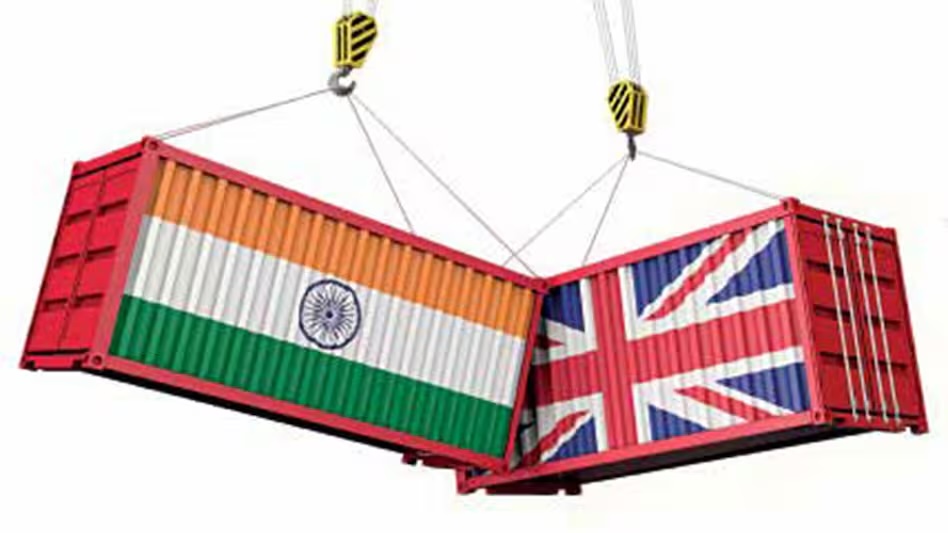
The India–UK Comprehensive Economic and Trade Agreement, finalized in 2025 after thirteen negotiation rounds, reduces or eliminates tariffs on roughly 85% of Indian exports to the UK and 90% of UK exports to India. Let us consider the facts of the matter. Before the agreement, most commodities exported by the UK to India had extremely large tariffs, typically larger than 100% the price of the commodities. The trade deal slashes these tariffs. British alcohol which had a 150% tariff prior to the deal will only have 75% tariffs. Automobiles and electric vehicles which had tariffs of 110% would be slowly brought down to 10%. Meanwhile, before the deal, the UK had nominal tariffs on Indian commodities, typically in the 5-10% range, which are now being done away with.
Trade between India and the UK is fundamentally unequal. While India exports cheap textiles and pharmaceuticals, the UK exports luxury automobiles and expensive alcohol. The trade deal adds a layer of asymmetry. The slashes on British imports are large, a 75% reduction in tariffs in some cases while nearly halving of the market price in others. On the contrary the reduction in tariffs on Indian goods is nominal, because the tariffs on Indian goods to the UK were low to begin with. If government and media claims in India are to be believed, then these nominal tariff gains will increase demand for Indian goods and offset the diplomatic failure on the American front. These are extremely unlikely to happen. Most Indian exports to the UK are already extremely cheap, and the volume of exports to the UK are a fraction of the volume of exports to the US. Furthermore, the British economy is relatively stagnant and has not recovered from the post-Brexit slump. It is not likely that a marginal reduction in the prices of Indian commodities would create the demand boost required to offset the crisis caused by large scale contract cancellations in a much larger economy like the US. However, the large slashes on tariffs on British commodities, could not only dry up government revenue in India but could cause problems for competing Indian producers.
Alcohol: One of the sectors most likely to be impacted is alcohol, as British whisky and gin will see a massive drop in prices as tariffs slide from 150% to 75%. This could considerably strain the Indian manufactured foreign liquor (IMFL) industry. Indian alcohol producers have already registered complaints about this but the complaints have fallen on deaf ears.
Automobiles: The automobile industry is another major stakeholder in the trade deal. Finished automobiles and electric vehicles imported from the UK will see their costs nearly half over time as tariffs are planned to decrease from 110% (current) to a nominal 10%. This will ease the entry of British companies to India. The media claims that this will give Indian consumers better access to expensive alcohol and luxury automobiles. Even if this can be called a benefit at all, it will only benefit the elite classes of Indian society. On the contrary, workers of all classes will be impacted by the entry of British goods to India. In the context of automobiles, this will not only affect the workers of automobiles companies but workers along the supply chain. The auto parts industry is one of India’s most important manufacturing industries and employs millions in several MSMEs. As fully finished cars from Great Britain enter India, domestic manufacturers will see lower demand, MSMEs will shut down, and workers in Hosur will bear the brunt of London’s gains. This is above and beyond the losses already caused by tariff hikes by the US, which was 29% of India’s auto part export market. Thus, instead of relieving India from the crisis caused by the Trump-tariffs, the trade deal with the UK may worsen the crisis for the automobile sector.
Textiles: The textile and apparel industry was the worst affected by the hike in tariffs by the US. India is one of the largest textile exporters in the world. As India’s products became costlier, competing textile manufacturers in Bangladesh and Vietnam who have lower tariffs substituted Indian products in the United States, which led to huge cancellations in contracts of Indian textile manufacturers and cost countless jobs. The Indian government is thus pinning their hopes on the India-UK trade deal to revive the textile industry. However, whatever nominal benefits due to the deal, if any, will not recover the losses caused due to the American tariffs. Until a few months ago, the US imported five times as much textiles from India as the UK. The tariff increases from the US were large (50%) while the tariff reductions from the UK have been low (5-10%).
Pharmaceuticals: The pharmaceutical component of the trade deal best exposes it for its hollowness and contradictions. India exports a large volume of pharmaceuticals to the UK already, most of which are priced cheaply and have nominal tariffs. However, they make up a small share of UK markets. The biggest exporters of pharmaceuticals to the UK are other European countries who sell expensive branded pharmaceuticals. India does not export similar products to the UK and cannot outcompete Europe as they produce different segments. India exports cheap generic drugs (Eg: paracetamol, aspirin), where it already leads exports to the UK. Therefore, not only is there less room for growth of Indian pharmaceutical exports to the UK, it is also very unlikely that a nominal cheapening will cause any meaningful increase in demand for generic drugs.
Moreover, the agreement simultaneously pushes for “TRIPS-plus” intellectual property enforcement. The deal explicitly encourages voluntary licensing instead of compulsory licensing. Legally, India has provisions for compulsory licensing, which means that if there is a patented foreign drug that is unable to cater to demand in India or refuses to price their drugs according to India’s affordability standards, the government can license other domestic firms to produce these drugs cheaply without running into barriers with intellectual property regulations. Voluntary licensing, which the trade deal encourages, gives British companies the power to block other producers from producing patented drugs cheaply. The push towards voluntary licensing, tighter IP provisions, including stronger data exclusivity and extended patent terms, could restrict India’s use of compulsory licensing and erode the generic industry’s competitiveness. This is especially concerning as Indian firms face rising regulatory scrutiny in Western markets. The supposed export opportunities may thus come at the expense of India’s policy autonomy in public health. Voluntary licensing may also make basic needs like medication exorbitantly expensive for Indian consumers.
Thus far from being the respite that the deal claims to be for Indian workers and consumers, it only entrenches India into the age old neocolonial structures of unequal exchange, allowing British manufacturers greater access to Indian markets costing domestic companies and more layoffs in India, with marginal benefits to Indian exporters, if at all. Still in the face of the fallout with the United States, the Indian and British governments are forcing a rhetoric of the deal being a successful economic partnership. In the best case, this is merely a diplomatic maneuver, allowing politicians and the mainstream media to chest thump in the face of the embarrassment caused by the fallout of the India-US trade deal. In the worst case, this leads to large layoffs, increased unemployment, and sets a pattern of less protection for Indian producers, greater liberalization easing foreign players to take over Indian markets, and a slippery slope towards voluntary licensing in healthcare restricting access of a billion people to basic necessities.