

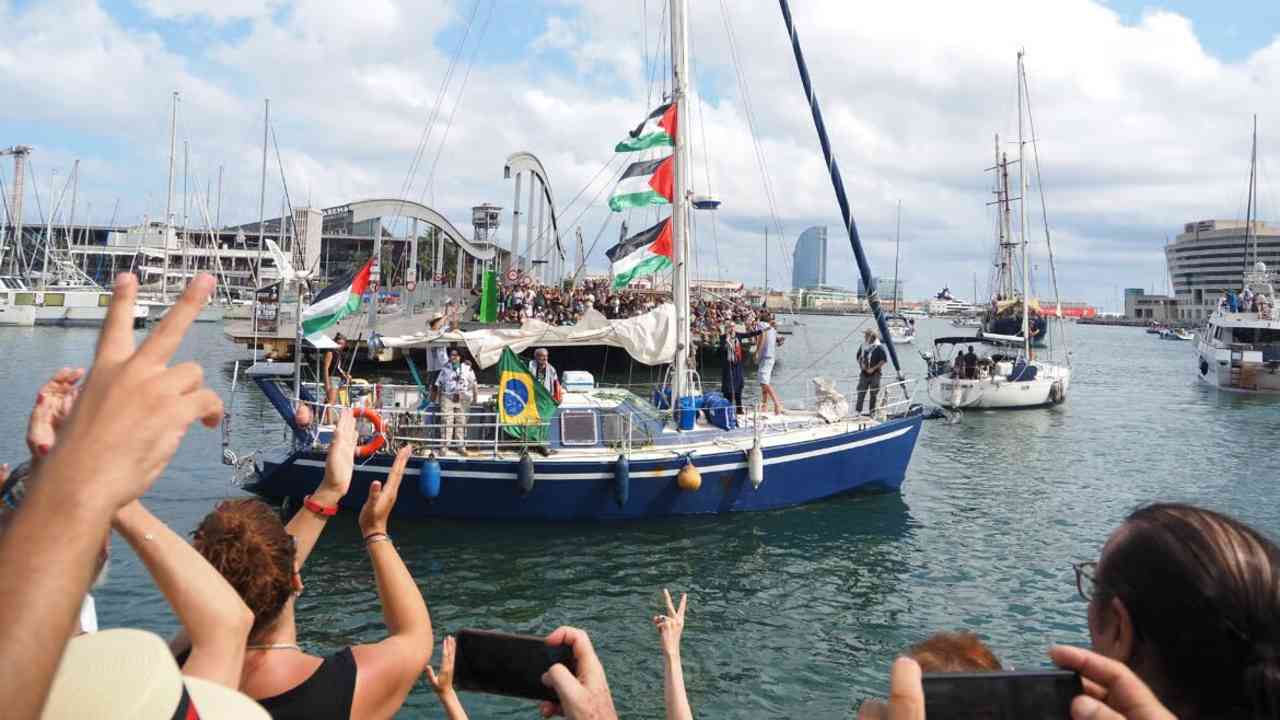
Writing on behalf of the people of India, he described the flotilla as “a brave voyage of defiance, determination and hope that sets sail against siege, genocide and occupation.” He noted that the ships of the flotilla carry not only supplies but also “the unyielding will of the world’s peoples to stand with Palestine and the people of Gaza.”
The letter condemned the continuing assault on Gaza, stating that “Gaza bleeds under bombs and blockade unleashed by fascist Israel, yet refuses to surrender. Children grow up amid ruins yet raise their voices in songs of freedom. Every attempt to crush Palestine only strengthens its roots, for a people fighting for dignity cannot be erased.”
Dipankar hailed the courage of successive solidarity missions to Gaza, declaring that “no wall of oppression can hold back the tide of history. The Flotilla is that tide, reminding us that international and people-to-people solidarity is stronger than weapons, and that the seas themselves echo with the promise of liberation.”
He affirmed that the struggles of the Indian people against oppression and injustice are linked with the Palestinian people’s fight for freedom. The letter concluded with the call: “From the river to the sea, we join our voices with yours. Palestine will be free. Break the siege. End the genocide. End the occupation.”