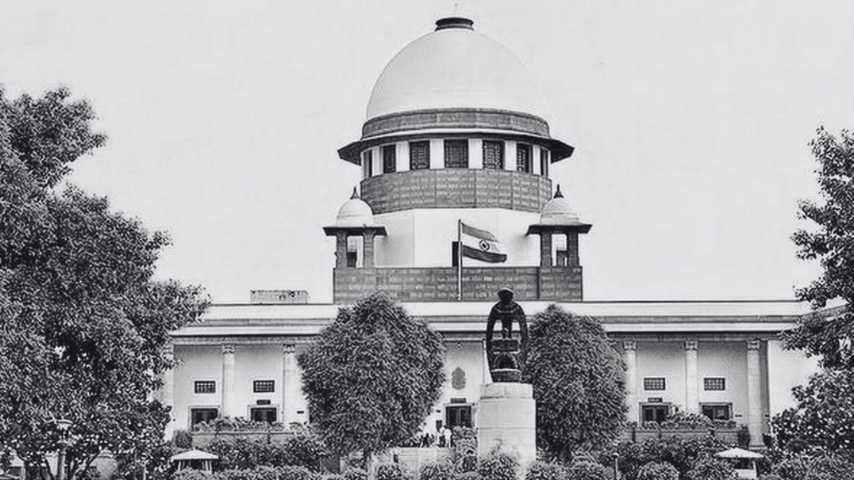
On 13th March 2026, the Supreme Court disposed off a writ petition seeking paid menstrual leave for women in all establishments. The Court stated in it’s order that it had no doubt that the competent authority will earnestly consider the observations made by the Court in other petitions for the purpose of formulating a Model policy for consideration by all stakeholders. The observations that the Supreme Court was referring to had been made in an earlier order in another case filed by the same Petitioner, Shailendra Mani Tripathi v. Union of India (W.P.(C) Nos. 172/2023. In that case the Supreme Court left it to the Union Ministry of Women and Child Development to take an appropriate decision.
On 13th March during the hearing, the bench comprising of Chief Justice of India Surya Kant and Justice Joymalya Bagchi are reported to have made certain deeply concerning oral statements. the Chief Justice of India Surya Kant orally stated that, “These petitions are deeply rooted, designed PILs. You are not a bona fide petitioner. This is basically only to create a type of impression in young women that you still have some natural issues and you are not at par with male persons and you cannot work like them during a particular time.” The Chief Justice also stated, “This can be harmful to their growth...You do not know the kind of mindset created at the workplace” Justice Joymalya Bagchi stated, “Affirmative action in respect of females is constitutionally recognised. But look at the practical reality in the job market. The more unattractive the human resource, the less is the possibility of assumption in the market. Look at from the business model. Will any employer be happy with the competing claims of other genders?”
It is noteworthy that in either case, the Supreme Court failed to issue any specific directions to the Union Government. Instead, the Court deferred the decision entirely to the executive, and stated that the Union “may” take a decision. The Court also failed to fix any timeline for the decision to be taken. Detailed reasons have not been given for the refusal to consider the request for a menstrual leave policy for women.
This is a marked departure from Courts actively enforcing rights. In the seminal case of Vishaka and Ors. V. State of Rajasthan (AIR 1997 SC 3011), the Court had stepped in bridge the absence of an enacted law against sexual harassment. The Court issued what will come to be known as the Vishaka Guidelines on sexual harassment, leading to the subsequent enactment of the Sexual Harassment of Women at Workplace (Prevention, Prohibition and Redressal) Act, 2013. Now, this active approach of enforcing rights has been abandoned.
We are deeply disturbed by these statements made by the judges. The Supreme Court is meant to be the guardian of fundamental rights. Justice must not only be done, but must be seen to be done as well. The statements made by the Supreme Court betray a certain position of the Judges on the issue of paid menstrual leave, and affects not only the decision that may be made by the Union Government on the issue, but also on other States that may be making decisions on the issue.
The statements are also deeply patriarchal in nature, placing the burden on women to endure pain while working instead of companies enforcing paid menstrual leaves. The statements places a premium on the reality of gender discriminatory practices by the companies, instead of issuing directions to stop these practices. Similar arguments had also been made prior to the enactment of laws granting maternity leave, deferring to the needs of companies instead of the needs of women.
The Supreme Court fails to consider that menstrual health is a core aspect of reproductive health, as has been held by the Supreme Court in other cases. Menstrual health is an aspect of the right to live with dignity as well, and is tied into the right to bodily autonomy. The Court must not look at women as a mere “human resource”, but persons with inherent rights such as dignity that cannot be sacrificed at the whims and fancies of companies or the market.
This approach of the Supreme Court lacks in understanding of the actual experiences of women. A huge population of women suffer from menstrual pain, ranging from severe to chronic, depending on stress, physical health, nutrition, and access to medical help. These factors are exacerbated in marginalized communities especially for Dalit and Adivasi women.
The Supreme Court must also ensure that there is a progressive realization of rights for women, and we do not regress. Oral statements made by judges must also be bound by the Constitution, on which they have taken their oath.