Nearly a century after Engels’ work, as India drafted its Constitution, about 60 million people belonged to the Scheduled Castes, a population larger than that of England. Reservation emerged as a response to this historic exclusion. Though framed as a measure of social justice, its consequences extended beyond representation, quietly addressing disease, deprivation and premature death rooted in poverty.
Where Caste and Class Converge
Virchow, Engels and Allende wrote largely in the language of class. Their work identified how diseases borne out of poverty required not merely economic reform but social reform as well. Class however is primarily economic. In India, caste frequently determines class location. Though fixed by birth, it has historically been tied to occupation and stigma. The majority of the working class at the lower strata carry a distinct caste imprint. Manual scavengers, graveyard diggers, sanitation workers, stone quarry workers, migrant labourers, cobblers, and fishing communities are not occupationally distributed by accident. Caste here does not merely accompany poverty and labour, it organises them. At the lower strata, caste and class converge while they increasingly diverge at the upper strata through access to education, employment and livelihood, all products of reservation. Birth determines Caste, caste determines occupation, and occupation in turn determines exposure to diseases. Access to education, employment and safe housing through reservation has enabled sections of these communities to move away from hereditary labour and the occupational diseases that once accompanied it.
Caste, Poverty and Disease
Even today, data echo these historical truths. The National Family Health Survey 5 shows that children born to Scheduled Caste and Scheduled Tribe families are breastfed longer than those from other groups. In isolation, this may appear encouraging. In reality, though the data may not be sufficient to establish causality and may require larger epidemiological studies, it still underlines silent hunger and lack of access to adequate nutrition. Prolonged breastfeeding compensates for food insecurity. This underscores why access to education, livelihood and maternal empowerment remain central to child health and why reservations for women are inseparable from public health outcomes.
Virchow wrote that epidemics such as typhus could occur only under the wretched conditions created by poverty and that removing these conditions would prevent their recurrence. His answer to preventing future epidemics was simple and enduring: Education, liberty, and prosperity.
There is substantial evidence to show that factors such as caste and standard of living shape disease outcomes. Data from the National Family Health Survey (NFHS-5) indicate that children in the lowest wealth quintile have a stunting prevalence of around 46%. Socially disadvantaged groups remain more vulnerable, with stunting rates of 39.2% among Scheduled Castes and 40.9% among Scheduled Tribes, higher than those observed among general and Other Backward classes. A recent study published in Nature similarly reports a higher prevalence of stunting among SC and ST children at around 39%, compared to about 33% among non-SC/ST populations, and highlights the role of poor sanitation, with children in households lacking adequate sanitation being significantly more likely to be stunted. The household wealth index alone, a leading factor, is estimated to account for nearly 41.3% of the stunting inequality between SC-ST and non-SC-ST groups.[3,4] These findings point to a clear convergence of caste and poverty, where children from SC and ST communities and those in the lowest wealth quintiles bear a disproportionate burden of malnutrition. This is not merely a nutritional deficit but a reflection of deeper structural inequities. The complex interplay of social, economic and political factors shapes growth patterns and health disparities, as described in the Social-Economic-Political-Emotional (SEPE) framework of human development. Historical marginalisation, unequal access to healthcare, inadequate maternal education and barriers to sanitation together shape health outcomes. Caste-based exclusion continues to limit access to public services, including healthcare.The World Health Organisation has long noted that a significant proportion of malnutrition is linked to infections arising from poor sanitation, including diarrhoeal diseases such as cholera and dysentery, as well as intestinal infections. Its recent report on social determinants of health equity further underscores that health outcomes are shaped less by medical care than by the social and economic conditions in which people live, and calls for addressing structural discrimination embedded in institutions and social systems.[5]
Evidence from Southern states like Keralam and Tamil Nadu provides a useful illustration of how social policy and public health systems can intersect to shape better outcomes. Tamil Nadu which takes pride in one of the earliest public health directorates established in 1920 and India’s first Public Health Act in 1939, has consistently recorded some of the lowest infant mortality rates and maternal mortality ratios in the country. The state’s IMR stands at around 19 per 1000 livebirths compared to the national average of 28 and a much higher level in states such as Uttar Pradesh with an IMR around 50. MMR has similarly declined to around 35 per 1 lakh live births (2023), well below the national average of 88. Indicators of Child nutrition bear a similar pattern. Stunting, an indicator for chronic undernutrition in children, assessed based on height-for-age, is around 25% in Tamil Nadu, compared to 42.9% in Bihar and 39.7% in Uttar Pradesh, while wasting, an indicator of undernutrition assessed based on weight-for-height, stands at about 14.6%, significantly lower than in states such as Gujarat (25.1%) and Maharashtra (25.6%). {5} Institutional deliveries and sustained improvements in maternal care have further reduced early-life risks across populations. These patterns suggest that where public health systems operate alongside broader social policies that expand access to education, employment and basic living conditions, the gains extend across all social groups.[6] Historically marginalised communities in better-performing states, therefore, fare better than their counterparts in high-burden states.
When India adopted reservation, the dominant constitutional framing moved beyond formal equality and focused on substantive equality. Articles 15 (4) and 16 (4) empower the state to make special provisions for socially and educationally backward classes and for the scheduled classes and scheduled tribes. Though these addressed the structural disadvantages, their implications extended further. Article 47 directs the states to improve nutrition, standard of living, and public health. Yet public health itself cannot advance in communities without addressing diseases borne of poverty, illiteracy and insecure living. Preventive medicine rests as much on housing, nutrition and education as it does on clinical care. Policies that expand access to education and employment, therefore, reshape the conditions in which diseases take root.
The doctrine of substantive equality embedded in the Constitution offers a deeper explanation. Equality is not achieved by ignoring caste, but by recognising how caste structures access to resources like education and housing. In the same way, public health recognises that diseases such as tuberculosis, leprosy and malnutrition are the results of poverty. Slum dwellers with limited education and precarious livelihoods repeatedly experience epidemic outbreaks, a reality documented for long and reaffirmed by contemporary research.
Caste in India functions as a health determinant. Reservation operates as a population-level intervention, flattening extreme vulnerability rather than privileging individuals.
Housing policies offer a parallel illustration. Engels identified overcrowding and poor ventilation as drivers of mortality. In states like Tamil Nadu, initiatives such as the Slum Clearance Board and the Periyar Samathuvapuram scheme were introduced by the former Chief Minister M Karunanidhi as social reform measures.The Kalaignar Kanavu Illam scheme, introduced in 2024, aims to make Tamil Nadu a slum free state by 2030. Yet their public health impact was unmistakable. Permanent housing with ventilation, spacing, and sanitation undoubtedly reduced communicable diseases spread through air, water, and vectors. These were health interventions implemented outside hospitals.
Why Reservation Must Endure
Reservation has long faced demands for a sunset clause. Ambedkar rejected this unequivocally. Infectious diseases do not disappear with time limits. Diseases rooted in poverty retreat only when living conditions improve.[7]
The drafting committee chaired by Ambedkar adopted the term backward classes with flexibility across states. The underlying logic, however was consistent as social backwardness, which could not be separated from housing, education, occupation, and quality of life differ from state to state.
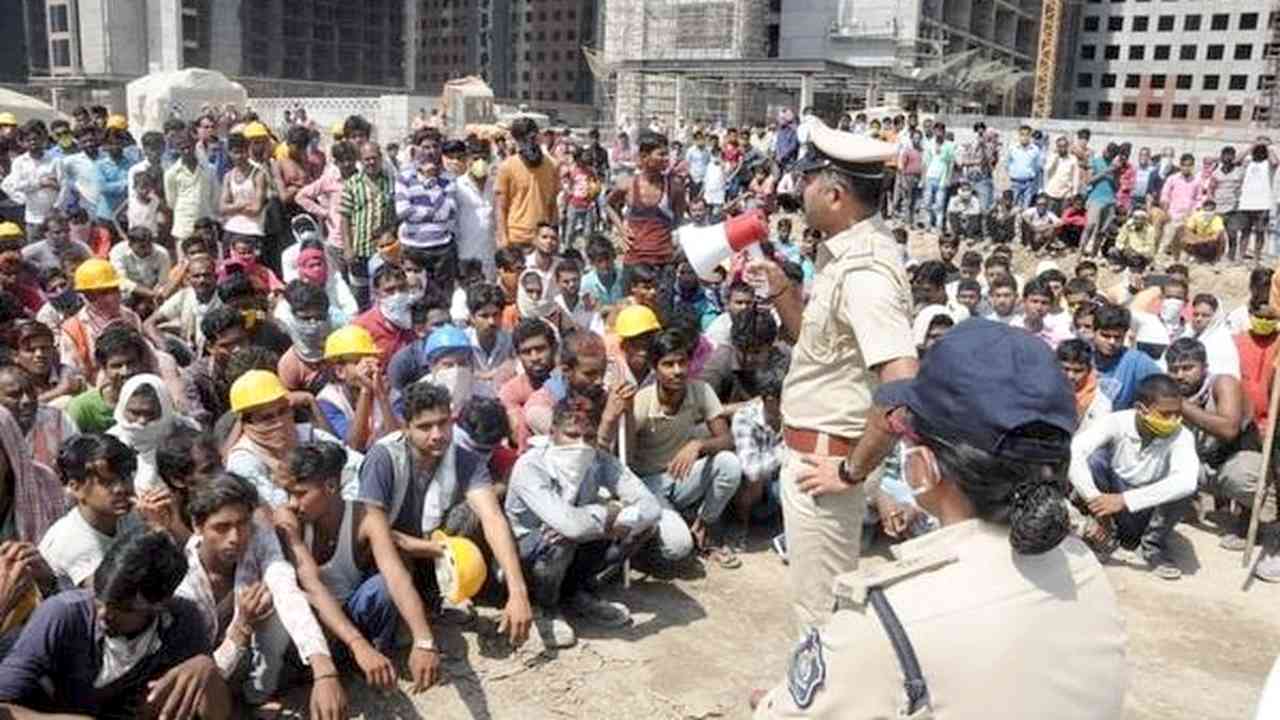
Contemporary India continues to reflect this reality. Migrant workers in Tamil Nadu employed in stone quarries, salt pans, and construction sites often belong to castes like Gond and Oddars. Many remain unrecognised in official records, depriving them of reservation benefits in education and employment.[8] According to the Tamil Nadu State Planning Commission report 2025, eight out of ten migrant workers live in kutcha or semi pucca houses. Most purchase drinking water, rely on common toilets, lack social security, and remain excluded from ESI coverage. Silicosis, though notifiable, remains underreported and frequently misdiagnosed as tuberculosis due to bureaucratic and occupational pressures. Global health declarations have long reinforced these truths. The Alma-Ata Declaration and the Ottawa Charter recognised health as a fundamental right and placed social justice, education, and equity at the centre of health policy. Countries and states that adopted progressive social policies achieved better health indicators not through medical advances alone, but through redistribution and inclusion.[9,10]
Despite decades of progress, stigma persists. Tuberculosis, leprosy and HIV continue to displace patients from homes and livelihoods. These diseases remain concentrated among populations with poor housing, unsafe work and lack of access to education. Health education alone cannot dismantle this cycle. Structural interventions must precede behavioural change.
India ranks among the most unequal countries globally. The World Inequality Report 2026 shows that the richest ten percent capture nearly sixty percent of national income, top one percent hold forty percent, while the bottom half receives only fifteen percent. Wealth inequality is sharper still. Female labour force participation remains abysmally low despite decades of reservation. These inequalities translate directly into health disparities.
Reservation was introduced as a response to historical injustice. It has endured because it continues to address present vulnerability. Public health stresses that diseases recede when dignity, education and stability expand.
Though the Union budget largely continues to prioritise curative interventions in health with only a gradual shift towards preventive medicine, India has historically invested in prevention and health promotion through lateral policies outside the health sector. Such policies achieve much more than what budget reallocation to the health sector alone can achieve. Reservation is one such intervention; it has quietly contributed to the elevation of socio-economic status and environmental standards of living, factors that lie at the heart of public health.
Ambedkar understood this when he rejected arbitrary timelines or a sunset clause for justice. Responding to arguments in the Constituent Assembly, he invoked Edmund Burke’s words that “large empires and small minds go ill together.” Diseases may persist, but diseases borne of poverty will recede when the benefits of reservation reach the poor and the wretched.
Reservation, therefore, addresses the social determinants of health.
(The author is a Community Physician and Public Health Researcher.)
References
1. Virchow RC (1848). Report on the typhus epidemic in Upper Silesia. American journal of public health. 2006 Dec;96(12):2102-5.
2. Allende, Salvador (1939): La Realidad Médico-Social Chilena (The Chilean Medico-Social Reality), Santiago: Ministry of Health.
3. Dolui M, Sarkar S. Decomposing social groups differential in stunting among children under five in India using nationally representative sample data. Scientific Reports. 2024 Nov 8;14(1):27260.
4. Padigapati, V. N. S., Singh, A., Velayudhan, P. K., Perumal, A. & Ramalingam, S. Examining the prevalence and predictors of stunting in Indian children: a spatial and multilevel analysis Approach. Agricultural Res. 1–12
5. World Health Organization. World report on social determinants of health equity [Internet]. Geneva: World Health Organization; 2025 May 6 [cited 2026 Apr 24]. Available from: https://www.who.int/teams/social-determinants-of-health/equity-and-health/world-report-on-social-determinants-of-health-equity
6. Das Gupta M, Desikachari BR, Shukla R, Somanathan TV, Padmanaban P, Datta KK. How might India’s public health systems be strengthened? Lessons from Tamil Nadu. Economic and Political Weekly. 2010;45(10):46–60.
7. Ambedkar, B R (1949): Constituent Assembly Debates, Government of India, New Delhi.
8. Tiphagne AC. The Kal Oddars: Hidden and ignored from the development agenda. J Madras Sch Soc Work. 2017;11(1-2):74-85. Available from: https://www.msswjournal.in/index.php/msswj/article/view/88/48
9. World Health Organization (1978): Declaration of Alma-Ata: International Conference on Primary Health Care, Alma-Ata, USSR.
10. World Health Organization (1986): Ottawa Charter for Health Promotion, First International Conference on Health Promotion, Ottawa