

I
SIR: More than Election Theft
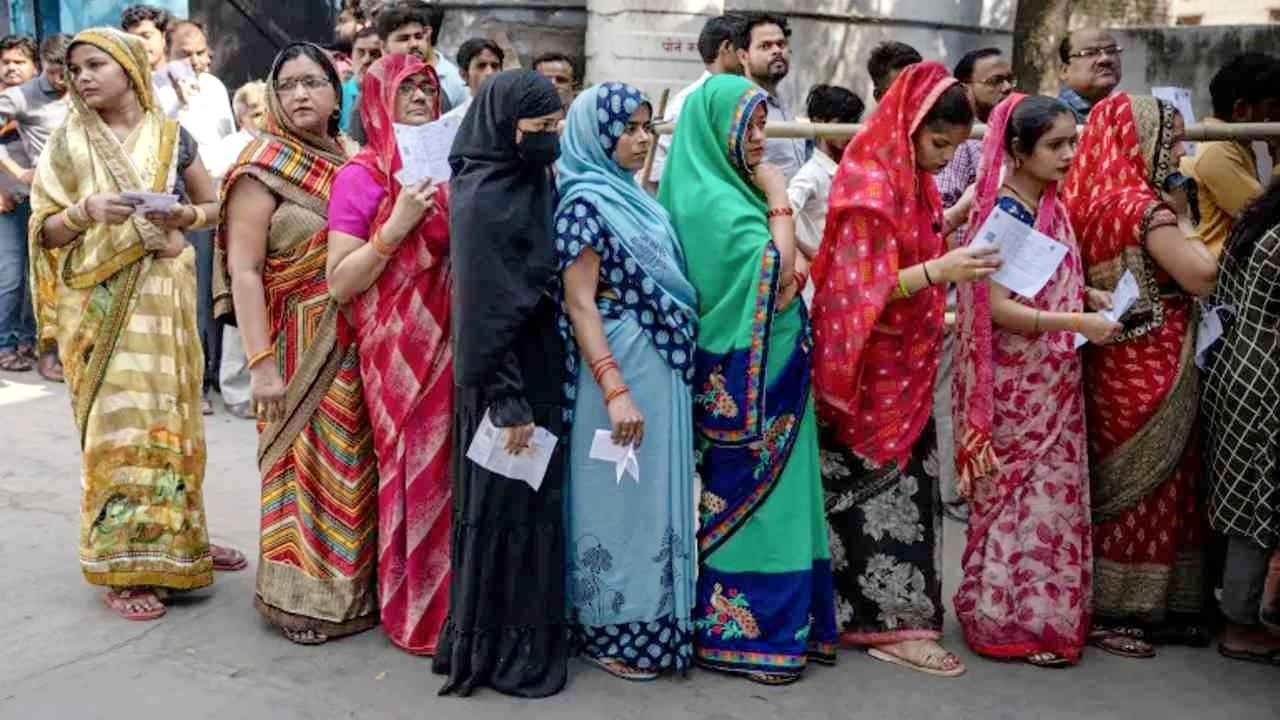
The nationwide SIR, which is a stepping stone to the notorious NRC and closely linked with allied operations like EVM and voter list manipulations, is arguably the most vicious attack on the most elementary democratic right of the citizenry: the right to free and fair elections, which entail the right to vote, the right to participate in the political process, the right to elect and eject governments. This is a meticulously planned conspiracy to pull down the very foundation of parliamentary democracy, to annihilate the basic spirit of the Indian constitution. In this sinister game plan, the saffron fascists are faithfully following their Godfather who ruled Germany in the 1930s
Indian Version of Nazi Citizenship Acts
Hitler became Chancellor in 1933 and started reconstructing his country into what RSS would call ‘Aryan Rashtra’. The Nuremberg Laws of 1935[1] legally divided people into “Aryans” and “Jews,” and citizens were asked to prove “Aryan descent” through documents like the Ahnenpass (Ancestral Passport) and Ariernachweis (Proof of Aryan Descent), tracing family lines back to grandparents or great-grandparents. By 1938–39, Jews were specially marked through census and registration drives, special identity papers stamped with “J,” and forced name changes (“Israel” or “Sara”). Those unable to produce Aryan proof were expelled from jobs, universities, and professions. Eventually, this data provided the basis for preparing lists of people to be thrown into concentration camps and gas chambers. Thus, what was launched as an innocuous population registration programme, quickly metamorphosed into a mechanism of segregation, deportation, persecution and genocide.
In our country, a similar process is going on slowly, haltingly but steadily: recall how the NDA mandated the creation of a National Register of Citizens (NRC) when it came to power in 2003, resumed the work as soon as it had the opportunity in 2014, announcing the NPR as the first step towards NRC, and then went on introducing a complete package of three measures with a flexible “chronology” – and now we have the monstrous all-India SIR. They have to work like this, because the Sanghi juggernaut lacks the kind of absolute power the Fuehrer possessed, and needs to maintain at least a semblance of the democratic process. This limitation they are trying to overcome by very many means, technological as well as political. They enjoy the services of the latest computing technologies including AI to prepare, process, and do almost whatever they want to with voter lists, EVM machines, vote-counting processes, and what not. Their political assets include docile Election Commission and Supreme Court, the godi media, and of course, the integrated network of ‘IT Cell’ and local rumour mills – to name only a few.
The similarity between the Nazi and the Sanghi citizenship Acts is abundantly clear. That holds true in some other instances too. But they are no copycats. They have long roots in ancient India's religio-philosophical traditions which, when suitably repackaged and served with trendy vibes, strike a soft chord with large sections of the majority community, including intellectuals and professionals. Moreover, the RSS emerged as a conservative, fundamentalist backlash against progressive social and political movements[2] in the 19th and 20th centuries, objectively serving the interests of dominant castes and classes. Without these ideological moorings and the support of ruling classes and castes, the RSS could not have grown to such power despite so many challenges and setbacks. This will be evident if we see how the so-called NGO actually evolved.
II
Prehistory of RSS
Long before the birth of the RSS, nationalism in India was thoroughly steeped in Hindu religious sentiment, a strong secular stream notwithstanding. In the 19th century, upper-caste Hindu elites began to form “Dharma Sabhas” (religious assemblies) to defend traditional Hindu practices and to counter Christian missionaries, Muslim reformers, and even Hindu reform movements like the Brahmo Samaj and Arya Samaj. The first one was founded by Radhakanta Deb, a conservative Bengali zamindar, in Calcutta in 1830.
Punjab Hindu Sabha to Hindu Mahasabha
The Punjab Hindu Sabha, the first overtly political Hindu organization, was established in Karachi in 1909. Its leading light Lal Chand argued that Hindus had been historically weak because they lacked collective self-assertion and the Congress ideal of “self-abnegation” (tyāg or self-effacement) in the name of “national unity” made Hindus subservient to the demands of Muslims. In Self-Abnegation in Politics (1917), he asserted:
“Politics knows no morality higher than self-preservation. The race which practices self-denial in the struggle for existence perishes by its very virtue.”
And further: “The Congress doctrine of self-effacement is a pious fraud. It disarms the Hindus while arming their rivals.”
Savarkar developed the clear-cut anti-Muslim nationalism to a new, more sophisticated plane. In 1923, while imprisoned in the Andamans’ Cellular Jail, Savarkar wrote Essentials of Hindutva, later expanding its core ideas in speeches and writings. To be very brief, he held that those who revere India—from the Indus valley to the seas—as both fatherland and holy land, proudly worshiping it as their own, are Hindus and form one indivisible nation. Muslims and Christians—whose holy lands are Mecca or Palestine (today we may call it Palestine/Israel)—may have lived here for generations, but do not truly love it as fatherland. Therefore, in truth they belong to other nations.
This thesis elevated “Hinduism” beyond sects and divisions into a single community -- unified via festivals like Diwali, pilgrimages, and the figure of Ram, whom almost all Hindu sects across the country love and worship. Savarkar set up his Hindu Mahasabha in 1915 on this novel formulation.
Born in the Hellfire of Communal Riots
Savarkar’s work inspired another Maharashtrian Brahmin, Dr. K.B. Hedgewar, to found the RSS in Nagpur in 1925. He consciously chose Vijaya Dashami for the occasion. Vijaya Dashami—that is, the day when Ram is said to have triumphed over Ravana. The saffron flag of Ramchandra—which Shivaji is also believed to have used—was adopted as the organization’s flag.
The socio-political backdrop to the birth of RSS deserves our attention. The Non-Cooperation Movement under Gandhi’s leadership and the Khilafat Movement led by the Ali brothers (Shaukat Ali and Mohammad Ali), Abul Kalam Azad, Hakim Ajmal Khan, and Hasrat Mohani—these two streams of anti-British struggle converged around mid-1920, exerting tremendous pressure on the British government. An exemplary atmosphere of Hindus and Muslims fighting together against the common enemy developed. However, when Gandhi abruptly called off the Non-Cooperation Movement in early 1922 following the Chauri Chaura incident, the spell of Hindu-Muslim camaraderie collapsed, and brazen communalism resurfaced. Hedgewar described the situation with fierce anti-Muslim hatred:
“As a result of the Non-Co-operation Movement of Mahatma Gandhi … the evils in social life which that movement generated were menacingly raising their head. As the tide of national struggle came to ebb, mutual ill-will and jealousies came on the surface. … Conflicts between various communities had started. Brahmin–non-Brahmin conflict was nakedly on view. … The yavan-snakes [i.e. Muslims] reared on the milk of Non-Cooperation were provoking riots in the nation with their poisonous hissing.” (From Sri Guruji Samagra Prashikshan Vol. IV, published by Suruchi Publication, New Delhi).
The RSS came into being and grew by capitalizing on this very situation. In 1927, during a riot in Nagpur, the RSS actively participated and started growing rapidly. In the same vein, it gradually expanded to other places as well.
It was not without a reason that Maharashtra became the cradle of militant Hindutva. As Anand Teltumbde points out [3], the 1870s saw Jyotiba Phule’s Satyashodhak Samaj spark an anti-Brahmin movement, carrying forward his programme of education, rationalism, and social equality. Brahmins were further alarmed when the 1911 Census divided the Hindu population into three categories – Hindus, Depressed Classes, and Animist Hindus (Tribes) – thereby institutionalising internal divisions within the so-called Hindu fold. This development profoundly unsettled the Brahminical leadership, which had long assumed that the reins of political power would naturally pass into its hands once the British left India. By the early 1920s, the anxiety among the upper-caste elite of Nagpur was palpable: their historical monopoly over education, ritual authority, and nationalist politics was being challenged simultaneously from below by Dalit and Shudra movements and from outside by Muslim political assertion.
Upper-caste Hindus responded by organizing around the concept of an indivisible Hindu society (including Dalits). Freedom fighters like Tilak aligned this to anti-British struggle, but reactionary Brahminical sections branded Muslims as national foes, opting for anti-Muslim Hindu unity as the simplest and best path. Savarkar and Hedgewar embodied this strand, as outlined above.
III
Ideological Roots of RSS
The ideology and politics of RSS are solidly based on the annals of the warrior king Ram and the sermon on the battlefield of Kurukshetra delivered by Lord Krishna. These are the chief sources of its bellicose majoritarian nationalism: their reading of the epics provide moral justification for their permanent war against minorities, Dalits, ‘urban Naxals’, ‘foreign agents’ and infiltrators – a war that will, they expect, usher in a modern Ram Rajya ruled by someone like Ram or Shivaji (and now maybe the ‘divinely born’ Hinduhridayasamrat!).
War as Sacred Duty: Teachings of Ramayana and Gita
Savarkar and key RSS leaders passionately projected Ram as India’s ethical–political ideal. “Our forefathers spoke of Ram-rajya. By this they meant not a kingdom of weakness, but a state founded on strength, national unity and fearless defence of the motherland” -- said Savarkar in his Presidential Address, Hindu Mahasabha, 1937 (Samagra Savarkar Vangmaya, Vol. 4). He further observed, “Shri Ram is the ideal of a national hero, who defended his people, punished the wicked and founded a kingdom based on strength and dharma.” (Collected Works of V.D. Savarkar, Vol. 3)
“In Shri Ram”, Golwalkar declared in his Vijayadashami address at Nagpur in 1950, “we see dharma and national duty blended.” (Shri Guruji Samagra Darshan, Vol. 3)
Divine Bellicosity: the Gita
As we know, the Bhagwat Gita has been the most popular source of inspiration to almost all sections of nationalists from Congress leaders like Tilak, Gandhi and Subhas Bose to national revolutionaries in Bengal, Maharashtra and Punjab in the 19th and 20th centuries. They interpreted and upheld the text in keeping with their own ideological-political outlooks. Even Ambedkar, from a standpoint very different from Gandhi’s and Tilak’s, referenced parts of the Gita on different occasions (for example, to explain the true purpose of his Satyagraha at Mahad). However, in later years with deeper studies he completely changed his view.[4]
The RSS took this reverence to an extreme position. It took the Bhagavad Gita as the cornerstone of its violent Hindu nationalist ideology, viewing it as a manual for moral discipline, character building, and struggle for the attainment of Hindu Rashtra. In RSS shakhas (daily branch meetings), the Gita is routinely invoked through recitations, discussions, and training modules to instill values like selfless action (nishkama karma), obedience to hierarchical authority, and national duty. RSS leaders, past and present, have repeatedly drawn on the Gita to justify the caste hierarchy, anti-minority stances, and disciplined armed campaigns, ostensibly to protect the Hindu community, which is allegedly under seize.
Among the most prominent leaders of Hindutva, Savarkar used the Gita primarily to justify action, courage, and violence as duty—especially the teaching of fighting even against one’s kin for the sake of swadharma (one’s own religion). Golwalkar and later RSS leaders treated the Gita as the scriptural charter of karmayoga, emphasising disciplined, selfless service to the Hindu nation. The Gita for them was a manual for organized, militant activism, not mysticism, as the following quotes reveal.
Savarkar very clearly highlighted what he considered the basic teaching of his holy book when he wrote, “The Gita clearly enjoins every man to do his duty in defence of the nation even if in doing so one may have to kill one’s own people. Arjuna was taught that nothing is more sinful than shirking one’s duty towards the national cause.” (Six Glorious Epochs of Indian History (1963)). In Hindutva: Who is a Hindu? (1923), he said, “Shri Krishna is the divine incarnation of the national hero who teaches us to fight for swadharma.”
More an activist than a theorist, Hedgewar said, “The Gita teaches us steadiness in action—karmayoga. The Sangh worker must develop this quality in service of the Hindu society.” (Dr. Hedgewar: The Epoch Maker (a compilation of speeches from RSS Publications)).
Golwalkar, the longest-serving and most admired sarsanghachalak, wrote in his Bunch of Thoughts: “Shri Krishna has in the Gita given us the law of nation-building—unity, selfless action, and dedication to dharma.”
The cult of belligerent bhakti continues to this day. In February 2019, Modi released a three-meter-long, 800-kg copy of the Gita, at a function in the ISKCON temple in Delhi. Hailing it as “the source of all knowledge and the core symbol of our culture”, he quoted a passage where Krishna tells Arjuna: “To protect the righteous, to annihilate the wicked, and to reestablish the postulates of dharma, I appear on this earth, age after age.” The Prime Minister explained, “We always have the power vested by god to protect our land from miscreants and Asuras.”
The allusion, clearly, was to the recently arrested Dalit activists in Bhima Koregaon case and other ‘enemies of the state’. And who was the avatar of Krishna? Obviously, Modi himself – the “we” was only a polite way of saying I! Later, while campaigning for the 2024 LS elections, he said that he was not a normal, biologically born human and added, “God has sent me for a purpose.” Meanwhile, the NDA government had ensured that the Gita occupied pride of place in the “Indian Knowledge Tradition” and in school curriculums in BJP-ruled States.
MN Roy on Philosophical Roots of Fascism in India
Roy, a contemporary of Savarkar and Golwalkar, produced a prescient analysis of fascism’s philosophical foundations in India. He showed that in the Indian context, Fascism was a peril latent in the country’s own philosophical traditions like fatalism, karma, and unquestioning obedience to divine authority. In the absence of an Enlightenment-like rationalist upheaval as in Europe, India’s scriptural myths—romanticized by most nationalists as Vedic ideals —fostered a psychology of cosmic submission. This understanding rendered the masses susceptible to authoritarian mobilization, even under figures like Gandhi.
At the heart of Roy’s indictment lay the Bhagavad Gita, which he viewed as a metaphysical blueprint for totalitarianism. In it, Krishna’s counsel to Arjuna justified war and destruction as divine duty, subordinating reason and conscience to a mystical order. As Roy wrote in Reason, Romanticism and Revolution (1952): “The philosophy of the Gita teaches unquestioning obedience to authority, the suppression of reason in the name of duty, and the moral justification of war as the fulfilment of divine will.” He elaborated: “In the Gita, Krishna exhorts Arjuna to do his duty, to kill, to destroy, without questioning the moral justification, because action in the performance of one’s duty is superior to inaction. Thus, the individual conscience is subordinated to a mystic cosmic order.”
Roy drew stark parallels between this and fascism’s glorification of the state: “The Fascist glorifies the State as divine; the Indian theologian sanctifies the caste order as divine. In both, the individual is effaced before a higher mystical whole.” He pinpointed four key enablers of Indian fascism—irrational mysticism in religious philosophy, fatalism and glorified obedience in the Gita, the caste system’s rigid hierarchy, and the uncritical use of ‘spirituality’ in politics—arguing that power itself becomes godly mandate: “… the roots of the philosophy of Fascism can be traced in the divine philosophy of the Gita, according to which all power (bhibhutis) on earth are the powers of God.”
The communist leader and Marxist scholar cautioned that nationalism, if rooted in religious revivalism, risked mirroring Europe’s fascist surge: “If India, in seeking self-expression, turns to her mythical past for inspiration, she will find there not the spirit of liberty but the sanction for obedience.”
Notes:
1. These included, inter alia, the “Law for the Protection of German Blood and Honour”, which banned marriage or sexual relations between Jews and “Aryans” and the “Reich Citizenship Law”, which decreed that only people of “German or related blood” could be citizens of the Reich.
2. These included, apart from the Hindu-Muslim united struggle against the British government, the communist movement, and many other trends. The RSS actively defended traditional Hindu practices and therefore vehemently opposed even Hindu reform movements like the Brahmo Samaj and Arya Samaj, not to speak of the anti-Brahmin movement. According to Golwalkar, “The theories of territorial nationalism and of common danger, which formed the basis of our concept of a nation, had deprived us of the positive and inspiring content of our real Hindu Nationhood, and made many of the ‘freedom movements’ virtually anti-British movements. Anti-Britishism was equated with patriotism and nationalism. This reactionary view has had disastrous effects upon the entire course of the freedom struggle, its leaders and the common people.” Golwalkar thus argued that defining nationhood on territorial grounds (i.e. people living in the same political borders) is “lifeless,” “unnatural,” and “unscientific.” He believed that what really binds a nation is cultural unity — religion, language, shared history — rather than just geography.
3. The RSS Was Also a Reaction to Early Dalit Mobilisation, The Wire, 25 October, 2025
4. Ambedkar did not explicitly link the Gita to fascism, but made scathing critiques of the same, as well as other Shastras (which, he demanded, must be blown up with dynamite) because they justified rigid dogmas and oppressive hierarchies while suppressing rational thinking and reasoning. In a number of scholarly works, he demonstrated that the Gita was essentially a Brahmanical reaction to the revolutionary and rationalistic thought of the Buddha. He explained: “The Bhagvat Gita is emphatic that one must follow one’s svadharma. And svadharma is nothing but the duty of caste. In short, the Gita is a reiteration of the duty of each according to his caste.” (Riddles in Hinduism).