Rather than ownership over a physical object, Intellectual property (IP) is a state-guaranteed monopoly over the use of knowledge, inventions, designs, or cultural works. A patent is a temporary legal monopoly over the commercial use of an invention or a method which in reality, however, serves to restrict the very free competition that capitalism otherwise hails as supreme. Patent regimes allow firms to extract monopoly rents from technological ownership long after the direct costs of innovation have been recovered. Under most standard IP regulations, companies reserve the right to permit other producers to manufacture the commodity if they pay royalties to the patent-holding company. This system is called “voluntary licensing”, since companies can voluntarily decide whether other companies may produce the commodity.
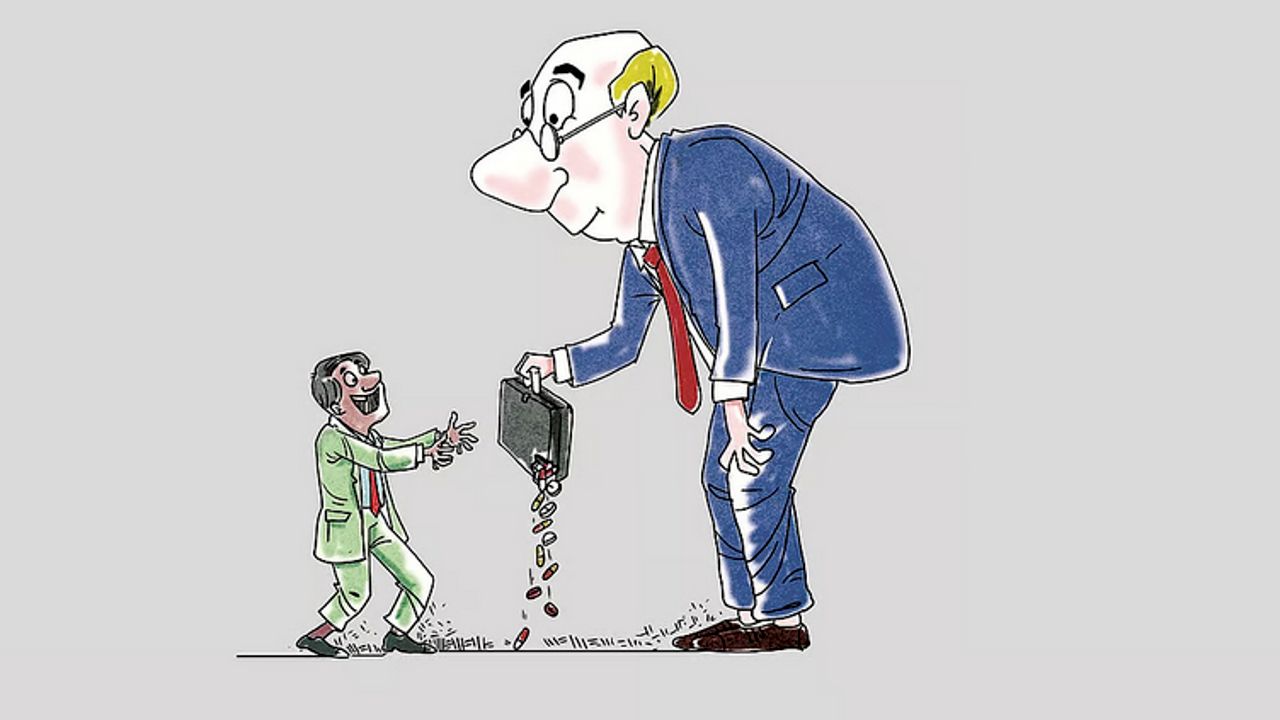
Now consider what a patent might mean for medicines and pharmaceuticals. Companies that discover drugs for diseases like cancer or AIDS are free to keep the prices of these life-saving drugs extremely high, while disallowing other companies from manufacturing them, even if another company would be able to deliver the same drug to patients at considerably lower prices. Historically, this has led to extremely high medication prices, such as during the AIDS crisis in many African countries, when life-saving antiretroviral medication existed but remained prohibitively expensive for most patients. In this regard, the Indian legal system has had relatively strong provisions to prevent the misuse of patents by pharmaceuticals, through a provision called compulsory licensing, where the government can force a pharmaceutical company to allow others to produce the drug if it is prohibitively expensive by Indian standards and the patent is deemed to have “not worked.” In a landmark case – Natco vs Bayer, 2012 – Indian pharmaceutical company Natco Pharma applied for a compulsory licence for the cancer drug Nexavar, sold by Bayer at around Rs. 2.8 lakh per patient per month, arguing that Natco could manufacture the same drug for about Rs. 8,800 per month. The Indian Patent Office (IPO) found that only 2% of the eligible patient population in India could realistically afford the drug at Bayer’s prices and granted its first compulsory license of the twenty-first century. Natco could produce the drug at low prices after paying about a 6% royalty to Bayer.
India’s relatively progressive IP regime itself is a product of a long history of post-colonial struggle. At the time of independence, India inherited the colonial Indian Patents and Design Act, 1911. The old Act was considered to favor foreign, particularly British, patentees as opposed to Indian producers or consumers. The 1957 Ayyangar commission warned that foreign patent holders may even be able to use patents to capture Indian markets without manufacturing in India. In 1970, India passed the progressive Patents Act (1970) and the Patents Rules came into effect in April 1972, replacing the colonial law. The 1970 Act did not allow product patents for food, drugs, and medicines. It allowed only process patents in these sectors, with shorter terms for drug/food processes. It is with this act that the safeguards against pharmaceutical monopolies and the compulsory licensing provisions were introduced. The Act was instrumental in the development of the Indian pharmaceutical industry, in the 1970s and 1980s, which could produce drugs at extremely low prices without patent restrictions, giving India the title of the “pharmacy of the world.”
After economic liberalization in 1991 and India’s subsequent entry to the World Trade Organization (WTO), India became bound by TRIPS regulations in 1995, with a transition period lasting until 2005. Soon after, in 1997, the United States and countries in Europe pushed back on India’s IP laws that didn’t allow for a “mailbox system” and did not give foreign companies exclusive marketing rights for pharmaceutical and agrochemical patents during the transition period. The WTO ruled against India, and India had to concede. Multiple other concessions followed. In 2002, the NDA government modified the Patent Act to bring it closer to TRIPS regulations. This introduced the 20-year validity and restrained compulsory licensing provisions. In 2005, product patents – including food and drugs – were restored, and the government amended the previous law that only allowed patents for processes and not products. However, the Natco/Bayer case in 2012, and the Novartis case the subsequent year, showed that the Indian government was still willing, at least selectively, to use the public-health flexibilities available within the TRIPS framework.
The Narendra Modi government, however, has been weakening these institutions. In 2024, the government enacted the Patent (Amendment) Rules, which weakened Form 27 -- the mandatory disclosures that companies had to declare about how well their patents have “worked”, which they no longer need to do. The government is also partly implementing restrictions on pre-grant opposition to patents: Earlier patients and activist groups could oppose patents before they were granted, which they may not be able to do after the rule changes. Thus, by weakening rules, the government is subordinating the pharmaceutical market to foreign corporate interests despite the laws still allowing compulsory licensing.
Thus, recent developments by the government of India, such as the emphasis on voluntary licensing of pharmaceuticals in recent trade deals with the UK, EU, and the EFTA is a cause for alarm. Critics have warned that these agreements may create a chilling effect around the use of compulsory licensing, even if they do not formally abolish it. If these agreements weaken India’s willingness to invoke compulsory licensing, life-saving medication could get prohibitively expensive.
Instead of weakening existing compulsory licensing regimes, the government should consider extending compulsory licensing provisions beyond pharmaceuticals, to other industries. One policy route is technology transfer requirements for foreign firms operating in the country. Technological transfer requirements have been one of the policy instruments that have allowed China to pursue industrial policy – using mandated technology transfers to develop domestic industrial capacity in manufacturing – especially, high value manufacturing. Another more controversial alternative is state-sponsored R&D and reverse engineering, which may ultimately be understood as a process of the democratization of access to advanced productive technology.
India must decide whether IP policy will serve imperial rent extraction or prefer public health, and industrial self-reliance. The recent direction taken by the government towards voluntary licensing arrangements, must be understood as a piece in the broader subordination of India’s economic sovereignty and national development to imperialist control. The people of India must continue to struggle for more affordable products and services against the monopoly of big corporations and multinationals.