Recently reports emerged that Andrew Cuomo, the ex-governor of New York who lost big time to Mamdani, has decided to contest as an independent. Reports have suggested that he met Trump and the latter advised him to contest independently. It is needless to say that federal administrative help and shady financial assistance by Trump’s coterie will be on Cuomo’s side. The history of Cuomo’s association with Trump runs deep. Andrew Cuomo’s father was a close friend of Fred Trump, Donald’s father. Andrew also carries the distinction of working for a law firm that represented Donald Trump in corporate law suits. During the frantic presidential campaign of 2016, Andrew Cuomo did not campaign aggressively for Hillary Clinton. The latter’s contestant, Donald Trump had then said about Cuomo ‘‘we get along very well.’’
Another interesting thing that has unfolded in this period is Barack Obama’s phone call to Mamdani. The last time Obama’s phone call had become famous was during the Black Lives Matter (BLM) protests. He had phoned Lebron James (the black basketball star) and his colleagues to give up the idea of a strike in support of BLM. It is not clear what Obama said to Mamdani, however the fact that he did not endorse him publicly yet speaks volumes about the Democratic party’s ‘extreme center’ (an apt expression used by Tariq Ali to describe centrist parties in the west after the neoliberal counter-revolution). In short, the Democratic party establishment is happy to fall in line with Trump rather than support Mamdani and honour their voters mandate.

New York city is not new to hot mayoral contests. In 1886, Henry George, economist and an enigmatic figure ran for the Mayor of the city as candidate of the United Labour Party. The party was a curious mix of communists, Catholics and ‘Georgists’, followers of Henry George who believed in free-trade and a single tax on land. Abram Hewitt won the contest but George finished second pushing the Republican candidate Theodore Roosevelt (the future President of the United States of America) to the third spot. George was defeated by the great commercial and industrial capitalists of the city who had paid bribes to stuff ballots and engaged in other forms of brazen cheating. The contest got the attention of Friedrich Engels. He, despite his reservations for George, declared the result to be an ‘epoch making day’. George entered the mayoral race as the star author of Progress and Poverty (1879), a radical essay which argued that ‘the first went hand in hand with the second due to the monopolization of land, whose owners reaped most of the rewards of progress in the form of rising land values.’ Bearing a similar message about inequality in New York City, Mamdani has made rent affordability and living standards a blazing issue.
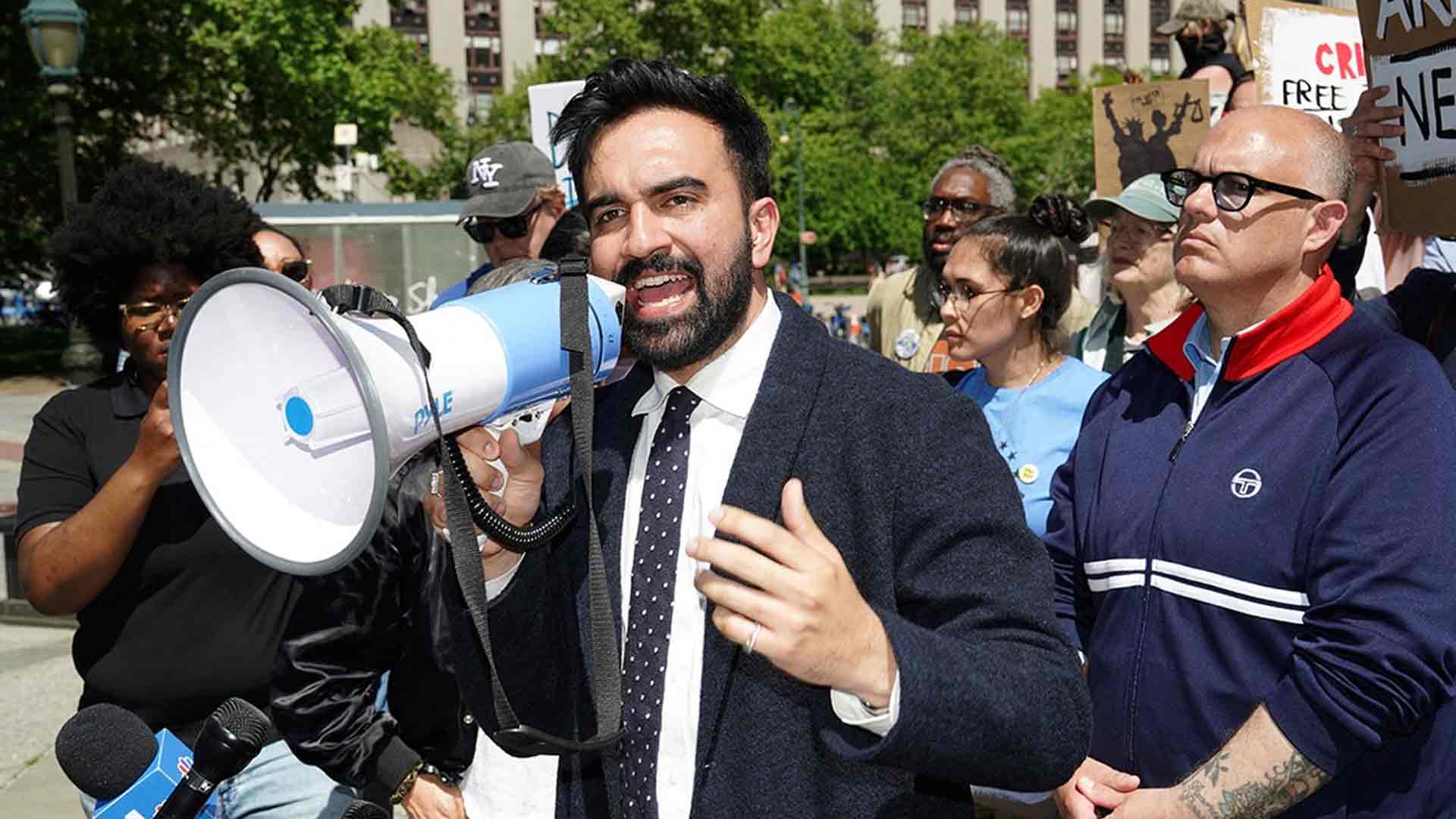
The difference between Mamdani and George’s campaign is that Mamdani has utilized the Democratic party apparatus, and in doing so, radicalized it like never before. Like many DSA (Democratic Socialists of America) cadres, he relied on the Working Families Party, founded in 1998 by disillusioned Democratic operatives and labour and non-profit organizers, to launch his bid in the Democratic primaries. Today, the ‘Mamdani corps’, which includes civilians, party affiliates and sympathizers who knocked at the doors of New Yorkers, number a staggering 50,000 volunteers. The latter went knocking on the doors of millions of New Yorkers. In class terms, Mamdani succeeded in banding together the middle classes in his favour. 47% college graduates, 48% Hispanics, 52% Asians, voted for Mamdani. However, Mamdani failed to cut ice with black and poor voters. Among the black voters, Cuomo polled 51% votes whilst Mamdani secured 34% votes. Even if we add Brad Lander’s progressive votes, there would be an uptick of just 3% points in Mamdani’s favour. The reason behind this paradox is not Mamdani’s failure to posit himself as the ally and spokesman of the city’s poor, but the sheer distrust that the most marginalized have developed for the political establishment. Any promises, lofty or otherwise, appear to them as wishful and far-fetched. This is the result of years of distrust and disillusionment that the American political establishment has meted out to them. Under neoliberalism, this is true for the whole world.
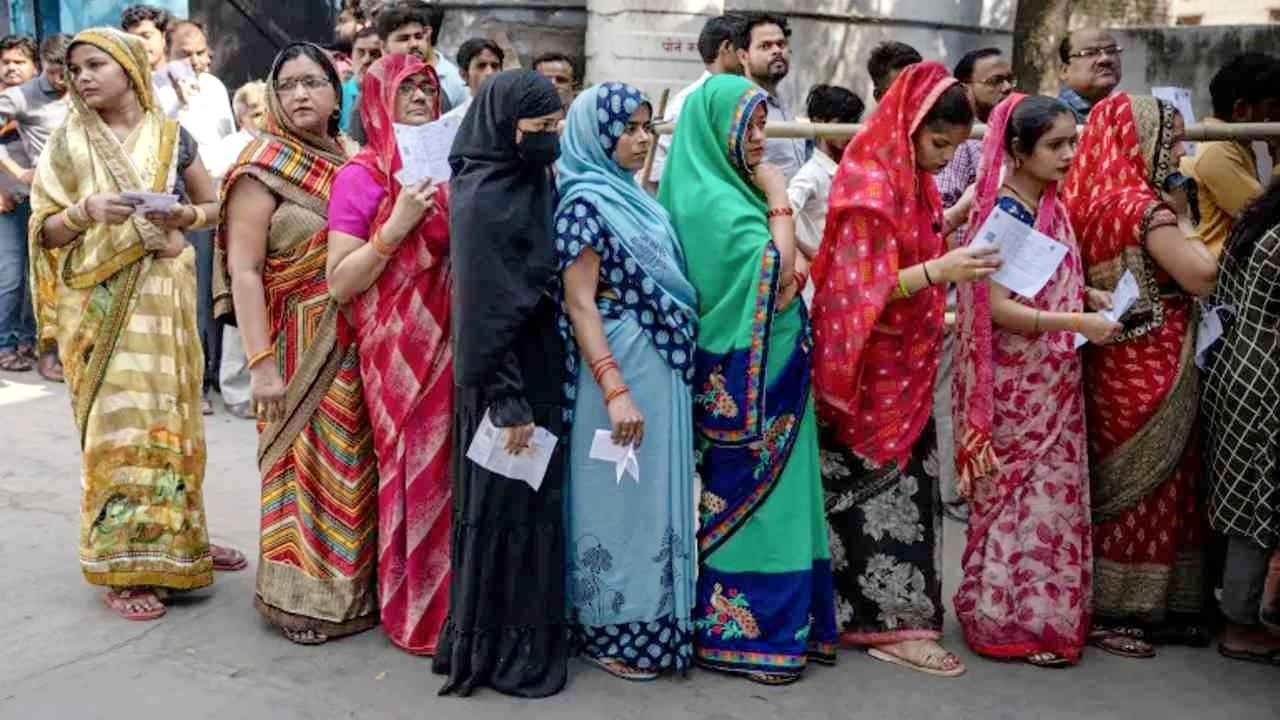
In India, the Bharatiya Janata Party has succeeded in building a coalition of non-dominant OBCs and non-dominant scheduled castes with its traditional upper-caste votes. The economic abandonment that the former two groups faced at the hands of neoliberal policies coupled with the sectarian apathy shown towards them by the existing leaders of the dominant OBC and scheduled castes, delivered them into the hands of the ugly gargoyle—RSS-BJP. In 2024 general elections, it took a frantic campaign by the INDIA coalition regarding the danger(s) posed to the Constitution by the RSS-BJP for affecting a little change in their favour. Scheduled caste votes dropped by 3% points for the BJP. The BJP received 31% of scheduled caste votes in 2024, against 34% in 2019.
Mamdani’s rise has had another major impact. It has enthused a huge section of American socialists and progressives who were hitherto enervated by the presence of Scylla (Democratic party establishment) and Charybdis (Trump and the MAGA movement) on both their sides. Last weekend, they organized the annual Democratic Socialists of America (DSA) national convention in Chicago, which welcomed tens of thousands of politically minded individuals from across the country to the unionized McCormick Place convention center. Many DSA-endorsed candidates like Jake Ephros, running for Jersey City council; Kelsea Bond, running for Atlanta city council; Jorge Defendini, running for Ithaca common council; and others who attended this convention are looking to replicate Mamdani’s success. Capitalism and its economic and ecological unviability are being questioned in these circles like never before. Chic social media clips of Bernie Sanders, Alexandria Ocasio-Cortez and others have also done well to challenge the MAGA digital warriors.
Does Mamdani’s victory hold any lesson(s) for the Indian left? America is a de facto two-party democracy, India is a de jure and de facto multi-party democracy. The unabashed nakedness of the rich in influencing the political system is a new thing that is being systematically crafted and drafted by the BJP, in America it is the hallmark of its political system. Mamdani has succeeded in cutting these two Gordian knots, albeit in a limited way. The modern industrial-capitalist city in South Asia is a tinderbox containing a combustible mix of class and caste oppression. And it is the big cities in India where the communists are the weakest. Historically, this was not the case. During the mid-1920s, the influence of the communists was such in the city of Bombay that during the Simon Commission protests the city’s police commissioner noted in his diary that without the communists ‘‘the Congress Party would not have been able to stage any demonstration in Bombay against the Simon Commission.’’ In a newly independent India, Delhi’s first Mayor, Aruna Asaf Ali, was a communist. Can the communists in India draw necessary lessons and inspiration from the Mamdani campaign in New York to strengthen the Left presence and impact in India's big cities?