
Commemoration of the Bi-centenary of the Birth of Jyotiba Phule and Centenary of Mahad Satyagraha
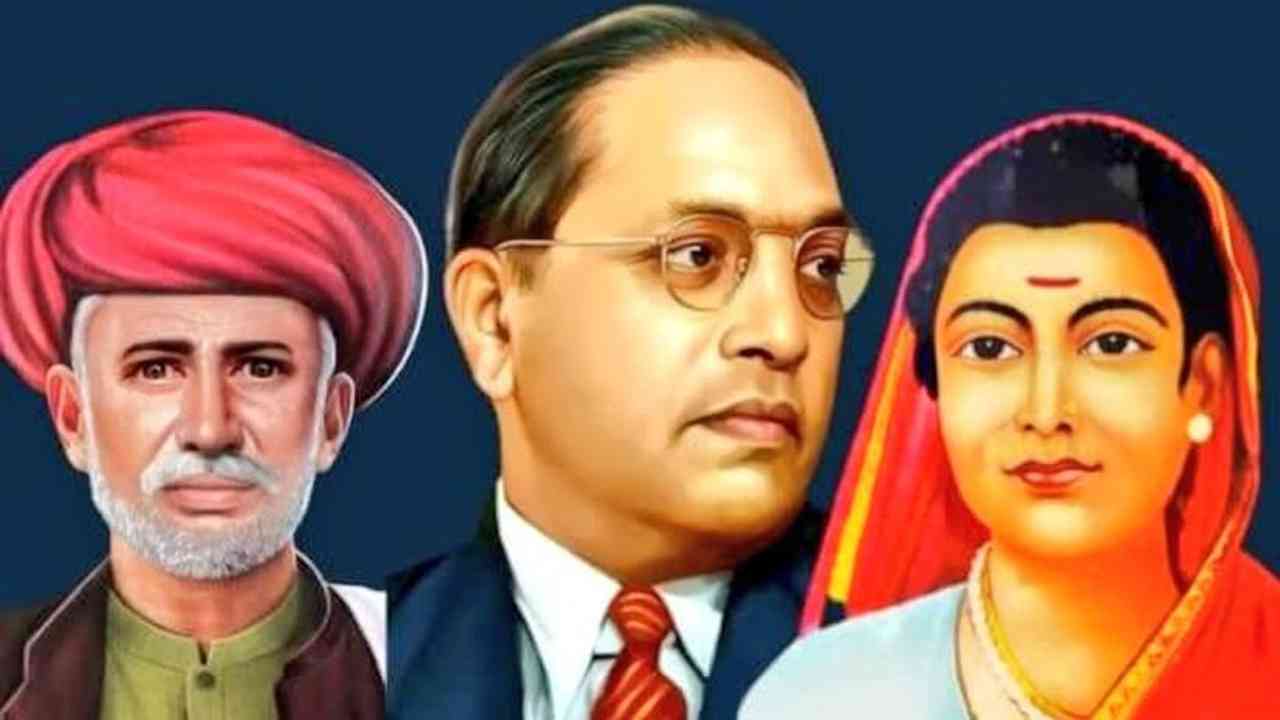
We are now just one year away from the bi-centenary of the birth of Jyotiba Phule, one of India's greatest social revolutionaries. In a society where the powerful and the privileged have been dominating for centuries by monopolising knowledge, imagine an initiative that weaponises education to challenge both caste hierarchy and patriarchy. Imagine a vision of a truth-based order to counter the obscurantist reign of lies and bigotry. Imagine the quest for scientific modern agriculture with farmers' rights guaranteed by a welfare state to end the plight of millions of debt-ridden poor peasants. In Jyotirao Phule, nineteenth century India had witnessed the blossoming of this radical idea which was nothing short of the beginning of a social revolution in a feudal and colonial setting.At the age of twenty-one, Jyotirao Phule and his wife Savitribai, with the help of friends Fatima and Usman Sheikh, established the first school in India for Shudra and Atishudra girls in Pune in 1848. Another school for girls of all castes followed in 1851, followed by an evening school for working people in 1855. To put this into perspective, 1848 was the landmark year when the Communist Manifesto made its first appearance, setting the global stage for stirrings of freedom from capitalist plunder and colonial brutality. Soon after, in 1857, large parts of India rose in revolt against the British rule, marking the first war of India's independence.
The fight for education in India in the 1850s was not merely a battle against illiteracy. It was a direct challenge against a social order that banned women in general and people of oppressed castes from accessing formal education. It was thus the beginning of a social upheaval without which colonial India could not really have a political awakening. Like Vidyasagar in Bengal, Phule in Maharashtra was also a great champion of widow remarriage. He even organised a barbers' strike to oppose forcible tonsuring of widows. In 1868 Phule threw open the water tank in his house for drinking by people dubbed 'untouchable'. This was nearly sixty years before Ambedkar would lead the Mahad Satyagraha to claim equal right to water as a free public good.
In 1873 Phule publishes his seminal work, ‘Gulamgiri’, against the caste system in India, and dedicates the book to the civil war fought to end slavery in America. In the same year he and his wife, Savitribai Phule, establish the Satyashodhak Samaj - or the Truthseekers' Society - to dismantle the caste hierarchy and promote the education of women and oppressed castes. Having had to withstand relentless assault from conservative quarters for his own views, Phule always stood up for other scholars and reformers facing social stigmatisation and vilification, be it defending Tarabai Shinde for her feminist writings or Pandita Ramabai who received a lot of flak for her conversion to Christianity.
Decades before Ambedkar would identify caste as being anti-national and call for the annihilation of caste, Phule asserted that "There cannot be a ‘nation’ worth the name until and unless all the people of the land of King Bali – such as Shudras and Ati-shudras, Bhils (tribals) and fishermen etc, become truly educated, and are able to think independently for themselves and are uniformly unified and emotionally integrated." Of course, this 'bahujan' vision of nationalism articulated by Phule in the latter half of the nineteenth century contrasts starkly with the religion-based Hindutva nationalism propagated by the likes of Savarkar in the early decades of the twentieth century. Unsurprisingly, Savarkar's heirs in power are today desperate to reduce Phule to just another 'social reformer' and appropriate him as an EBC icon.
The trail blazed by Phule continued to light the path of India's freedom, especially freedom from caste oppression and obscurantist dogma. Born just a year after Phule passed away in 1890, Ambedkar inherited and carried forward the legacy of Phule through his relentless crusade against caste discrimination and social injustice and single-minded focus on education and empowerment of women. Ambedkar recognised Buddha, Kabir and Phule as the three great masters who inspired him in his mission to establish the vision of humanism and rationalism and the core values of liberty, equality and fraternity. It is a befitting coincidence that the bi-centenary of Phule's birth will also mark the centenary of the historic Mahad Satyagraha (20 March 1927) and the public burning of the Manusmriti, the code of social slavery (25 December 1927).
Remembering Phule and Ambedkar today is not just about commemorating those inspiring chapters of India's history, it is about rekindling the radical spirit of the Phule-Ambedkar legacy to rejuvenate the battle for liberty, equality and fraternity in today's India. Education that both Phule and Ambedkar viewed as a fundamental tool of reason and social mobility is being recolonised as a preserve of the rich and the privileged and used as an instrument of ideological indoctrination, cultural uniformity and political control. The demand for discrimination-free education campuses is being mocked as an addiction to permanent victimhood. The Phule-Ambedkar vision of a welfare state guaranteeing the rights and benefits of India's farmers and workers is being trampled upon by a corporate state transferring all resources to ever fewer hands.
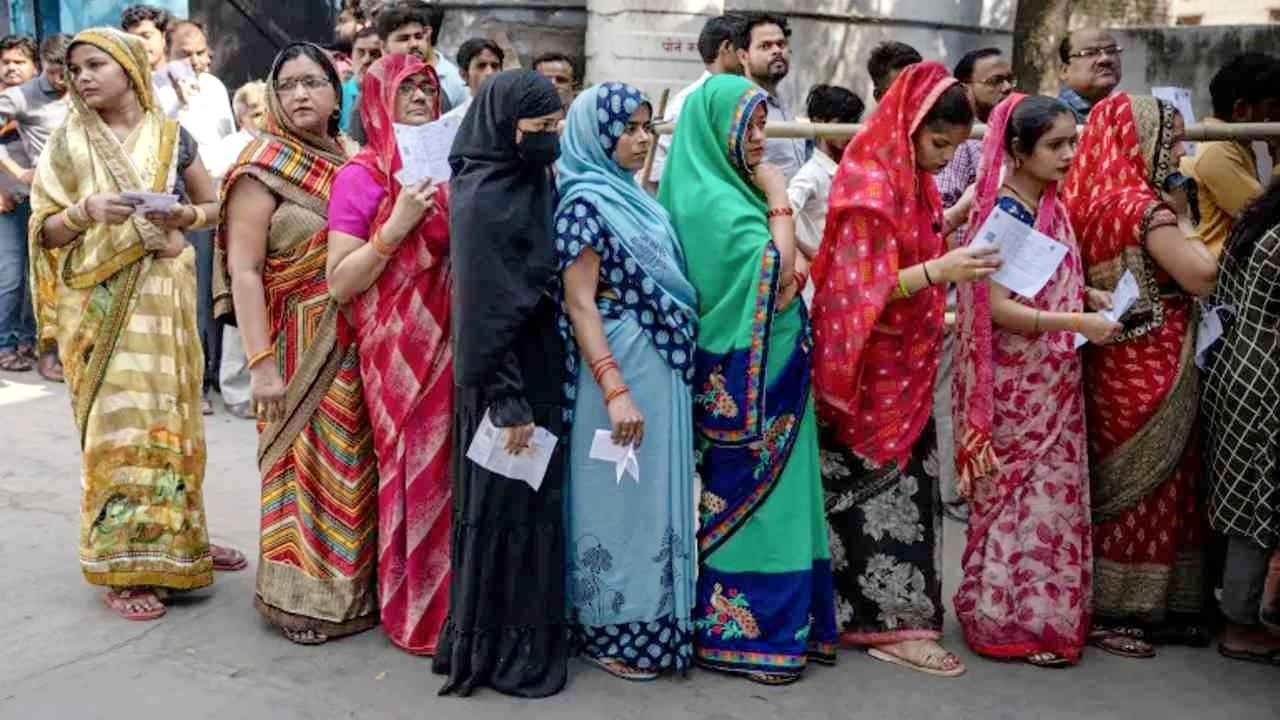
Adult suffrage guaranteed to every citizen as a constitutional sign of equality is no longer a universal fundamental right, with millions being subjected to systematic disenfranchisement and a life of utter uncertainty. And the Indian national identity advocated by Phule and Ambedkar on the basis of liberty, equality and fraternity - free from any division and discrimination in terms of caste, gender and creed - is being systematically refashioned on the basis of Brahmanical Hindu supremacy and cultural majoritarianism. Let the observance of the bi-centenary of Phule's birth, and the centenary of Mahad Satyagraha and the Manusmriti burning, become an occasion to spread the Phule-Ambedkar fire of courage, education and reason against the fascist reign of fear, hate and bigotry.