

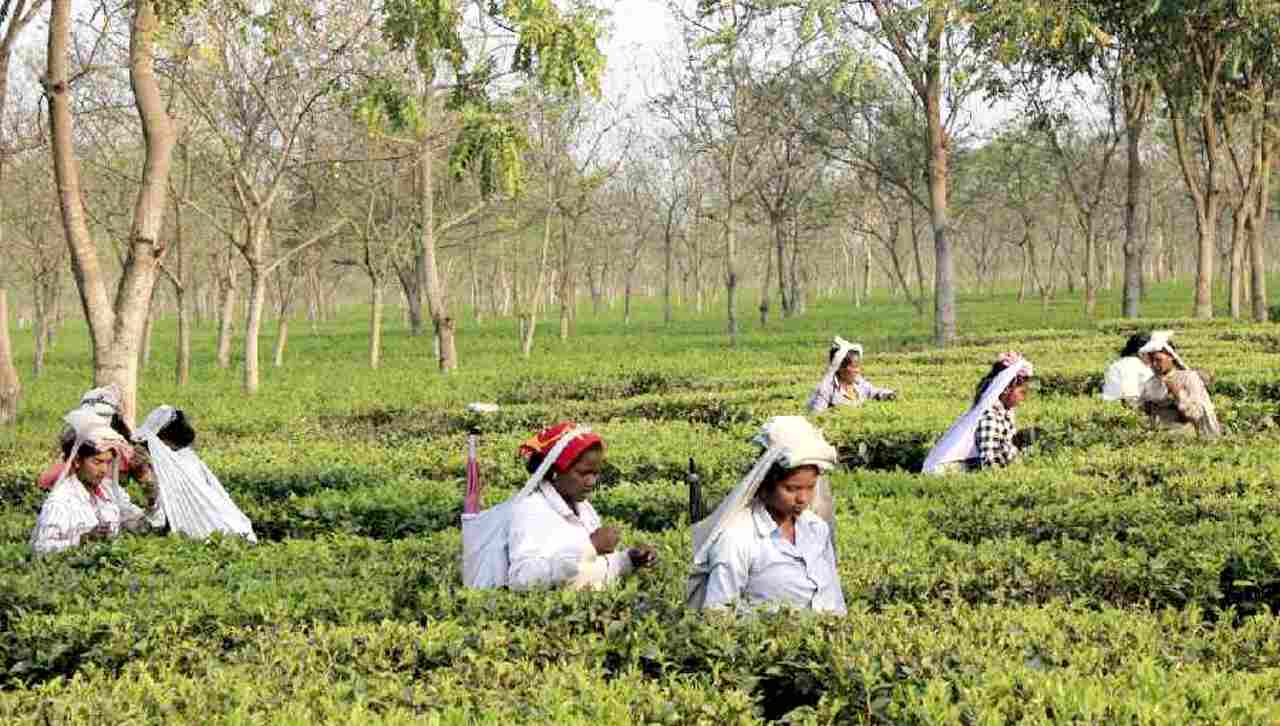
Despite being India’s second-largest labor-intensive, agricultural-based organized sector, tea workers remain deprived of their legitimate minimum wages. While the industry generates significant foreign exchange and amasses wealth for its leaders, tea workers—semi-employed yet hardworking—see no improvement in their living conditions. Since 2014, the West Bengal government has failed to establish a minimum wage structure, increase wages in line with rising costs, or secure land titles for permanent plantation workers, largely due to opposition from the garden owners’ organization, the Consultative Committee of Planters Association (CCPA).
On June 15, 2022, the Parliamentary Standing Committee on Commerce and Industry presented its 171st report, titled Issues Affecting the Indian Tea Industry, Especially in the Darjeeling Region, to the Lok Sabha and Rajya Sabha. The report highlights critical challenges facing the industry and its workers, offering recommendations to address them.
Key Observations and Recommendations
1. Low-Quality Tea Imports from Nepal
The report notes that low-quality tea from Nepal is entering India and being marketed domestically and internationally as premium Darjeeling tea, undermining the region’s Geographical Indication (GI) status, awarded in 2004 for its high-quality tea. This illegal practice devalues Darjeeling tea and reduces its market exchange rate. The Committee recommends:
Revising the 68-year-old India-Nepal trade agreement to strengthen oversight of imported tea.
Establishing a NABL-approved tea quality laboratory in Darjeeling.
Directing the Directorate General of Trade Remedies (DGTR) to investigate and impose anti-dumping duties on Nepalese tea, whether imported legally or illegally.
2. Subsidies and Tea Board Challenges
The tea industry’s development has stalled due to delays in subsidies from the Tea Board, exacerbated by the Union Commerce and Industry Department’s decision to withhold arrears for gardens lacking legal clearance. The Committee urges the Tea Board to streamline clearance processes. Notably, the report omits mention of the Rs 1,000 crore announced in the 2021–22 Union Budget for the welfare of women tea workers and their families, none of which has reached them.
3. Land Rights for Tea Workers
For the first time, a government report acknowledges tea workers’ settlements as their hereditary lands. Tea garden owners, operating on 30-year leased land, often claim workers’ homesteads as part of their holdings, denying workers land titles and access to schemes like the Pradhan Mantri Awas Yojana due to withheld No-Objection Certificates (NOCs). The Committee also notes owners’ resistance to designating land for workers’ cremation grounds or graveyards. It strongly recommends:
Enacting land reform laws to grant permanent land titles (patta-parcha) to tea workers for their traditional residential lands.
4. Wage Disparities
Tea workers in North Bengal earn far below the national minimum wage, leading to a poor standard of living and a declining development index for the industry. While the report initially references a “living wage,” it ultimately recommends establishing a minimum wage structure through tripartite negotiations involving workers’ organizations, employers, and the government. It also calls for immediate implementation of the Code on Wages (2019) to ensure workers receive in-kind wage components and other dues. However, the report overlooks the Code’s provision to extend daily working hours from 8 to 12, which could further burden workers.
5. Modernization and Welfare
The Committee proposes modernizing the Tea Board by replacing its bureaucratic hierarchy with an executive director to enhance autonomy and efficiency. It also recommends:
Mechanization and financial packages through NABARD to revive the Darjeeling tea industry.
Ensuring workers’ access to welfare schemes, health services, housing, and fair working conditions, as the Tea Garden Act (1951) remains inadequately enforced.
Creating a databank to streamline workers’ access to government schemes and implementing the Labour Code (2020).
Supporting small tea gardens, which produce over 50% of India’s tea, through incentive schemes, GI tags for their produce, and organizing them into producer organizations.
Establishing an e-Auction Centre in Darjeeling to improve marketing benefits for small producers.
The Wage Struggle
For nine years, the Tripartite Advisory Committee, formed in 2015 under pressure from workers’ movements, has failed to establish a minimum wage structure for the tea industry. Despite submissions of wage calculations based on the commodity price index, the state government claims it has not received these accounts, delaying action. The labor minister’s repeated false statements and the government’s alignment with employers reveal a deliberate effort to suppress this demand. On August 1, 2023, the Calcutta High Court ordered the state to announce a minimum wage structure within six months, a deadline that expired on February 1, 2024, without progress. The Minimum Wage Demand Committee, comprising trade union leaders and civil society, launched a widespread poster campaign in 2025, labeling the government’s inaction as “10 years of fraud.”
The Land Grabbing Crisis
Over the past two to three decades, tea plantation lands have increasingly been repurposed for commercial ventures, particularly near urban centers like Siliguri and Darjeeling. Since the eviction of workers from Chandmani Tea Garden in 2003, illegal construction has proliferated. A 2019 law permits 15% of tea garden land to be used for “tea tourism” and related commercial activities, with leases extended from 30 to 99 years. Up to 150 acres of land are now used for non-tea purposes, including hotels, resorts, private schools, and hospitals. For example:
A multinational luxury hotel chain built a five-star hotel on 24 acres of New Chamta Tea Garden (1867), far exceeding the allocated 5 acres, with local complicity. Other gardens, such as Bagdogra (5 acres), Matigara (40 acres), Kamala (50 acres), Singhijhora (22.26 acres), Okai (10 acres), Takvar (0.18 acres), and Mohorgaon-Gulma (145.86 acres), have been repurposed for similar ventures.
The state government’s recent decision to convert unused leasehold lands into freehold properties for corporate sale threatens further land alienation. Luxury hotels and resorts are also under construction in Makaibari and Jangpana tea estates, while housing projects dominate Matigara and Nishchintapur gardens.
Workers’ families, traditionally allowed to cultivate unused garden land, face eviction by government-backed promoters and officials. In the Dooars, lands near the Teesta Irrigation Project are exploited for illegal sand and dolomite mining, except in Totapara, where workers resistance halted such activities. Tribal and Nepali temporary workers are also being evicted from forest settlements near tea gardens, reclassified as national parks or wildlife reserves.
Workers’ Resistance
The Joint Forum, representing 26 trade unions, has spearheaded resistance against land grabs and wage suppression. On January 13, 2023, it resolved to oppose all attempts to seize tea garden land, whether through the Tea Tourism Act or other means. Workers’ conventions in Darjeeling (January 29, 2024), Bagdogra (February 11, 2024), and Chalsa (February 12, 2024) sustained this movement, demanding minimum wages and land titles.
The state’s Cha Sundari housing scheme, offering one-room, 358-square-feet houses, was rejected by workers, who value their traditional, open-air habitats for livestock, vegetable cultivation, and communal living. A new Rs 1.2 lakh grant for house construction has also failed to gain traction, as workers lack land ownership. The Joint Forum demands that workers receive titles to their existing labor-line lands, prompting the government to reconsider its approach.
On March 30, 2025, the Land-Livelihood-Save Environment Movement convention in Siliguri united tea workers, farmers, forest dwellers, and hill communities to demand protection for their land, livelihoods, and environment. Key demands included freeing North Bengal’s river basins from sand and stone mafias and halting low-lying dams on the Teesta. The Joint Forum’s emergency meeting in June 2025 outlined a movement-oriented program for June, July, and August, signaling intensified protests.
The tea industry in West Bengal faces a deepening crisis, marked by wage suppression, land alienation, and inadequate government action. Tea workers, particularly women, endure conditions reminiscent of the British colonial era, with their rights to fair wages, land, and dignity systematically denied. The Parliamentary Standing Committee’s recommendations offer hope, but their implementation remains uncertain. The workers’ resolute movement, led by the Joint Forum and supported by civil society, signals a powerful resistance against the primitive accumulation of capital. As the tea belt buzzes with protests in June and July 2025, the struggle for justice in North Bengal’s tea gardens continues to gain momentum.
(This article was first published in Workers Resistance, Sept-Oct 2025 Issue)