
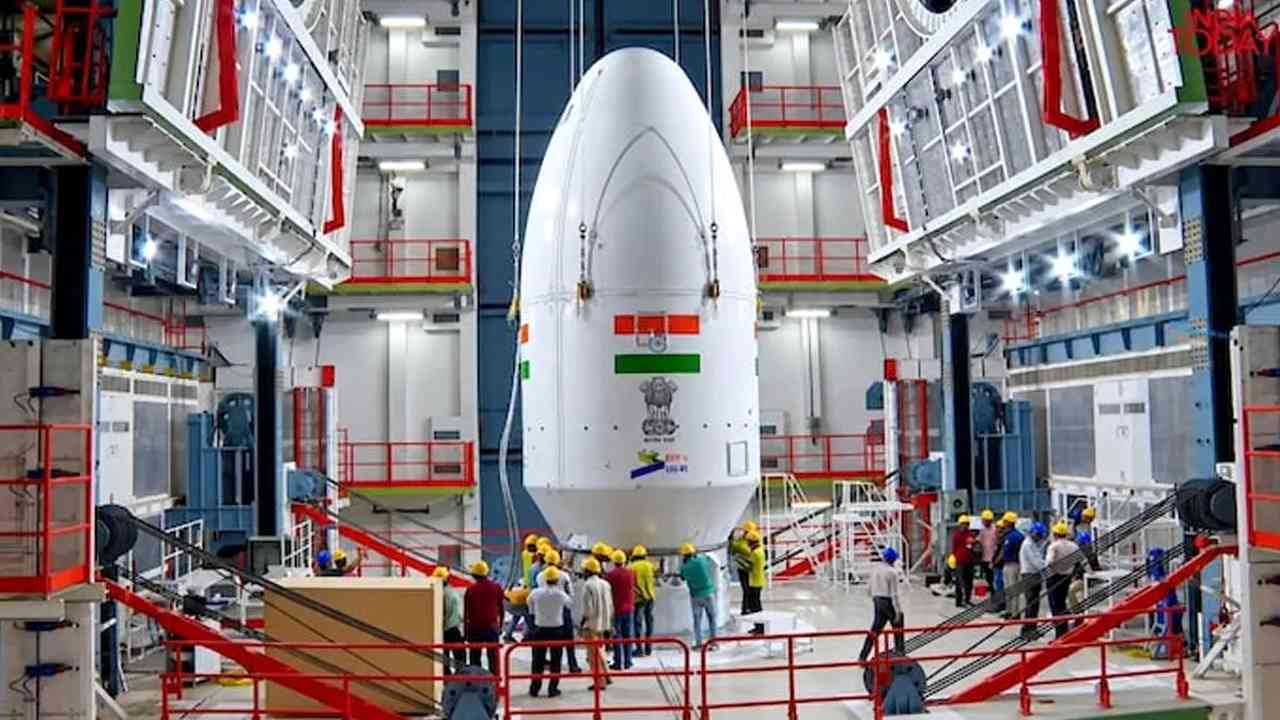
This controversy was preceded by another disturbing development. In July 2026, reports that more than 100 scientists and technical personnel, including senior scientists associated with major missions such as Chandrayaan and Gaganyaan, had left ISRO made headlines. Around 80 departures were reported from the U R Rao Satellite Centre in Bengaluru and about 20 from the Vikram Sarabhai Space Centre in Thiruvananthapuram. The Department of Space (DoS) had to issue an office memorandum acknowledging a spate of requests for voluntary retirement and resignation from Group-A Scientific/Technical personnel. Centres were told that cases involving important projects should be forwarded to the DoS for a decision. The exodus is particularly significant because ISRO was already operating with 2,613 vacancies against 18,142 sanctioned posts, including 1,636 scientific and technical vacancies.
These two developments should not be viewed as separate phenomena. Both are rooted in the restructuring of India’s space sector that began with the Union government’s 2020 reforms, which opened space activities to substantially greater participation by non-government entities, and was subsequently institutionalised through the Indian Space Policy 2023. The policy establishes a new division of functions among ISRO, the Indian National Space Promotion and Authorisation Centre (IN-SPACe), NewSpace India Limited (NSIL) and non-government entities (NGEs). The present controversy over ISRO’s changing institutional role and the contemporaneous crisis of personnel retention therefore need to be understood as interconnected manifestations of this wider restructuring.
A closer reading of the Indian Space Policy 2023 makes the direction of this restructuring explicit. NGEs, Indian as well as foreign, are permitted to undertake end-to-end space activities, including operating satellites, disseminating remote-sensing data, manufacturing and operating launch vehicles, and establishing and operating launch infrastructure. IN-SPACe, meanwhile, is constituted not merely as an authorising agency but as an active facilitator of this private ecosystem. It is empowered to authorise privately owned or leased launch facilities, promote industrial clusters, enable NGEs to access facilities and remote-sensing data created through public expenditure, and identify ISRO-developed technologies to private entities. Correspondingly, ISRO is directed to focus primarily on advanced research and development and to “transition out” of manufacturing operational space systems, with mature systems transferred to industry for commercial exploitation. Furthermore, NSIL, a PSU under the DoS, is explicitly assigned the task of commercialising space technologies and platforms created through public expenditure. Thus, the whole design is nothing but to drain the public money and other resources to develop the private space sector. The public expenditure continues to sustain the costly processes of scientific research, technological development and infrastructure creation, while the resulting infrastructure, mature technologies, facilities and operational activities are made available for the profit making by the private sector. The issue, therefore, is not simply the entry of private firms into the space sector, but the fact that the expensive scientific and technological capacities created through public money are being converted into opportunities for private valorisation.
The opening of the space sector to the private players has created, virtually for the first time in India, a substantial private market for the highly specialised scientific and technical labour historically concentrated within ISRO. By mid-2026, the country had around 400 space start-ups, and scientists who had left ISRO pointed to substantially better remuneration and professional opportunities in the private sector as important reasons for doing so. Thus, private capital is not gaining access merely to technologies and infrastructure developed through public expenditure. It is also able to recruit the skilled labour-power produced and accumulated within the public institution over decades. At the same time, the policy-induced uncertainty over ISRO’s future role can only aggravate the problem of retention as manufacturing and operational functions progressively migrate outside the organisation. The relationship between commercialisation and the resignations is, therefore, not accidental.
What is happening in ISRO, however, is not an isolated phenomenon. Rather it forms a part of the much larger framework called liberalisation-privatisation-globalisation (LPG) reforms of 1991. Gradual disinvestment, commercialization, and opening of public sectors to private investments have since become more explicit day-by-day. The Union government's New Public Sector Enterprise Policy, 2021 declares its intention to “minimise the presence of Government” in public-sector enterprises and retain only a “bare minimum” public-sector presence even in strategic sectors. Significantly, these strategic sectors include both “Atomic Energy, Space and Defence” and “Transport and Telecommunication”.
The experience of BSNL is particularly illustrative. Its 2019 restructuring package combined asset monetisation with a large Voluntary Retirement Scheme (VRS) aimed at reducing employee costs, under which tens of thousands of workers left the company. Interesting to note that, in each case (BSNL then and ISRO now), VRS acts precisely as an instrument through which labour flexibility is introduced into public enterprises in the wider context of privatisation. The whole process has now reached even the nuclear sector: the SHANTI Act, 2025 permits private entities to build, own and operate nuclear power plants and undertake specified activities that had historically remained overwhelmingly within the state sector. The developments in ISRO must therefore be located within a broader critique of the LPG trajectory itself. Seen from this perspective, the Indian Space Policy 2023 is not an isolated administrative reform, but another step in a long-term policy direction that progressively opens publicly created assets, infrastructure, knowledge and productive capacities to private accumulation. The struggle against such restructuring of ISRO, therefore, cannot be separated from the larger opposition to the LPG framework itself.
The Indian Space Policy 2023 was approved by the Union Cabinet in April 2023 and not enacted as legislation by Parliament. In fact, the DoS is now preparing a Space Activities Bill that would give statutory form to the authorisation and regulatory architecture of the sector, including the powers of the proposed IN-SPACe Board and the regulation of NGEs. In this situation, every politically conscious group and individuals, who are on the people’s side, must oppose the Space Policy itself. When the Space Activities Bill will eventually be placed before Parliament, the present policy direction should therefore, confront a much wider democratic test.