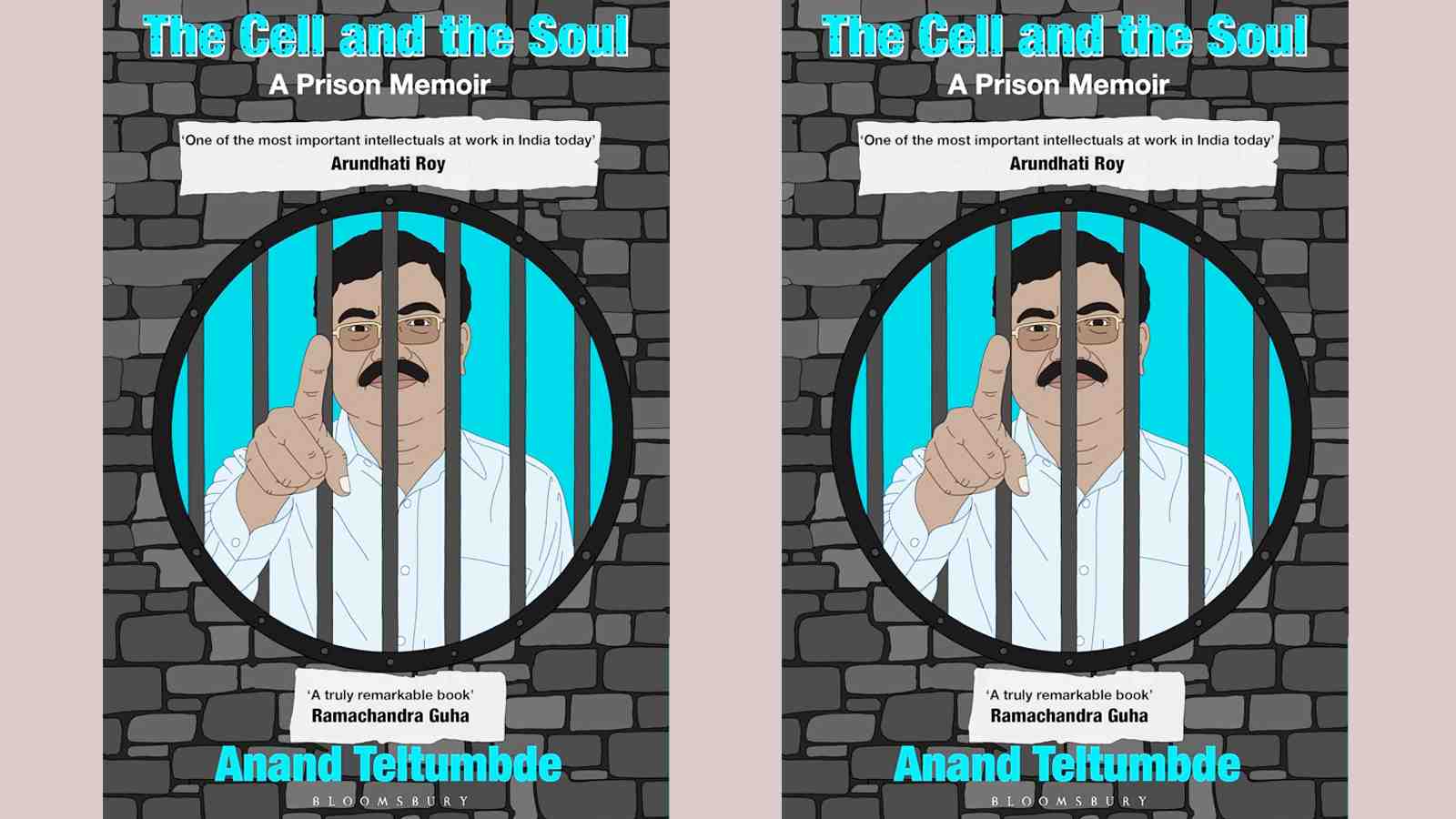
But then the Bhima Koregaon episode itself is Kafkaesque, reading about the arrest and incarceration of the lawyers, professors, human rights and cultural activists is like wading through Franz Kafka’s celebrated novel The Trial all over again. If one follows the BK or the Delhi ‘Riots’ case, this is the pattern throughout, a system of courts, police, jails, investigative agencies manipulated to suit the diabolical designs of the rulers. Take the case of Stan Swamy who could not drink water without a sipper but was not allowed to bring one into the prison. Only after several appeals to the court and national and international outrage, he was allowed to have it that too after two months had already elapsed. Jail authorities found out devious ways to torment the prisoners. In a malaria-prone jail like Taloja, suddenly one day all mosquito nets were confiscated. All incoming or outgoing letters were vetted not only by the jailor and superintendent but also the NIA and the Anti-Terrorism cell thus grossly invading one’s privacy. Inmates faced severe water shortage as they were allowed only one bucket of water (roughly 15 litres) instead of the mandated 135 litres. Sagar Gorkhe of ‘Kabir Kala Manch’ who was implicated in the same case wrote a letter to Maharashtra home mnister comparing the jail’s condition to a torture camp. He along with all the BK accused went on a day’s hunger strike. Teltumbde and others even petitioned the court to allow the use of mosquito nets. Strangely the court concurred with the prison officials’ argument that the nets were a ‘security threat’ and advised the inmates to use mosquito repellents instead, and to add salt to the wounds, asked them to buy it from the canteen, making it accessible only to prisoners who could afford it. Other demands too were not fulfilled. Water supply improved only temporarily, and letters continued to be vetted.
Teltumbde recounts the plight of Stan Swamy, Varvara Rao, a prisoner named Bhola and mourns the death of his brother Milind to whom the Memoir is dedicated. We have a first-hand account of how gross and systematic negligence led to Stan’s death and severely endangered Varvara Rao’s life. Bhola’s case is emblematic of lakhs of undertrials (94% of prisoners in Taloja jail were undertrials, much higher than the national average of 77.1%) languishing in India’s prisons. He didn’t even know why he was arrested. Always smiling, he helped the inmates by doing several odd jobs. At night his cries moaning his desolate, helpless mother pierced the prison’s walls. One such night he hanged himself and was summarily dismissed as ‘mental’ by the jail authorities. This only underlines the heartlessness of the prison environment. Not much is known about Milind Teltumbde who died in a major police offensive in the Gadchiroli forest. While he was vilified in the media as an extremist, we come to know that he was an upright young man brought up in extreme poverty, who later took up political activism. We learn of his valiant role in the protests against the Khairlanji massacre, and various workers’ movements in the Chandrapur district.
The author makes a case for abolition of prisons. He cites the example of various Nordic countries and developed countries like Switzerland where reintegration into the society by education and skill-building has reduced crimes and led to the abolition of prisons. In New Zealand Maori cultural practices have been incorporated into rehabilitation programmes as they are over represented in the prison population. However considering the Himalayan problems that exist in Indian society, the mere thought of abolition of prisons here seems to be a utopia.
Most importantly are the author’s thoughts on Babasaheb Ambedkar’s legacy. According to the author followers of Ambedkar revelled in symbolic gestures but show little concern for real-life atrocities. As per the NCRB, 2022 report on an average three dalits are killed and a dozen dalit women raped every day. But the Ambedkarites are not much concerned about this. Instead they become agitated when the author is arrested because he happens to belong to the great man’s family. For instance even the gruesome Khairlanji massacre in September, 2006 failed to move the community. But two months later when a statue of Ambedkar was desecrated thousands of protestors stopped the Deccan Queen train and burnt its bogies. The author argues that any disrespect shown to Babasaheb must be opposed but the same alacrity should be shown to oppose atrocities on dalits. Teltumbde writes two major currents define Ambedkar thought - statism and anti-communism. As Ambedkar authored the constitution, it is assumed that the state operates according to its guidelines, hence one must support the state. Any wrong doing of the state is blamed on the Manuwadi nature of the bureaucrats. The second current stems from historical division between Ambedkar and the communists. He realised this ideological bias when his brother Milind was killed. At that time the jailor in Taloja jail happened to be a dalit. When he came to know that Milind was author’s ‘real’ brother he was surprised. According to him dalits were supposed to be only Ambedkarites and not communists or anything else!
An inmate who was very influential, probably involved with some gang, one day asked the author why he writes ‘Ambedkar’ and not ‘Dr. Babasaheb Ambedkar’. He was initially taken aback but then he realised that the perception among many dalits was that he was not respectful enough to the chief architect of India’s constitution. He explained that honorifics like Mahatma, Babasaheb, Lokmanya were sparingly used and avoided in serious writing. Gandhi is simply written as Gandhi. And many PhD holders, including he himself did not use the prefix ‘Dr’ in their names. The root cause of the person’s question lies in hero-worshipping Ambedkar. The fact is Babasaheb himself warned against Bhakti. The author quotes his final speech to the Constituent Assembly: “Bhakti in religion may be a road to the salvation of the soul. But in politics, Bhakti or hero-worship is a sure way to degradation and to eventual dictatorship.” Again in a speech ‘Ranade, Gandhi and Jinnah’, delivered in 1943 he cautions, “Heroes and hero-worship is a hard but unfortunate fact in India’s political life ... we ought to be more cautious in our worship of great men.” As a nation we obviously have not heeded his words, otherwise how can one explain the bhakti cult sweeping through our political landscape creating non-biological demi-gods.
The author confesses to a dilemma he regularly faces in his life. In Ambedkarite circles he is known as a Marxist and in Marxist circles as Ambedkarite. There are two aspects to this: the tendency to label a person by some ism; and the unfortunate rift between ‘Ambedkarism’ and Marxism. Teltumbde refuses to be identified with any ism. He describes two types of isms: “ideological (liberalism, socialism, fascism) and eponymous (Marxism, Gandhism, Ambedkarism).” He believes such identity-based isms foster ideological inertia. Followers of these isms presume that faithfully following a great personality or his ideas is sufficient to solve all problems. This attitude can turn dynamic ideas into a dogma. The author believes in today’s rapidly evolving world no single ism is comprehensive enough to unravel modern complicacies. These thoughts are valuable resources but not road maps.
As regards the historical genesis of the divide between Ambedkarism and Marxism, he traces it to the ideological rift within the Republican Party of India (RPI) in the late 1950s. “The ‘correct’ faction identified constitutionalism as Ambedkar’s legacy, disavowing the ‘incorrect’ faction’s agitational methods as communist-influenced. Thus, Ambedkarism was born not merely as a tribute but in direct opposition to Marxism.” This trend persisted with the split among the Dalit Panthers. Instigated by the state this trend only got inflated in later decades. However, Teltumbde urges these two traditions to introspect and to come closer by burying their differences. Citing three instances from history, he shows that significant impact was created when the two trends have worked together: in the anti-Khoti movement of 1938; in the working class strike against Industrial Disputes Bill also in 1938; in the land satyagraha of 1959 led by Dadasaheb Gaikwad. All three movements have been discussed in more details in the author’s celebrated book Iconoclast.
Finally the author questions the relevance of nationalism in today’s world. He says the concept has become a tool in the hands of the power-hungry politicians. Since Narendra Modi came to power in 2014 the tribe of anti-nationals has grown exponentially. Anybody who dissents, opposes the government is an anti-national. By that argument 60% of Indian electorate who did not vote for BJP are anti-nationals. Owing to this ism, wars are being fought, millions are dying in riots, terrorist attacks, coups, and are being displaced from their homes. Vital resources are being frittered away in fuelling jingoism, turning the poor against the poor. On the other hand vast sections of the population continue to languish in perpetual misery. The author opines that a global movement of people declaring themselves as anti-national could erase fear, the most potent weapon of authoritarian regimes. He states, “Only by transcending the artificial constructs of nationalism can we hope to build a world that prioritises humanity over narrow, exclusionary identities.”