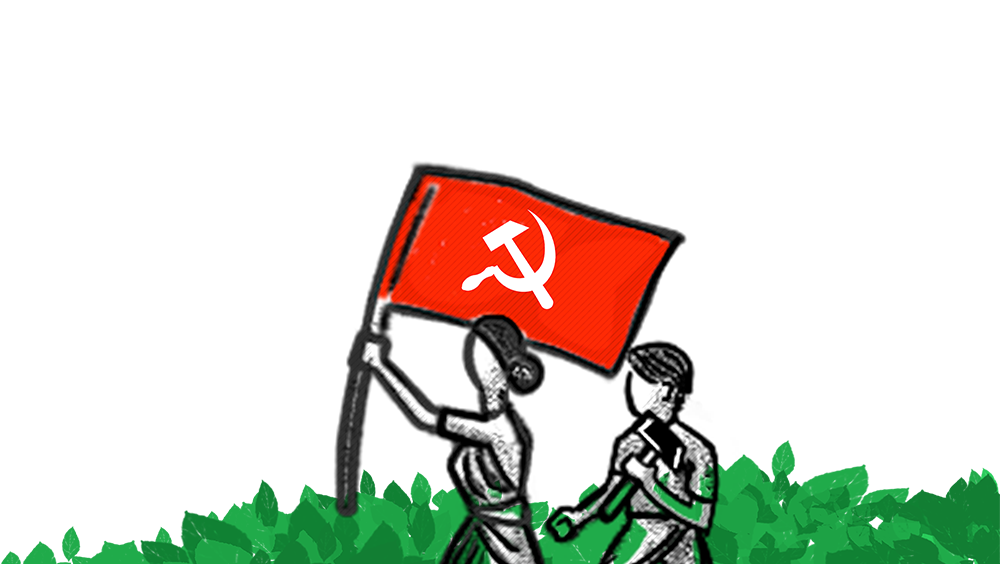
The National Student League for Democracy (LMND), born out of the 1998 Reformasi movement, sees this not as a historical misjudgement but as a direct assault on the values of democratic resistance. For LMND, Suharto’s name should not be enshrined in golden ink but should stand as a warning that unaccountable power always corrodes justice. LMND rejects this narrative of heroism outright and vows to continue mobilising, educating and resisting any attempt to whitewash the past.
Suharto’s Crimes Against Humanity Cannot Be Erased, Nor the Call for Justice
Raising Suharto’s name to the rank of national hero is not an act of honour. It is a betrayal of history and a distortion of the spirit of reform. It is not a tribute but an attempt to bleach the brutality of a regime built on the blood and suffering of its own people. To elevate Suharto is to preserve history in the formalin of deception.
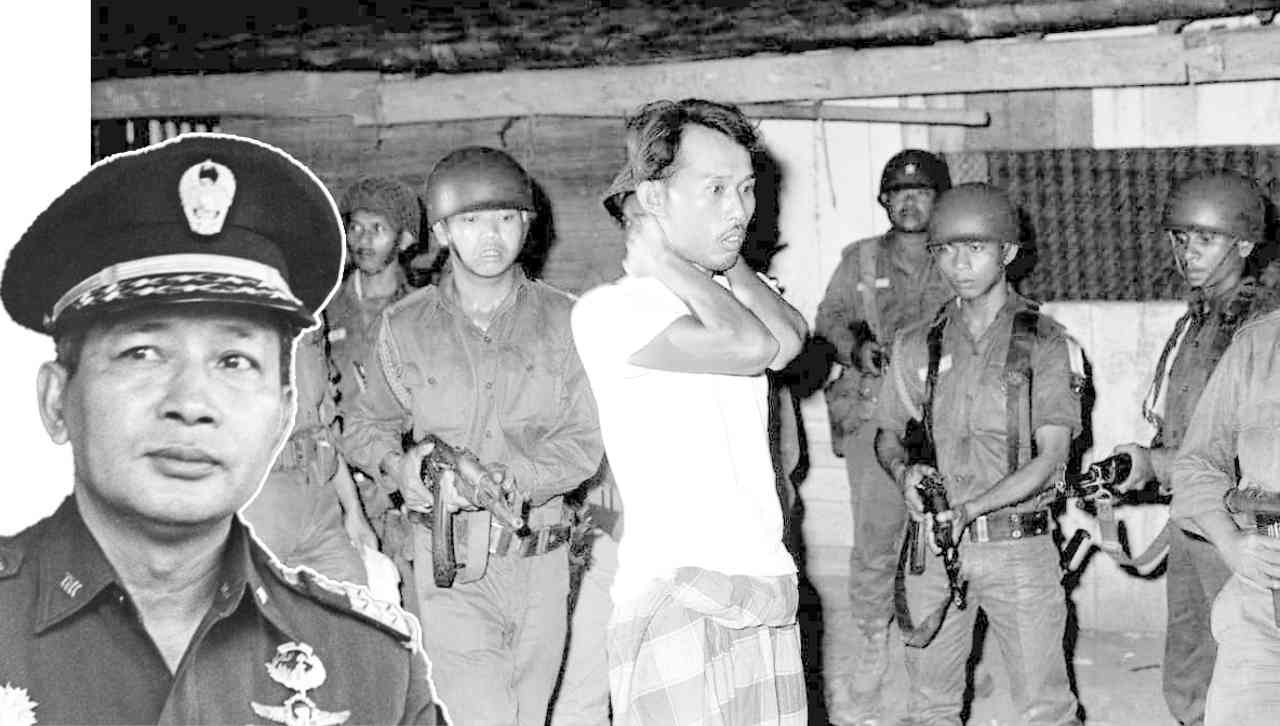
For LMND, awarding Suharto the title of hero suggests that Indonesians should thank a ruler who, in their view, surrendered national sovereignty to foreign interests and presided over mass atrocities and killings against communists, dissenters and progressive voices during the 1965 to 1967 genocide, as well as the tragedies of Tanjung Priok, Talang Sari, the Petrus killings and the disappearances of activists such as Wiji Thukul, Suyat and Bima Petrus Anugerah. For LMND, Suharto’s legacy is not only one of human cruelty but also of economic, social and political suffocation that kept citizens far from the decisions shaping their future.
LMND itself was born out of resistance to the New Order. The regime’s crimes are the trauma that shaped its ideological foundation. To understand LMND’s position is to reopen the dark pages of Suharto’s rule, an era defined not only by authoritarian governance but by a systematic architecture of oppression.
Suharto’s crimes were against humanity. His regime rose over mass graves, beginning with the anti-communist purges of 1965 to 1966 that killed hundreds of thousands and imprisoned or exiled millions. The violence continued through military operations in Aceh, Papua and East Timor, the Petrus shootings and the bloodshed of Tanjung Priok. Under Suharto, violence became a political tool that was normalised and institutionalised.
He cultivated corruption, collusion and nepotism as the core of state management. Wealth flowed through monopolies, foundations and mega-projects into the hands of his family and cronies, who controlled the nation’s strategic sectors. The deep inequality Indonesia still faces today is rooted in this system.
His regime is known for the deliberate silencing of political life, where parties were forced to merge, Golkar became the machinery of power, the single principle of Pancasila became a tool to enforce uniformity and the press and university campuses were suppressed. Dissent was criminalised and the people were turned into passive subjects of an authoritarian state.
Under the banner of development, forests were destroyed, mines were handed to foreign corporations and business cronies, and indigenous communities were driven from their land. Indonesia’s ecological crisis today is part of this legacy.
The centralised and corrupt economic management pushed the nation into collapse in 1998. When the crisis hit, it was the poor who suffered most as prices soared, industries collapsed and unemployment surged.
With such a record, Suharto is not a hero. He is a warning. History must not be bent to serve the nostalgia of power. Honour belongs to those who defend humanity, not those who violate it. LMND rejects any attempt to sanctify Suharto’s legacy and remains committed to resisting the rise of authoritarianism. The lessons of the New Order must not be forgotten, and the struggle to protect democracy must not be allowed to fade.
(The author is the Secretary General of the National Executive of the National Student League for Democracy, Indonesia (Sekjend EN-LMND).