
From inordinate delays to hundreds of cancelled flights without any prior intimation, hapless passengers had to bear it all for days on end. What made it immeasurably worse was the criminal loot unleashed by other airlines, the Tata group's Air India in particular, and the hospitality sector, especially hotels near airports, by weaponising 'surge pricing'. It was only after several days of predatory plunder that the government cared to announce a cap on surge pricing. While the Indigo Airlines is evidently at fault for non-compliance with the government regulation and its absolutely irresponsible and arrogant attitude to the customers, the Modi government is also equally complicit for its complete abdication of responsibility. Mere fixation of FDTL norms in accordance with international standards makes little sense if the government does not have the necessary preparation and firm leadership to ensure their enforcement. With the Indigo armtwisting the government into further deferring the implementation of the FDTL norms to end the disruption of flights, the concern for pilot fatigue and passenger safety again takes a back seat. The question also arises as to why the government did not defer the deadline earlier to avoid this huge crisis in this peak passenger season? Or has the whole crisis been allowed to enable some restructuring of India's aviation sector to enable some other big corporates to grab bigger slices of the aviation pie?
Beginning as one of India's several low-cost carriers in the 2010s, over the last decade Indigo Airlines has emerged as India's biggest player in the civil aviation sector. The group's graph jumped even as the aviation sector was hit badly by the Covid pandemic, facilitated perhaps by the group's generous purchase of electoral bonds. Indigo now has a whopping two-thirds market share, operating on close to 80% routes in India (900 out of 1,131 sectors). In 514 of these 900 sectors, Indigo is the sole operator. The Air India group, now controlled by the Tatas, is the second in the domestic aviation sector with 26% market share. Between them Indigo and Air India thus command more a than 90% market share of Indian skies.
India's domestic aviation sector is now the world's third largest market, next only to the United States of America and China. The number of airports has doubled in India in the last ten years, but safety, passenger amenities and corporate governance have already emerged as major concerns. In India, the airports are now increasingly being privatised and transferred to the Adani group while Indigo and the Tatas dominate the airlines. The government role is being progressively reduced from that of an operator to merely being a facilitator - more of a mute spectator complicit in profiteering than a proactive regulator ensuring fair play, quality and rule of law. And this pattern of privatisation and monopolisation now encompasses virtually the entire economy - if the Ambanis are all over the telecom and petrochemical sectors, the Adani group controls energy and infrastructure. The state still leads in banking and insurance only to prop up and bail out the corporate cronies of the government with mega loans, massive write-offs and generous purchases of shares and bonds.
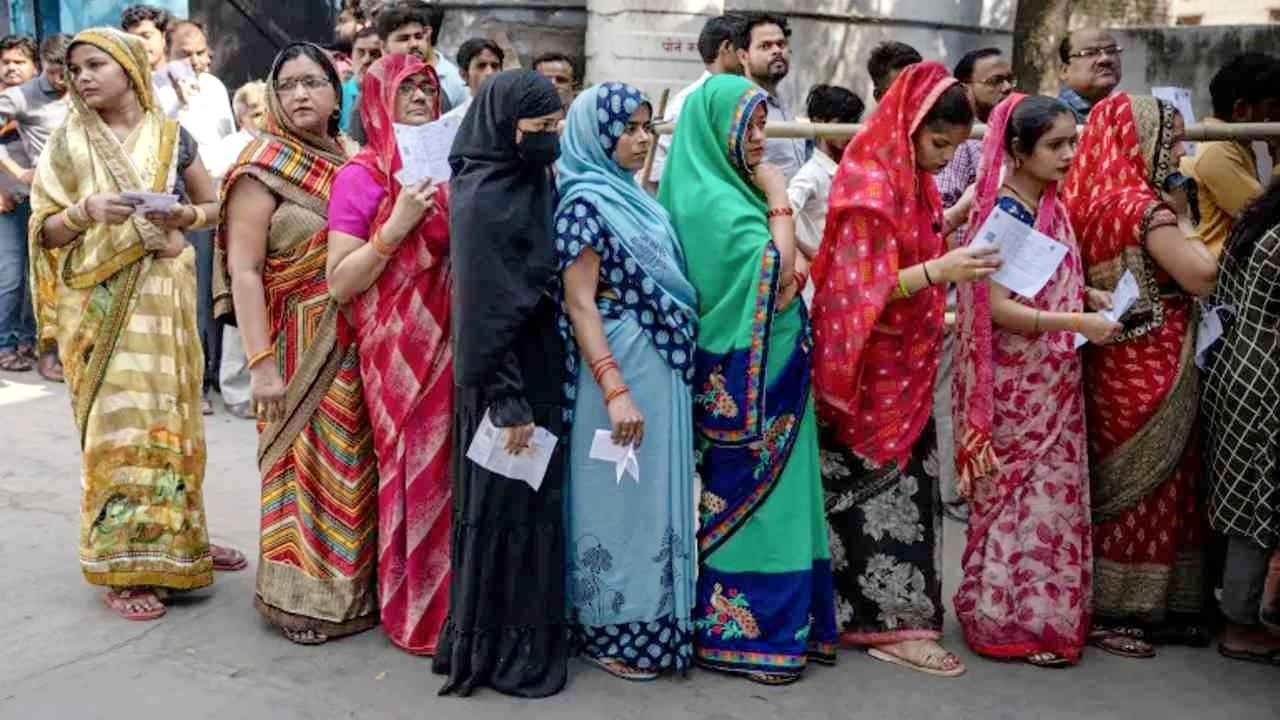
Despite the Modi government's 'aam aadmi' rhetoric - the aviation promotion project is called UDAN (Ude Desh ke Aam Aadmi - let the common people fly) - India's air travellers still belong mostly to the privileged sections of the society from upper and upwardly mobile middle classes. If such consumers can be taken for granted, it is not difficult to understand how the government and India's corporate sector treat common Indians. Indeed, half the population has already been reduced to the status of disposable 'beneficiaries' who can now be disenfranchised at will through the ongoing campaign of electoral purge.
For far too long India has debated the relative merits of public and private sectors equating the private sector with efficiency and the government with accountability. The Indigo crisis should now open our eyes to the Indian reality in the Modi era, the mess that is created when the government abdicates all accountability and presides over unmitigated corporate inefficiency and profiteering in the name of 'ease of doing business'. Alongside the battle for saving the constitution and parliamentary democracy, we the people of India must also join hands to rescue the Indian economy from this crony corporate mess. It is time for India's farmers, workers, consumers - disempowered citizens at large - to forge a broad-based unity to prioritise people's welfare and people's rights over state-sponsored corporate profiteering and plunder.