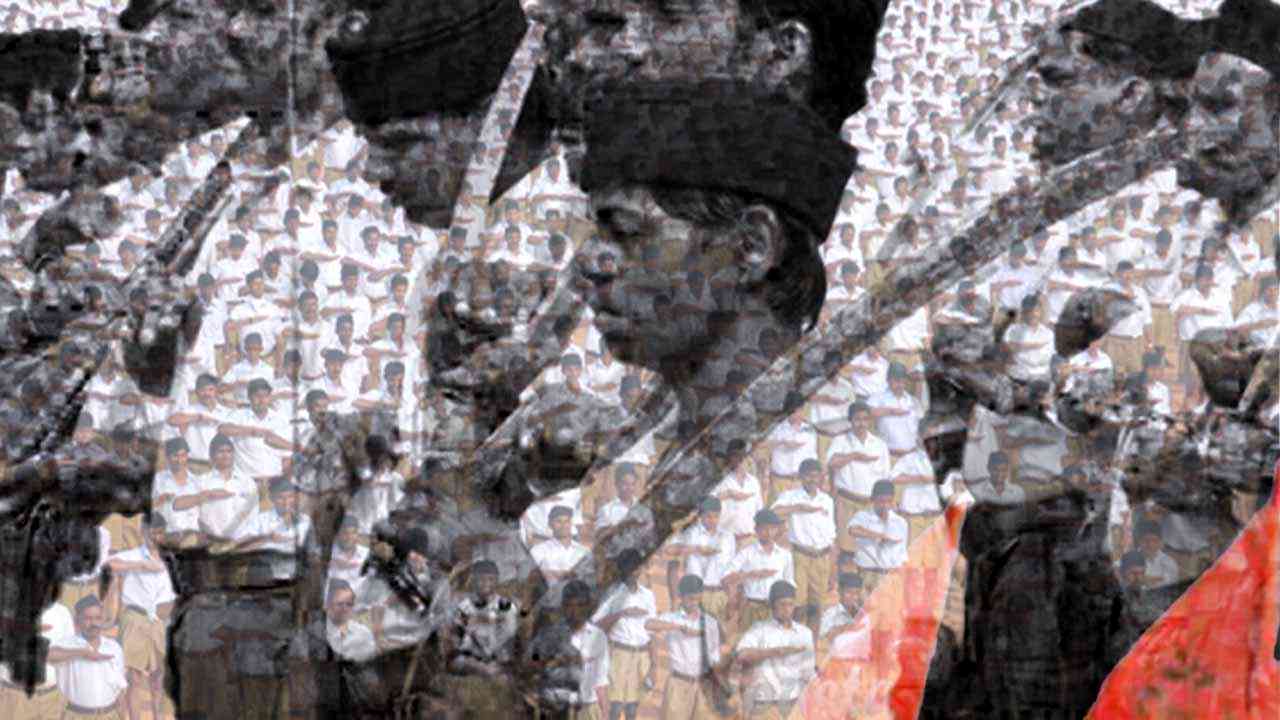
"The RSS has largely crossed out items on its short term agenda -- the Ram temple is up, article 370 is gone, the education policy is now tailored as per its wishes, a new penal code is in place and a uniform civil code has been passed in at least one state. The champion of Hindutva even reports Ghar Wapasi numbers or the number of those who converted to Hinduism from other faiths, largely Islam, in its annual report. Government officials are now free to come out in the open if they are Swayamsevaks. A ban until now ensured that their RSS affiliation remained secret, albeit an open one as hundreds of government officials were actively involved with the Sangh anyway. That includes the judiciary. A Calcutta High court judge revealed his life long association with the RSS in his retirement speech.
"Metaphorically, the RSS’s expansion and transformation in the Modi years is perhaps best captured by its New Delhi headquarters, Keshav Kunj. The ageing complex built in the 1960s has been replaced by twin towers each a dozen story high and equipped with modern facilities including meeting rooms, conference halls, library and living quarters. The chief himself has his office and living space near the top." [1]
Behind the stupendous achievements lies a history of phased political evolution, a long tortuous journey fraught with major challenges including three bans.
IV
A Long March to Power: A Diversified Lineage of Leaders
An interesting way to trace the evolution of the behemoth may be to check the lineage from the first sanghachalak to the present one. Walter K. Andersen and Sridhar D. Damle has given us precisely that in their scholarly work 'The RSS: A View to the Inside' . Drawing liberally on it, we are offering you the following brief account.
Dr. Keshav Baliram Hedgewar (Doctorji),
Medical practitioner,
Born in Nagpur ,
Head of RSS: 1925- 40.
The founder leader had an intellectual stock-in-trade ready at hand in the works of Lalchand, and Savarkar, while the Hindu Mahasabha was already active in Nagpur. However, he had in his mind something special. He firmly believed that first it was necessary to unify the deeply divided Hindu community. To attain this goal, he developed a system to train a cadre (men only, of course) to bring about Hindu unity. More than an ideologue or propagandist, he was an activist and grassroots organizer hailed as ‘Keshav Sanghnirmata’ (Keshav -- the Architect of the Sangh).
Hedgewar’s most original and enduring contribution to the ideological and structural development of the RSS remains the ubiquitous shakha -- the basic building block on which rises the impressive superstructure of the Sangh. This bottom-up approach aimed to create cohesive communities capable of national revival, without overt political agitation. He described shakhas as daily gatherings focused on physical fitness, discipline, patriotism, and devotion to societal welfare—the core of the RSS's "Sangh Mantra."
The Sangh’s Unique Source of Strength
Every Sarsanghchalak emphasized the central role of shakhas in different ways according to his priorities; here are a few samples.
The founder leader conceived shakhas as a direct response to the deep deficit of social capital in Hindu society, which he saw as divided by caste, region, and sect, lacking trust and collective action. He designed them as egalitarian, caste-blind spaces where young men from diverse backgrounds could build bonds through shared activities, gradually instilling a sense of civilizational responsibility. Deoras observed, "Shakha is not just a ritual that it is being made out to be by many people—it is the core of our work for social equality." He linked shakhas to eradicating untouchability and urged volunteers to practice equality in the daily gatherings. While Deoras was sincere in his urging, the incumbent chief was eloquent in his brand of smart politicking. During an interaction in Varanasi, he said all Indians, including Muslims, are welcome to attend shakhas provided they come as "sons of Bharat Mata, members of the Hindu society", chant “Bharat Mata Ki Jai” and show respect for the bhagwa jhanda. (TOI, April 07, 2025).
Scholarship on RSS also acknowledge the shakhas as the lifeblood of the Sangh Parivar. In an interview with Nilanjan Mukhopadhyay from The Federal on 9 October 2025, historian Tanika Sarkar observed, “The drills, including marching and coordinated displays, are rooted in tradition. They instill a sense of empowerment, discipline, and community participation.” Extending the scope of the discourse beyond shakhas per se, she underscores the importance of grassroots activities in general: “For young women, marching alongside rituals like worshipping an eight-armed Durga reinforces a symbolic readiness to defend the nation, even if no actual combat occurs.” Nevertheless, there is some decline in the role of the shakhas, she notes, “While its numerical and social reach has expanded, its role is no longer as critical as it was in the early decades up to the Ram Janmabhoomi movement.”
The implications are clear. The old engine of physical grassroots mobilization remains the lifeblood and nerve system of the RSS, but in the age of smart phones and social media it has started losing steam.
Himself an ex-congressman though, he was emphatic about keeping his organisation aloof from politics, to focus all attention on building a militant, battle-ready formation as the basis of unifying the broader Hindu community against the Muslims. However, he sensed that a section of volunteers would in any case come from the major anti-British agitations. So, to keep his flock together, the pragmatist in him permitted members in their individual capacity to participate.
MS Golwalkar (Guruji),
Biologist and professor of zoology,
Born in Ramtek near Nagpur, Head of RSS: 1940-73
Hedgewar’s handpicked successor and the longest-serving sarsanghchalak, Golwalkar guided the RSS through the turbulent times of Independence and partition. Following the assassination of Mahatma Gandhi, the organisation was banned from February 1948 to July 1949 and Golwalkar was arrested, along with many others. It was under his supervision that several affiliates including the BJP were formed (see below).
Madhukar Dattatreya Deoras (Balasaheb),
Law School graduate,
Born in Nagpur ,
Head of RSS: 1973-94
Deoras pressed for involvement in politics and social reforms, which led to serious disagreements within the organisation. Nevertheless, in his early speeches after becoming Sarsanghachalak, he spoke of the need for the RSS to act assertively on behalf of the poor and disadvantaged. His denunciation of caste discrimination was a significant ideological shift within the RSS. In course of the formation of the Janata Party, he also prodded RSS leaders to initiate contacts with Muslim groups to foster friendship through inter-dining etc. However, this move proved to be primarily a pragmatic response to the need of building the broadest unity against Indira Congress rather than an ideological shift. No wonder, it had little practical impact.
Prof. Rajendra Singh
(Rajju Bhaiyya),
Born in Shahjahanpur,
Uttar Pradesh,
Doctorate in Physics,
Head of RSS: 1994-2000
The first non-Brahmin and non-Maharashtrian head of the RSS, Rajju Bhaiyya continued the activism initiated by Deoras and stood out in shaping broader Hindu unity cutting across castes and sects. As general secretary of the organisation in Uttar Pradesh as well as at the national level, he was in a better position to interact with all BJP leaders. By the mid-1990s, the RSS head become much more entwined with the BJP. Therefore, Singh was a much more public persona than his predecessors in terms of interacting with the media and taking direct interest in the BJP's functioning. With the rapid growth of the RSS affiliats, he also put in place the a mediatory mechanism to address policy differences among them.
KS Sudarshan,
Born in Raipur, Chhattisgarh, Electronics and Telecommunications Engineer, Head of RSS: 2000-2009
Sudarshan oversaw the rise and fall of the Vajpayee government and an unprecedented rate of growth of the affiliates, especially the Bharatiya Mazdoor Sangh and the Bhartiya Kisan Sangh. He was sympathetic to the economic affiliates’ call for self-sufficiency and their opposition to the BJP's increasing support for liberalisation – privatization – economic globalisation. In an effort to establish a dialogue with India's largest religious minority, guided the formation of the Muslim Rashtriya Manch in December 2002, soon after the Gujarat riots. He was instrumental also in the creation of the anti-globalist Swadeshi Jagran Manch. Known for being openly critical of the BJP whenever necessary, following the defeat of the BJP-led coalition in the 2004 elections he bluntly suggested that the old guard represented by Advani and Vajpayee should step down and let younger leaders take charge.
Mohan Bhagwat,
Born in Chandrapur, Maharashtra,
Trained in veterinary science, Head of RSS: incumbent since March 2009
Bhagwat’s main emphasis seems to be to make the RSS a big tent that can accommodate many different views. A pragmatist and (unlike Sudarshan) a diplomat, he intensified the use of the mediation system to handle policy differences, some of them significant, among the various RSS affiliates. He has sought to push the policy agenda of the BJP government in a more populist direction by accommodating the views of the economic and cultural affiliates. Referring to Modi, Bhagwat cautioned RSS members to be wary of a cult of personality, and reminded them that the first loyalty must be to the RSS. We have some other observations on his style of functioning elsewhere in this article.
The above account clearly shows that all six chiefs – not just a few of them – made distinct contributions to make RSS what it is today. Taken together, they displayed great adaptability, resilience and creativity - - and that without making even the slightest compromise with the final goal. They aimed at the sky and built modestly on the ground. They started with just seventeen volunteers in one shakha at Nagpur, and expanded the network to the entire country (according to Panchajanya and other official sources, RSS had over 4 million members and 73,000 shakhas as of 2024). They single-mindedly built the core body for decades and then pushed forward to form the necessary affiliates one by one. Not that all these was pre-scheduled: the new initiatives or shifts in policy were but responses to what they considered the need of the hour.
V
From Influence to Power
The rise of Narendra Modi in 2014 represents the BJP’s as well as the RSS’s political apex. The distinction between cultural and political spheres has largely dissolved. RSS cadres are getting appointments in research institutions, universities, and various other bodies; books published by RSS affiliates are being prescribed in schools. Simultaneously, state institutions, media, and education are being recast to reflect a Hindu civilisational narrative. The RSS has wholeheartedly embraced the neoliberal economic theory that the Modi government is vigorously implementing, cutting taxes on the rich, cutting social welfare spending, opening doors to foreign capital, deregulating the economy and privatising public sector. This has led to a persistent economic crisis for the mass of the people while handing over super profits for the elite corporate sections.By fusing religion and nationalism, the RSS claims to restore India’s “true identity”. Over the past 100 years, its ideology and politics have remained essentially the same, but the nuances of expression (aggressiveness versus moderation, for example) have swayed widely even within brief periods. Its politics is not just a series of episodic agitations/campaigns, parliamentary struggles and running governments. It seeks not only to rule India. The mission is to reshape the idea and social fabric of India from the grassroots and now from the seat of state power too.
Its politics today seeks not merely representation within liberal parliamentary democracy, but a redefinition of democracy along majoritarian religio-cultural lines with unmistakable fascist features. But the project remains riven with contradictions — between caste hierarchy and Hindu unity, traditionalism and modern governance, moral discipline and populist politics.
VI
The Modi-Shah Regime: Fascism Front and Centre
In terms of ideological orientation, political complexion and organisational structure, the RSS has always been a communal Fascist organisation with peculiar Indian characteristics. However, it is only during the uninterrupted rule of the NDA government that the real contours of the specific brand of Indian Fascism are gradually unfolding before our eyes.To start with the class character of the present regime. From day one, its brazenly anti-people pro-big-capital, anti-national pro-imperialist policies, schemes and legislations (the current nuclear bill for instance) -- not to speak of irresponsible measures like note ban and sudden lockdown -- are making life more and more miserable for the aam aadmi. The steady decline of our country in global indexes on economic inequality, budgetary provisions on health and education, democratic rights, etc. drive home the fact that ours is a government of big capital, by big capital, for big capital, which is closely aligned with unproductive and parasitic classes/sub classes like feudal forces and the land mafia.
Secondly, Fascism entails extreme centralisation of power. Under the Modi Shah regime, this tendency expresses itself in numerous ways. We are witness to the centre usurping federal powers of the states through different schemes and legislations, governors obstructing bills passed by state legislatures and other means. Persistently disturbing the scheme of division of powers in the parliamentary form of government, the executive is always busy bypassing the legislature and confronting the judiciary, simultaneously trying to promote RSS people to higher positions. Within the BJP itself, the Modi Shah duo has ensured that there exists no other power centre within the party. This is why in the high seat of party president, which used to be graced by veterans like Rajnath Singh, Nitin Gadkari and Amit Shah, we now find non-entities like JP Nadda followed by Nitin Nabin.
Thirdly, Fascism means unfreedom and fear. In India, the bedrock of our democracy – free expression, independent thought and transparent governance – is under attack. We are witnessing a quiet, continuous erosion of freedoms, both online and offline, even as the bogey of "national security" is routinely invoked to justify illegal use of Pegasus and prolonged confinement of dissenters.
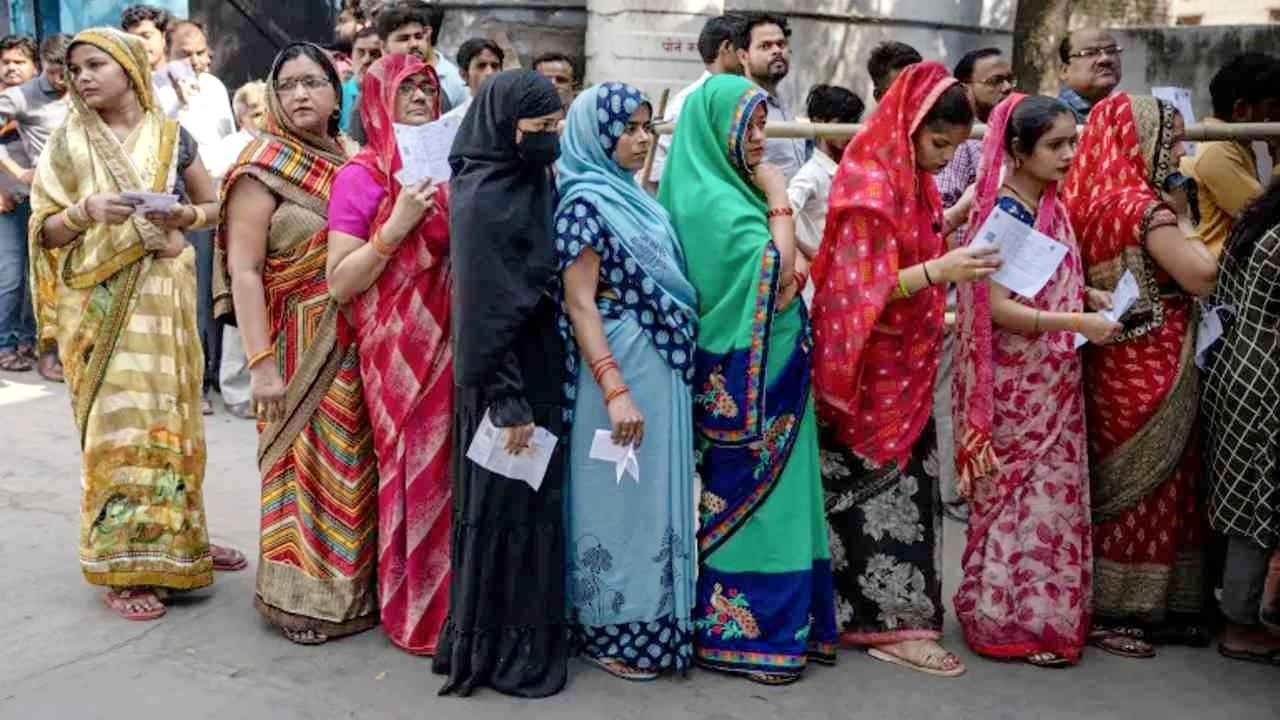
As for other general features of Fascism -- such as mass surveillance combined with special intensive surveillance over supposed “Urban Naxals” and others -- mention must be made of Fascists' fear of free and fair elections. After consolidating his power, Hitler simply abolished elections. This is what the Fascists in India also wants to do, so that they can enjoy power for 40 - 50 years, as Amit Shah famously said. Since they do not have the power to do that, they are trying to change the rules of the game with proposals like One Nation One Election. Even that is not immediately possible, so they are taking recourse to measures like SIR, manipulation of voter lists, possibly also EVMs, and other underhand, unethical means.
In addition to such patently Fascist techniques, the BJP has used many other clever methods to push up its numbers in the parliament and state assemblies by employing authoritarian means including blackmailing. Since 2014, it systematically leveraged political defections, emerging as India's most successful ‘poacher’ of political birds. This strategy has fueled its pan-India expansion, particularly in the South, East, and Northeast, by absorbing opposition leaders—often under pressure from central agencies or electoral incentives. However, success rates for defectors have been mixed, with recent joiners facing higher rejection by voters.
VII
It takes Two to Tango
Historically, the RSS as the ideological progenitor has enjoyed a special status of reverence from all the affiliates, the more so because most of the senior office-bearers in the front organisations are RSS products. This remains true to this day.However, Modi's popularity and uninterrupted rule has, at least in public perception, significantly tilted the delicate balance between the parent body and the all-important political front in favour of the latter. Occasional frictions between the powerful heads of the two organisations are also open secrets. Nevertheless, objectively they are very much interdependent, growing on the basis of mutual symbiosis. Subjectively, both leaders, belonging to the same age group and having decades of experience as RSS pracharaks, are mature enough not to upset the applecart at the summit of success. So it looks like (caveat: nothing is certain in politics) occasional false steps notwithstanding, the Tango show will go on, at least till the Sun shines.
A clear signal of this was sent out in late November last year, when Modi and Bhagwat ceremonially hoisted the Dharma Dhwaj atop the Ram Mandir in Ayodhya. The Prime Minister described the event as a “turning point” in India’s cultural consciousness, while the Chief Minister of UP remarked that the saffron flag was a symbol of India’s national religion. According to The Hindu, 25 November 2025, the joint appearance, something quite rare, is perceived to be a public display that old wounds are healing.
Achilles’ heel
In this brief overview, we have attempted to gain an objective understanding of the RSS and its evolution over the last hundred years. In a recent lecture in Kolkata Mohan Bhagwat has once again said that the job of the RSS is not to be one more Hindu organisation but to organise the Hindu society in its entirety. Bhagwat even added that viewing the RSS through the lens of the BJP is a big mistake. In other words, he would like us to believe that while the RSS specialises in organising the society, the BJP deals with political power and the state, and the two should be treated separately and not as an integral whole. On a superficial plane Bhagwat may sound right because the RSS has now been working for the last one hundred years while the BJP was formed only in 1980. But that does not separate the RSS from the BJP or the BJP from the RSS. The BJP, as much as its predecessor, the Jan Sangh, is nothing but the political arm of the RSS.Like the RSS phrase of 'cultural nationalism', this 'social vs political' dichotomy is another clever RSS attempt to camouflage the intimate connection between the RSS and the BJP. The RSS has always not just worked in tandem with its political arm but has also controlled it and benefited immensely from the state whenever and wherever the Jan Sangh and the BJP came to power. Let us not forget that while the Jan Sangh had merged into the Janata Party in 1977, it was the issue of the continuing loyalty of the erstwhile Jan Sangh section within the Janata Party to the RSS that led to the collapse of the Janata Party government and creation of the Bharatiya Janata Party precisely on the basis of its identification with and allegiance to the RSS.
The enormous growth of the RSS and its activities and its increasing control over the entire range of state institutions, governance apparatus and academic and policy-making architecture of the country are a direct outcome today of the Modi government's continuing stint in power since 2014. The centenary of the organisation which was banned by the state in the wake of Gandhi's assassination has been openly celebrated by the state in 2025. How long will the 'social' and 'cultural' camouflage of the RSS be able to serve as a safety net or safety valve for the BJP whose continuing reign in power proves itself increasingly disastrous for the people in the economic and governance domains, not to speak of the social and cultural spheres the RSS prefers to reserve for itself?