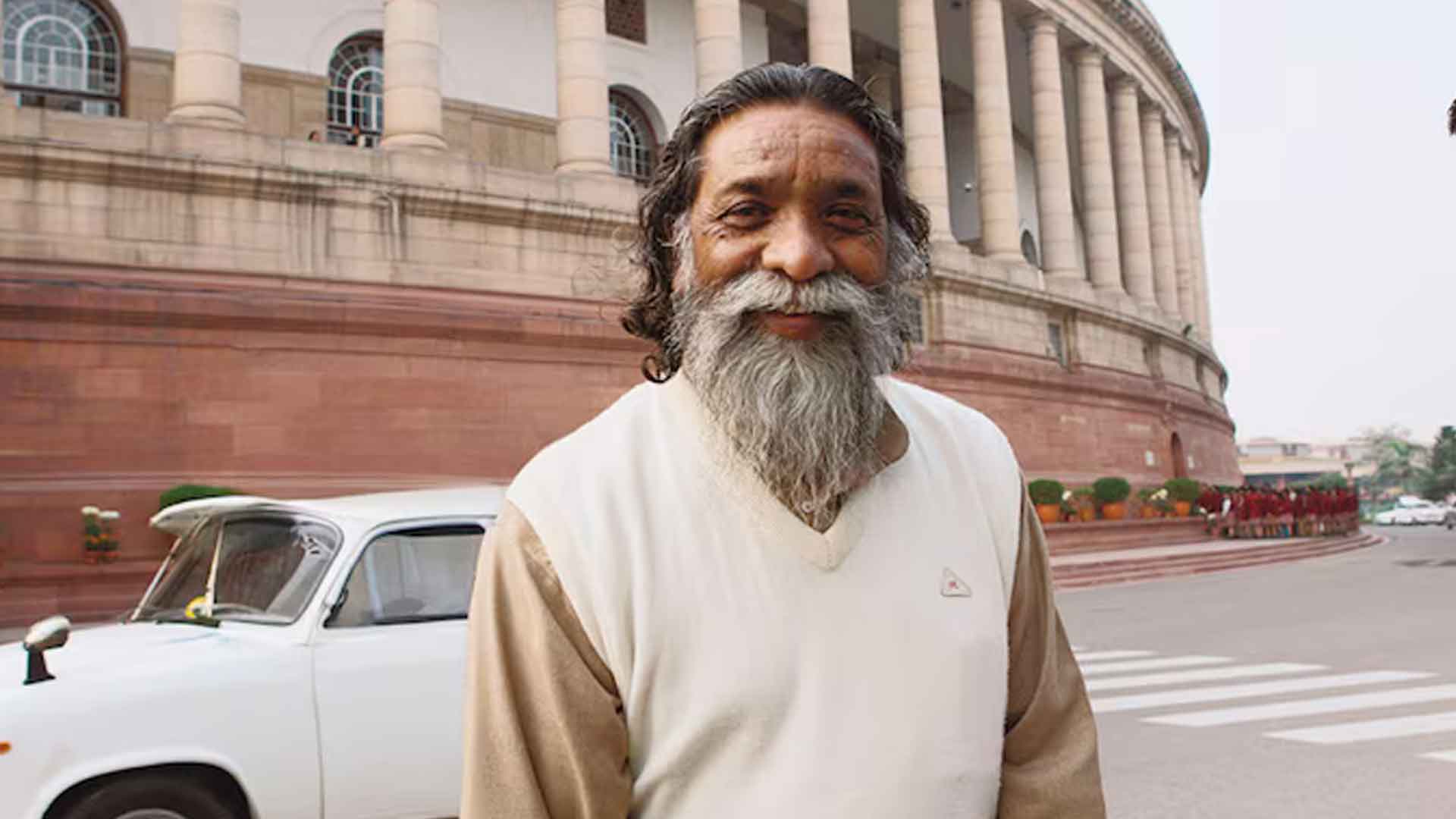
Shibu Soren breathed his last on 4 August after being admitted to Sir Gangaram Hospital on 19 June for a serious ailment. His death unleashed a wave of grief and anguish in the entire Jharkhand state. Barring some occasional and symbolic appearances on the public stage, old age and disease had rendered him inactive for a long time. He was a leader who was organically intertwined with the people of Jharkhand through the various movements that he had launched. The sound of drums in the northern Chotanagpur region had become synonymous with the movement he had launched for the right of Adivasis to land and crop. The attack by the corporates on water-forest-land and minerals of that region is a harsh reality of the present time. The saffron threat to the autonomy and existence of the Adivasis is looming large. A question that is troubling all in Jharkhand is that how Shibu Soren’s absence will affect the assertion of the Adivasis to build a powerful movement.
Much before he entered electoral politics, Shibu Soren during the 70s had emerged as a hero among the Adivasis. The adivasis of Jharkhand had entered into a phase of struggle to free their land from the clutches of the moneylenders. Armed goons and the state administration sided with the moneylenders. A young Shibu was the public face of this movement. The people had affectionately named him ‘Guruji’. The Adivasi men and women were distancing themselves from the country liquor shops run by the money lenders and the state. But this quest for land for not the only reason for the upsurge in the Jharkhand movement.
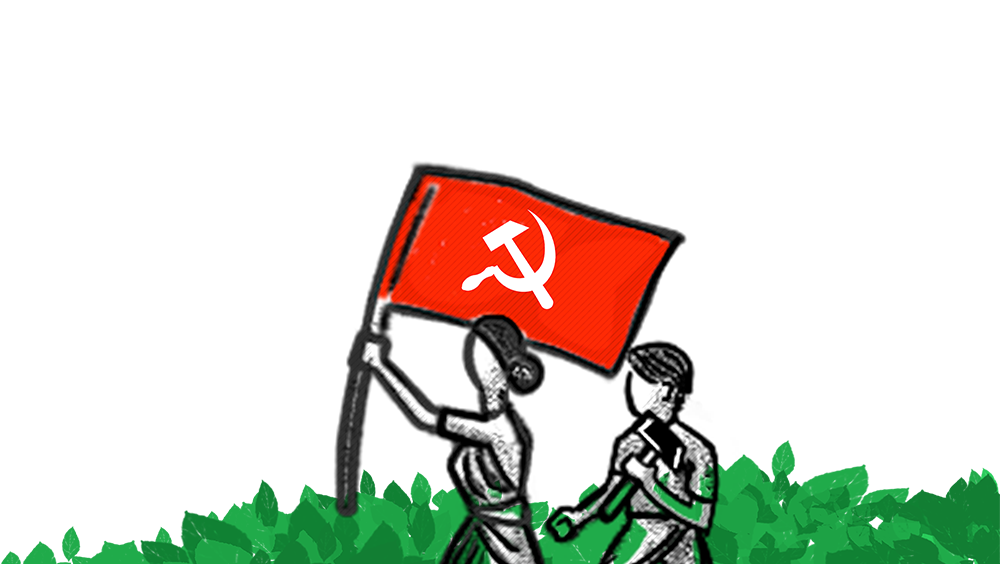
The Naxalbari movement had given a fillip to the left movement and was spreading all around. Inspite of facing brutal repression, the echo of the movement spread far and wide with Jharkhand being no exception. Under a red flag, Com. A.K.Roy had begun mobilizing the Adivasis, Dalits and other backward castes in the coal rich areas of the region against the oppression of the money lenders, mafia, companies and the police. Vinod Bihari Mahato had given a slogan for education and struggle to awaken the masses and even Shibhu Soren was influenced by left ideas. In the buildup to the Jharkhand movement, the issues of land along with social issues of the working class and an awakening of the oppressed masses played a major role in defining the contours of the movement. Undoubtably, the adivasis formed the backbone of the movement and on 4 February 1973, the Jharkhand Mukti Morcha (JMM) was founded, with Shibu Soren as its tallest leader.
The adivasis address the money lenders and land owners as ‘Diku’ while their own brethren are called ‘Hod’. The militant struggles of the adivasis in the north Chotanagpur and Santhal pargana drastically altered the equation of land ownership there. The left movement in Jharkhand and the assertion of the local workers in Dhanbad unleashed new dynamism. All forms of manipulations were employed to supress the rising movement. Shibu Soren had to face the brunt of these manipulations. His differences with Com. A.K.Roy were the result of these. Inspite of serving as a MP, president of Jharkhand autonomous council, a central cabinet minister and the chief minister of Jharkhand, he was considered as a stubborn leader fighting for the interests of the adivasis by the ‘Dikus’. Even the bureaucracy remained uncooperative.
Soren was framed as the prime accused in the twin murder case in 1974 in Kudko village of Giridih district and the 1975 murder in Jamtada where 11 people were killed. This was a big conspiracy hatched by the ‘Dikhus’ to terminate the political career of Soren but he remained undeterred. These cases were used to act as a leash on him. Eventually, he was absolved of all the charges.
In 1993, Soren voted in favour of the PV Narasimha Rao government in lieu of money. This episode was a blot on his political life. In 1998, the supreme court revoked his sentence in this case but on 7 January, 2025 it again revoked its earlier decision. Soren served as the chief minister of Jharkhand thrice- twice with the support of BJP and once by the support of non-BJP parties. In all, his tenure lasted six months. He was a part of the NDA alliance briefly but because of the strong anti-adivasi bias of BJP, their bonhomie could not last long.
The most militant phase of the Jharkhand movement centered around the agenda of control over the minerals of the state. This involved providing a direct challenge to the central government. The government of P V Narasimha Rao had made plans to crush this challenge. A section of the activists of the Jharkhand movement was ready to negotiate with the centre to get the status of a centrally administered state while Shibu and CPI(ML) were adamant for getting a separate state. A phase of movements and negotiations began.
On 15 March, 1993, an economic blockade was announced with the slogan - Declare the formation of the state of Jharkhand or face stoppage of supply of iron and coal. A violent round of repression consisting of raids, arrests and repression followed. As a constituent of the Jharkhand Coordination Committee, Indian people’s front (IPF), the mass political organization of CPI(ML) always participated in the statehood movement. Moreover, through Jhamkis (Jharkhand Mazdoor Kisan Samiti), the CPI(ML) ensured its direct participation in the statehood movement. In the initial phase of the statewide rallies organized as part of the economic blockade, Shibu shared the dais with Com. A.K. Roy and Com. Mahendra Singh. The Jharkhand Mukti Morcha along with other Jharkhandi organizations and CPI(ML) spearheaded the economic blockade. The number of arrests made in 1993 bear testimony to the fact that the unity of the green and red flags made the economic blockage a success and eventually paved the way for the creation of a separate state.
At the time of Shibu Soren’s death, Jharkhand is being ruled by his party under the leadership of his son. One can presume that Guruji would not have been unaware of the machinations of the Modi government to tighten the noose via Adani or the attempts to split the unity of the adivasis. The JMM has ousted the BJP from power there and is running the third term of their government. The two main factors that contributed to the recent victory of their party were a continuation and emphasis of the movement of the adivasis for their right to water-forest-land and implementation of the fifth schedule. Additionally, the mobilization of the scheme workers and youth played a pivotal role in forming a political force against the BJP. The CPI(ML) also played a major role in this mobilization.
These issues are still a challenge before the present state government. Large scale privatisation of iron and coal sector by the Modi government has resulted in a drastic reduction in the availability of jobs. After Godda, Adani is eyeing Hazaribagh and other regions of Jharkhand to capture land and minerals. Adivasis are being eliminated in the name of fighting Naxalism. The PESA act and domicile-based employment policy is yet to be implemented. Land acquisition is going on in full swing. In such a challenging situation, the question does not remain confined to running a government but gets focussed to the larger canvas of the legacy of the Jharkhand movement. In these times, a revolutionary left force like CPI(ML) will have to again accept this challenge and march forward by forming a coalition of fighting forces.