We all remember how Sonam Wangchuk and the people of Ladakh had welcomed the new arrangement in Jammu and Kashmir following the deactivation of Article 370 when Ladakh was declared a Union Territory alongside Jammu and Kashmir. The people of Ladakh had hoped that the UT status for this ecologically fragile and strategically sensitive Himalayan region would give greater say to the indigenous people and pave the way for greater devolution of powers. But experience has shown that Ladakh has lost whatever powers it had in the erstwhile arrangement - if Leh found Srinagar distant, Delhi turned out to be all the more so. Union Territory status without any legislature has reduced Ladakh to a glorified centrally administered and remote-controlled municipality shorn of any decision-making authority for sustainable development or recruitment power to provide jobs for the jobless local youth.
The demand for separate statehood and safeguards under the Sixth Schedule of the Constitution of India has emerged from this bitter experience of the people of Ladakh. Initially the BJP too had endorsed the demand for granting Sixth Schedule status to Ladakh. But as the demand took the shape of a popular movement in both Buddhist-dominated Leh and the Muslim-dominated Kargil regions and Sonam Wangchuk emerged as the most credible and charismatic face of the movement, the Modi-Shah regime developed cold feet and adopted a policy of complete denial. Movement demands put forward in major popular agitations like several climate fasts, the Leh-Delhi padyatra in September 2024 sponsored by both the Leh Apex Body and Kargil Democratic Alliance, and now the hunger strike this September, were brazenly ignored by the Union government.
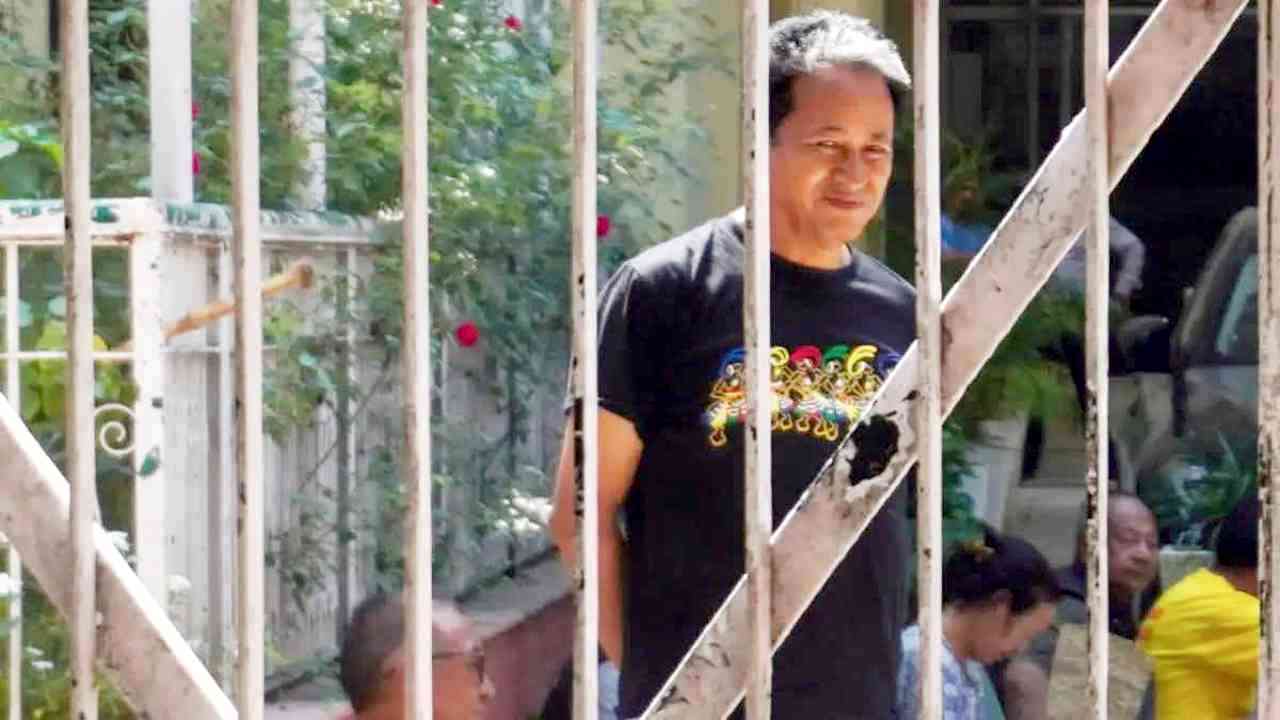
The September 24 vandalism and violence resulted from this frustrating lack of response to any of the core demands of the people of Ladakh and the utter mismanagement and police high handedness with which the administration sought to handle the peaceful protests. But even as Sonam Wangchuk withdrew the protests in the face of the chaos and police crackdown, the entire agitation is being portrayed as a 'foreign conspiracy' hatched by India's neighbours including Pakistan, Nepal and China. The fact that he attended a climate conference in Pakistan and that his NGO received some foreign donation for projects dealing with 'food sovereignty' is now being held as 'proof' of Sonam's alleged role as a 'foreign agent' instigating the peaceful people of Ladakh. An innovator who designed eco-friendly solar heated tents for Indian Army personnel stationed in the cold Himalayan terrain of Ladakh is now being dubbed an enemy of India and left to languish in solitary confinement.
The Article 370 misadventure of the Modi government is now unraveling in both Jammu and Kashmir and Ladakh. The terror attack in Pahalgam debunked the Modi government's claims of making the valley more secure. The plans of the Modi government revolve around increased corporate plunder of the region by suppressing the aspirations of the local people whether in Jammu, Kashmir valley or Leh and Kargil. While books on the history of Kashmir and various facets of the Kashmir crisis penned by renowned authors are being banned, the grazing lands of Ladakh are being sought to be reserved for the so-called green energy plans of the Adani group. The sense of alienation that has long run so deep in the valley has today spread to both Jammu and Ladakh where people are feeling increasingly betrayed and taken for a ride. Whoever had expected the abrogation of Article 370 to open a new chapter for the people of Ladakh must today demand the immediate and unconditional release of Sonam Wangchuk and stand with the people of Ladakh in their struggle for separate statehood and constitutional safeguards under the Sixth Schedule.