“The whole thing in democracy is to give the people the right to vote. But the right to vote will not be of much value unless you have an independent machinery to carry out elections in a fair and impartial manner. It is therefore of utmost importance that the Chief Election Commissioner should be an independent officer and should not be liable to be dismissed except on the same grounds and in the same manner as a judge of the Supreme Court. ...
“… in the interests of purity and freedom of elections… it was of the utmost importance that they [Election Commissioners] should be freed from any kind of interference from the executive of the day.”
-- B. R. Ambedkar
“If we cannot expect common honesty from persons occupying the highest positions in the discharge of their duties, the foundation for responsible government is wanting, and the outlook for the future is indeed gloomy.”
-- Hriday Nath Kunjru [1]
Well, before we come to such festering and stinking wounds on our body politic, for a proper perspective let us have a quick look at how the Constituent Assembly (CA) grappled with the crucial issue of independence and impartiality, integrity and credibility of the Election Commission (EC).
EC “under the Thumb of the Government”?
While introducing Article 289 of the Draft Constitution (which would evolve into Article 324 in the final form) in the CA, Ambedkar highlighted the importance of free and fair elections, declaring that initially the Committee on Fundamental Rights of the CA opined that “the independence of the elections and the avoidance of any interference by the executive in the elections to the Legislatures, should be regarded as a fundamental right and provided for in the chapter dealing with Fundamental Rights”. However, later the CA, while fully endorsing this viewpoint, observed that it should find place in a more suitable chapter in the Constitution, rather than in the chapter on Fundamental Rights.
In course of an animated discussion that followed, Professor Shibban Lal Saksena said, “it is quite possible that some party in power who [sic!] wants to win next elections may appoint a staunch party man as Chief Commissioner”. He also opined that the Government’s choice of a Chief Election Commissioner should be subject to the approval of the Parliament by a two-thirds majority. Shri Kunjru alerted the assembly by saying, “We are going in for democracy based on adult franchise. …if the electoral machinery is defective or is not efficient or is worked by people whose integrity cannot be depended upon, democracy will be poisoned at the source.” Ambedkar
did not deny this possibility, rather he admitted to a gap in the Constitution itself: “there is no provision in the Constitution to prevent the appointing of either a fool or a knave or a person who is likely to be under the thumb of the executive.”
But why then didn’t they introduce necessary safeguards to preempt such a situation? Because there were opposite voices also. For example, K.M. Munshi, a Congress member of the Drafting Committee, opposed this concept of insulating the appointment and functioning of EC from away from the Executive’s sway. He argued that elections, being a massive administrative exercise, must be conducted through government machinery, and therefore the Election Commission should remain closely linked to the government. It was difficult to reconcile the divergent views. Ultimately, on Ambedkar’s proposal a simple addition was made to this Article, to the effect that the President shall appoint Election Commissioners “subject to the provisions of any law made in this behalf by Parliament.”
Thus, in course of an enlightened exchange of diverse opinions, the wise parents of our Constitution laid out a clear scheme of appointment, responsibility and independent functioning of the EC as the fulcrum of parliamentary democracy. They also took serious note of the gaping hole mentioned by Ambedkar and others and entrusted the parliament to plug it by passing a suitable law.
The Role Model: Padmabhushan Sukumar Sen
Where the Constitution gave India the vision, the soul of democracy, Sen built the necessary infrastructure and work culture to realize that vision, to embody the soul. Taking Ambedkar’s vision (see Box) as his guideline, he and his team set to work in real earnest. They had to build an electoral system from scratch, and that too in a backward country with extremely bad communications, too many social divisions and logistical challenges. Under his encouraging leadership, the entire staff put in their best efforts with total devotion to the cause and made possible what the New York Times called ‘a miracle’.
“Whatever precautions we may take, the success of this vast experiment in democracy will ultimately depend on the manner in which everybody concerned conducts himself. The government in power, the officials, the political parties, the candidates and their agents, the Press and lastly, the individual voter will each have important parts to play in the coming elections, which will set the pattern of our political life for years to come. Each one will have to put forth his best efforts in order to make a complete success of this tremendous venture.”
- Ambedkar in a broadcast on All India Radio, April 4, 1951.
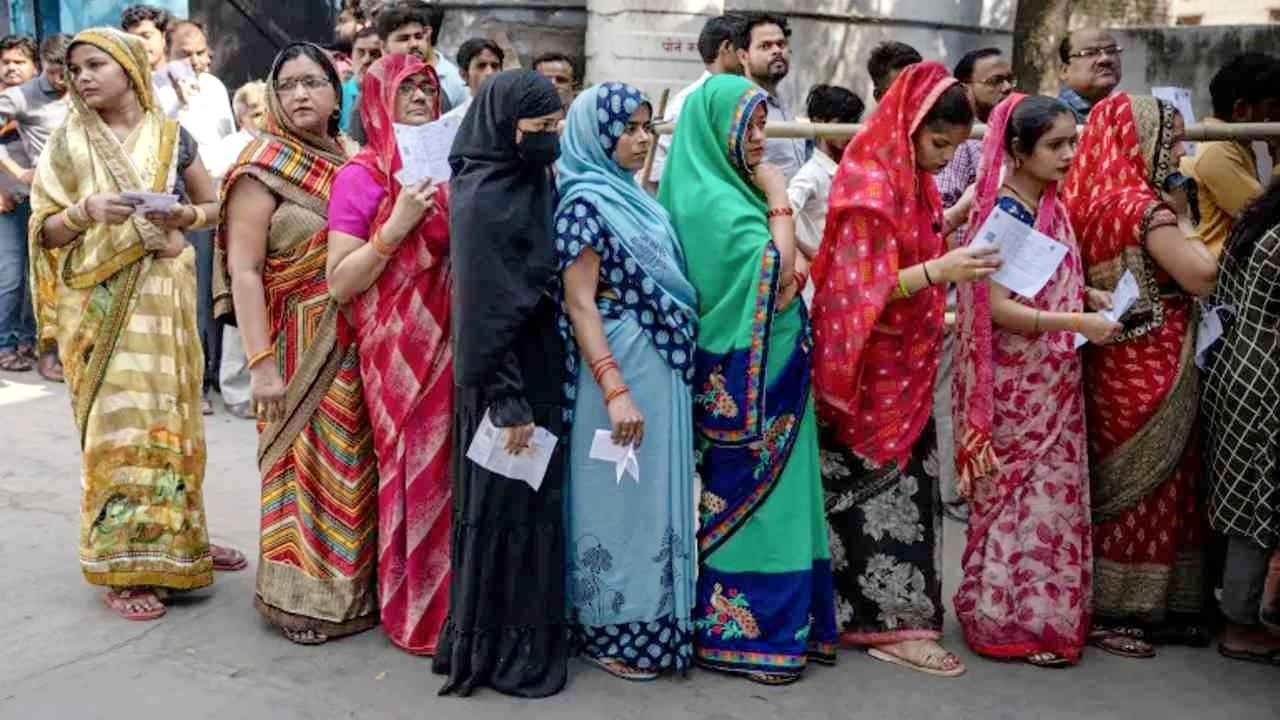
The tasks were daunting: preparing rolls for 176 million voters, most of whom had never voted before; devising casting methods suitable for an 85% illiterate electorate (this was solved by using pictorial symbols on separate ballot boxes for easy recognition by the illiterate, door-to-door enumeration of rolls by the EC staff themselves, and other innovations); ensuring secrecy and fairness in 224,000 polling stations, many of which had to be set up across almost inaccessible terrain; and so on. It was indeed “a great and fateful experiment unique in the world in its stupendousness and complexities”, as he described it. What is more, Sen conducted the whole exercise from a modern progressive standpoint. For example, he rejected the antiquated custom for women to be entered on the rolls only as “wife of” or “daughter of” someone, and insisted on individual names at par with men. In those days, this counted as a bold social reformist stance.
On successful conclusion of the grand festival of the masses, abundant accolades were pouring in from all quarters. The national and international press shifted from skepticism to lavish praise, even as Sudan invited Sen to conduct their first elections in 1953. Nevertheless, the Election Commissioner said he and his team were only doing their duty and passed on all the credit to the ordinary people of India:
“The main argument leveled in the past against adult suffrage… was the illiteracy of the voters which would render an election a farce unless an electoral system could be devised under which even an illiterate voter could cast his vote intelligently and in secret.” He affirmed: “Experience demonstrates… that… however backward and ignorant the common man in an ‘undeveloped’ country may be, he possesses in his way enough common sense to know what is good for him.”
It was in the same spirit that in a broadcast on the eve of the Second General Election [2] Sen painted a vivid picture of the forthcoming grand event:
“Men and women, sophisticated city-dwellers and simple village folk, high and low, the rich and the poor, the tribals, the hill-men and the plains people – all citizens of this great country – will make their way shoulder to shoulder to the hundreds of thousands of polling stations to participate in this great venture – that of democratically electing the men and women who will guide the destiny of the nation and form the governments for the next five years.”
The EC published a 325-page Report on the Second General Elections, which provided a vivid account of the elections and became the template for later elections. The Commission’s eye for minute details could be evaluated from just one of many decisions — the removal of railway engine as an election symbol after complaints reached its doorsteps that rural population in some remote areas were not familiar with railway engine and they could not, therefore, easily recognize it. Sen on his part expressed satisfaction that despite predictions of chaos, the voters proved remarkably enthusiastic and disciplined. He took special note of the high turnout among the poor and marginalized, calling it the true triumph of universal suffrage.
Putrefaction sets in, Supreme Court intervenes
Apart from the personal qualities of Sen, the overall political milieu of the young Republic as an inheritor of our glorious freedom movement was also an important inspiration behind the great work done by the first EC. That ambience, represented by personalities like Nehru, Ambedkar, Azad and many others, did not last very long. With an all-pervasive rot setting in, the EC also started losing its shine, though at a slower pace than many other institutions, gathering speed since 2014.
One of the reasons why the EC became a pawn of the ruling party was that the Parliament, in effect the parties or coalitions that took their turns in forming governments, did not legislate the Act suggested by the CA. They were happy to remain free from any legal bindings in this matter. So, the Supreme Court stepped in.
In a landmark judgment of 2 March 2023 in Anoop Baranwal versus Union of India, it ruled that until Parliament passed a law on this matter, appointments to the posts of CEC and ECs must be made from a panel of names recommended by a committee of three persons: the Prime Minister, the Leader of Opposition in the Lok Sabha (or leader of the largest opposition party in case no LoP is formally recognized), and the Chief Justice of India.
This directive was widely applauded. People hoped that the new arrangement would ensure a proper democratic consultation for the appointment of the CEC and ECs.
Modi overrules Top Court’s wise Directive
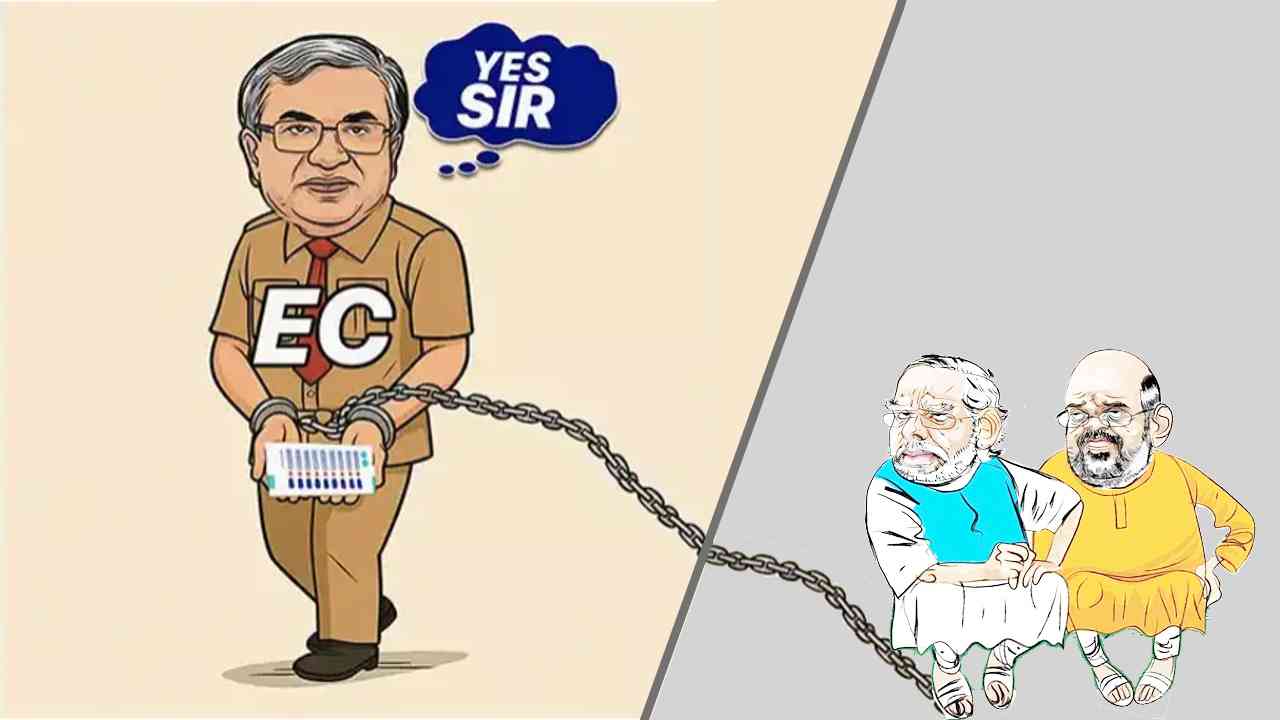
But democratic consultation was anathema to the Fascist Government; it pressed for monopoly control over the vital institution of EC. So it hurriedly enacted The Chief Election Commissioner and other Election Commissioners (Appointment, Conditions of Service and Term of Office) Act, 2023, which replaced the CJI with a Union Cabinet Minister nominated by the Prime Minister, thereby ensuring permanent two-thirds majority of the Executive in the committee. Thus, the judiciary’s role was rolled back and the Executive’s complete sway over appointment of the EC was established. No law was violated, but constitutional morality – something the chief architect of our Constitution saw as the core value of the foundational document – took a heavy beating.
From Zenith of Reverence to Nadir of Disdain
Citizens of India will always remember the first CEC for his spotless credibility and pro-people, inclusive approach. The incumbent 26th CEC Gyanesh Kumar goes down in history as one who overturned the traditional inclusiveness. He replaced Citizenship based on presumption (every adult Indian presumed to be citizen unless proved foreigner) with its opposite (everyone will be presumed to be foreigner until she proves herself to be a citizen, i.e., citizenship conditional on strict proof). By shifting the onus of recording and proving citizenship to the aam admi, the EC has willfully arranged for crores of poor people across the country to be automatically disenfranchised.
An antithesis of the first CEC, the incumbent one suffers from huge trust deficit, and is widely seen as an agent of the ruling party. He has earned lots of infamy from day one for his brazen behavior. His angry outburst against Rahul Gandhi over the ‘vote-chori’ allegation drew sharp reactions from national and international press and dignitaries like ex-ECs and ex-CECs. Ex-CEC Qureshi for example said that Gandhi being the LoP, was not just voicing his own opinion, he was voicing the opinion of millions of people. “Therefore, if he makes this comment, the Commission getting angry is not in its grain.” If he were the CEC now, Quraishi said, “We would have ordered an inquiry and taken it seriously… Daring the Leader of the Opposition in this tone and with this anger has not done any credit to the Election Commission.”
Sen always held himself accountable to the people; he had nothing to hide from them. By contrast, Kumar is known for ducking pertinent questions in his pressers. The EC even had no qualms about bluntly declaring in court that voters whose names were deleted from the rolls had no right to ask for the reasons. Even as allegations of EVM fraud persist, under Kumar’s half-closed eyes hi-tech undercover manipulation of electoral rolls is reportedly spreading from Maharashtra and Karnataka to other parts of the country. In a first, the CEC has lately earned the dubious distinction of being charged as a protector of ‘vote-chors’ because he refused to share information about those behind vote theft in Karnataka with the CID of that state, despite repeated requests from the latter.
EC Challenges Jurisdiction of Apex Court
In mid-September, the story started getting curiouser and curiouser. Advocate Ashwini Kumar Upadhyay, a founder member of AAP who landed in BJP in 2014 and is now a BJP leader in Delhi, filed a Public Interest Litigation seeking directions to mandate regular nationwide SIRs, particularly before every election. In its counter-affidavit, the EC submitted that Article 324 of the Constitution confers on it “superintendence, direction and control” over elections and rolls. It claimed that supplemented by the Representation of People Act, 1950 and the Registration of Electors Rules, 1960, this framework leaves to the Commission alone the choice of when and how to revise rolls. In other words, the EC asserted that the top court has no powers to issue instructions on these matters.
The EC’s arrogant assertion goes directly against the recent ruling of the top court. How, on what basis do they dare say this? Because they are appointed by, and work at the pleasure of, the PM and his chosen minister? Well, that may be their notional or psychological framework, but apparently, there is also a legal basis to this claim.
While the constitutional position cited by the EC does not seem to be strong enough, Section 16 of the Chief Election Commissioner and Other Election Commissioners (Appointment, Conditions of Service and Term of Office) Act, 2023 explicitly extended a legal immunity to all Election Commissioners (CEC and ECs alike). This was something new and very crucial. Earlier the Constitution (Article 324(5)) gave only removal-related immunity, and that too only to the CEC (i.e., the CEC could be removed only by the procedure followed in the case of removal of a SC judge, meaning impeachment by Parliament). The 2023 Act extended a clever roundabout protection to all commissioners, by barring courts from entertaining civil or criminal cases for anything they said or did in their official capacity.
“In a democracy, the purity of election must be maintained, or else it would spell disaster. The Election Commission cannot claim independence and at the same time act in an unfair manner.”
-- Supreme Court in Anup Baranwal v. Union of India (2023)
Unite to Fight, Fight to Win
Two years ago, this was how the Modi-Shah regime planned to get the EC out of judicial oversight, thereby ensuring exclusive authority of the Executive. With the aforementioned counter affidavit, the regime’s henchman has taken a step further ahead, and we will have to wait for a while to see how the clash between two constitutional authorities unfolds.
But one thing is certain. As we confront the Fascist dispensation that has meticulously and successfully corroded the entire constitutional architecture of checks and balances and substantially weakened the Judiciary in many ways, only the direct and powerful intervention of the masses can overpower the enemy and thereby protect not only the precious right to choose our own governments, but the entire spectrum of fundamental rights available to citizens of India. If our sisters and brothers in Bihar could put up such a valorous struggle at such a short notice and achieve a fair measure of success, why can’t we the people of the entire country join forces to force the enemy bite the dust?
Notes:
1. These comments, and the other one by Shri Kunjru below, were made during debates in the CA on June 15–16, 1949.
2. This was the last one to be held under his stewardship; he was seriously ill at the time of the Third General Election and died soon after.