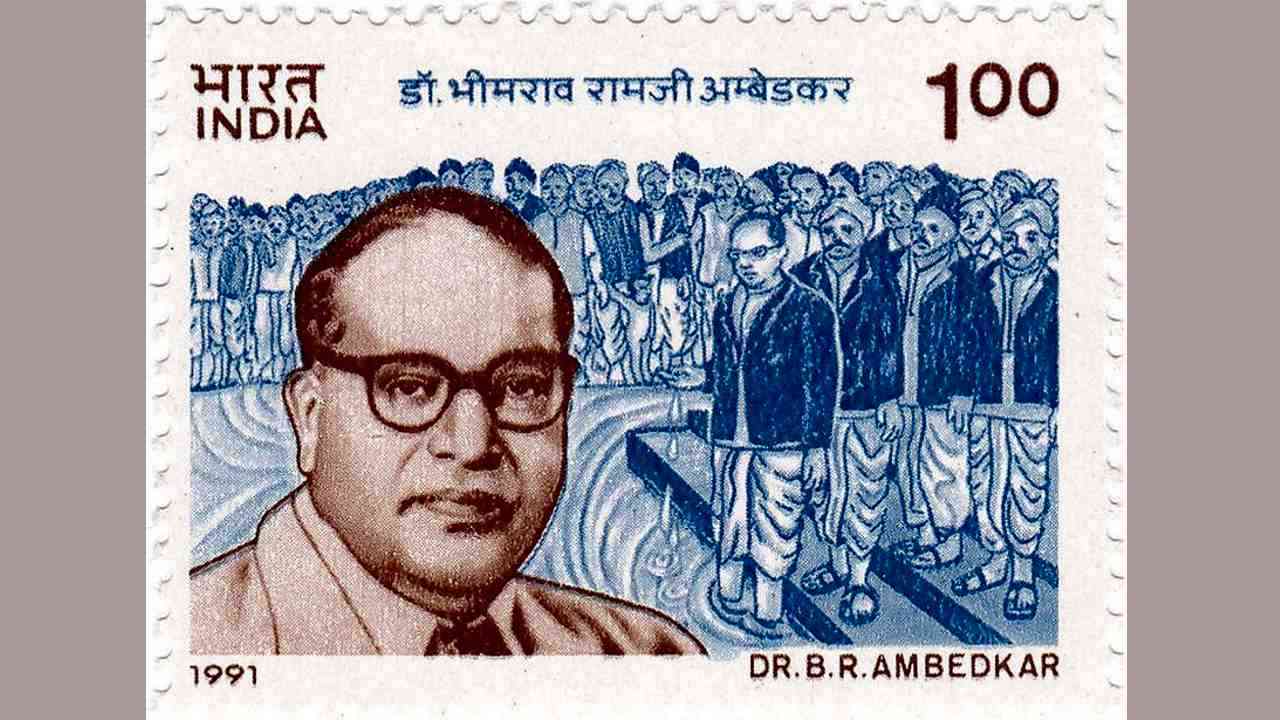
“Drinking the water of the Chavdar lake will not render any of us immortal. We did not drink the water from this Chavdar Tank until today, yet neither you nor I have perished. Our visit to the Chavdar lake is not merely for the sake of drinking its water. We must go to that tank solely to demonstrate that we, too, are human beings, just like everyone else!”
— Dr. Babasaheb Ambedkar
Second Bahishkrut Parishad, Mahad, 1927
March 20th, 2026, marks the commencement of the centenary year of the historic Chavdar lake Satyagraha, an assertive act of civil resistance, and the burning of the ‘Manusmriti’ (December 25th, 1927) in Mahad, Maharashtra. The Chavdar lake Satyagraha of Mahad holds immense significance within the movements for social transformation in India and the broader struggle for human liberation. The force of the resistance achieved by Chavdar lake Satyagraha, laid the foundation of an independent ‘Dalit Movement’ in India.
Before the Mahad Satyagraha, Mahatma Jotiba Phule, Savitribai Phule, Ramaswamy Periyar, and Chhatrapati Shahu Maharaj, among others, who were, the non-Dalit revolutionary social reformers had led struggles for social equality and to challenge the practice of untouchability.
The distinctive feature of Chavdar Lake Satyagraha or the Mahad Satyagraha lies in the fact that this battle for social equality was initiated and led by the Dalit community. The leaders of Mahad Satyagraha were those who had to endure indignity sanctioned by the caste-based hierarchy, an ideology enshrined in the Manusmriti.
In a remarkable moment in the history of social reform movements in India, the ‘Chavdar lake Satyagraha’ and the ‘Manusmriti Dahan’ (Burning of the Manusmriti) was led by the prominent Dalit proponents of social transformation. The struggle took place at Mahad, a town in the Konkan region of Maharashtra at the foothills of Raigad, which was the erstwhile capital of Chhatrapati Shivaji Maharaj. This event was underpinned by a specific historical and social context. Following the arrival of the British, the ‘untouchables’ of the Konkan region gained an opportunity to serve in the British Army. Dalit soldiers in the British Army, were able to experience a transformation in their daily lives. Their employment enabled them to cast off the mindset of servitude and embrace self-respect and independence. They gained access to education, economic mobility and the subsidiary benefits it brought along. Even during this period, we saw a lot of influence of Mahatma Jyotiba Phule and others. Gopalbaba Walangkar, a Dalit member of the British Army, was one among those who was influenced by Mahatma Phule and actively worked towards kindling the spirit of struggle among the Dalits against the social inequalities and injustices. His campaign was mainly in the Konkan regions of Mahad, Dasgaon, and Dapoli. He raised awareness, primarily through, ‘Anarya Dosh Parihar Mandal’, an organization he founded to irradicate the stigma attached to the non-Aryans.
Several activists joined Walangkar to stand at the forefront of the social reform movement in the Konkan region. Among those who supported him were Subedar Ramji Sakpal, i.e., Dr. Ambedkar’s father, Madiwale Joshi (aka Vitthal Hate) from Dasgaon, Gangaram Bhagoji Savadkar from Veer, Subedar Gangaram Bhatankar from Panvel, among several others. He was a pioneering social reformer and journalist of the Konkan region, who served as the Secretary of the ‘Anarya Dosh Parihar Mandal’. The British government of the time appointed him as a member of the Mahad Local Board in 1895, thereby recognizing his work to foster social awakening and enlightenment.[1 ]
During his tenure as the local body member, Walangkar moved a resolution advocating that all public tanks, wells, and water sources be opened to everyone, i.e., including the Dalit community and that the children of the Dalit community be granted admission to schools. It was a historical moment.
Subsequently, in the Bombay Legislative Assembly in 1923, Rao Bahadur S.K. Bole, followed Walangkar and successfully passed the ‘Bole Resolution’. The resolution mandated that all public places, wells, tanks, water sources, and dharmashalas are made accessible to everyone, including the Dalit community. A similar resolution was passed in 1924 by Surbabana Tipnis, the President of the Mahad Municipality. However, he was unable to effectively implement this resolution in practice in Mahad or elsewhere.
The initiative to ensure the actual implementation of this resolution, which sought to open the public spaces, wells, tanks, and water sources was taken by Ramchandra Babaji More, an educated, Dalit youth from Dasgaon. Ramchandra had endured the stings of untouchability practice during his own educational pursuit. He had to wage a struggle against the orthodox elements in Mahad, merely to secure an admission into the school. It was only after submitting a petition to the District Collector and writing letters to newspapers, followed by a directive issued by the Collector that RB More was granted admission into the high school.
RB More drew his ideological inspiration primarily from Gopal Baba Walangkar and from Babasaheb Ambedkar’s elder brother, Balaramdada Ambedkar. He took the initiative to ensure the actual implementation of the Mahad Municipal Council’s resolution to give access to the public tanks to everyone. At a young age, RB More convened the first meeting of youth from the Dalit communities in the Dasgaon, Veer, and Mahad regions in 1924. This meeting was held in Mahad, in ‘Maharwada’, a locality where the Mahar’s lived. Today, that location is situated adjacent to the ‘Kranti Bhumi’.
During this gathering, RB More apprised every one of the details of the ‘Bole Resolution’. He resolved to organize a ‘Bahishkrut Parishad’ (Conference of the Excluded) in Mahad, under the leadership of Dr. Babasaheb Ambedkar, to facilitate the resolution’s implementation. No individuals from non-untouchable communities were present at this meeting. It was this very assembly that entrusted RB More with the responsibility of persuading Dr. Ambedkar to attend the conference. Following this meeting, he, along with Sambhaji Tukaram Gaikwad, a Mumbai-based veteran leader of the Dalit community, met with Dr. Ambedkar at his office along with the social activist Anant Chitre (Bhai Chitre). RB More informed Chitre and Dr. Ambedkar about the proposed conference and expressed that they both should be part of this conference.
During his subsequent visits to Mumbai, RB More persistently followed up with Dr. Ambedkar regarding the organization of the conference. Dr. Ambedkar sent his associate along with Kamlakant Chitre, a member of the ‘Bahishkrut Hitakarini Sabha’, to assess the progress of the conference preparations in Mahad in 1925. RB More convened a meeting of prominent activists from the Dalit community in the Mahad region, along with Chitre. This meeting was attended by Subhedar Vishram Savadkar, Bhanudas Kamble (from the Charmakar community), among others. Following this meeting, Chitre, More and Savadkar had a meeting with the Municipal President of Mahad, Surbabana Tipnis, seeking clarification on the legal aspects of the resolution and announced that, soon a ‘Bahishkrut Parishad’ would be held in Mahad under Dr. Ambedkar’s leadership to ensure the implementation of the ‘Bole Resolution.’ At that time, Surbabana Tipnis pledged his cooperation for the conference.
Over the next two years, RB More continued to meet with Babasaheb and with Dalit youths working in Mumbai to discuss matters related to the conference. During this time he, with the assistance of Sambhaji Tukaram Gaikwad, established a youth organization in Mumbai called the ‘Mahar Samaj Seva Sangh’. RB More served as the General Secretary, while Bhikaji Gaikwad became the President and Keshavrao Adrekar was the Treasurer. Activists of this organization toiled day and night to publicize the upcoming conference throughout the Mumbai and Konkan regions and to raise funds for the event, for which the play, ‘Sant Tukaram’ was performed at the Damodar Hall theatre in Mumbai.
In his efforts towards press for the implementation of the Bole Resolution, RB More formally notified the local Tehsildar and police administration that he intends to hold a public event at the Crawford Tank and wells located in his village Dasgaon. On December 4th, 1926, approximately 200 to 250 people were present in Dasgaon, for this event. The ‘Bole Resolution’, which granted access to drinking water to all, from the public tanks and wells, was thus implemented for the first time in Dasgaon, three months prior to the Mahad Satyagraha. Prominent activists from the Dalit community from the Mahad region participated in this event. The proceedings were presided over by Adarkar, a progressive gentleman, and RB Potdar, a member of the local goldsmith community, also participated as a leading member.
Following the event in Dasgaon, a renewed sense of vitality and enthusiasm emerged within the Dalit communities of Mahad and the wider Konkan region. People began to engage vigorously in the work of the Mahad Bahishkrut Parishad. During this same period, Bhai Anant Chitre informed Bapu Sahasrabuddhe via a letter (in January 1927) that RB More and Vishram Savadkar were making rapid progress in their preparations for the conference, and therefore, a date for the conference should be secured from Dr. Ambedkar. Subsequently, in February, Dr. Ambedkar communicated the dates of March 19th–20th, 1927.
The historic ‘Bahishkrut Parishad’ was held in the assembly hall of the Vireshwar Theatre in Mahad, presided over by Dr. Babasaheb Ambedkar and under the chairmanship of the Reception Committee headed by Sambhaji Tukaram Gaikwad, who was the Konkan’s first ‘Dadasaheb’, aka, ‘Karmaveer’. RB More was the chief organizer of the conference, who introduced all the dignitaries and the guests at the conference. There were only two non-Dalit attendees who were present on the stage to serve as guides and mentors – Bhai Anant Chitre and Bapusaheb Sahasrabuddhe – who had both travelled from Mumbai for the Mahad conference.
Additionally, the Town Council President of Mahad, namely, Surbabana Tipnis and a few others were from the non-Dalit communities of Mahad, who participated in the conference. On the afternoon of March 20th, following an appeal made to the delegates during the conference proceedings by Bhai Chitre, the entire congregation led by Dr. Ambedkar marched in a procession through the market place of Mahad towards the ‘Chavdar lake’. At the lake, everyone from the conference delegates, drank the water from this public lake, from their cupped hands, i.e., they touched the water from the tank. In doing this, they not only enacted the direct implementation of the ‘Bole Resolution’, but they also asserted their fundamental human right to equality.
In the aftermath of this event, the casteist, orthodox, and fanatical elements resorted to spreading the rumours claiming that the ‘untouchables’ were now planning to storm the Vireshwar temple and desecrate the shrine. These rumours incited the common people and devotees, who then subjected the Satyagrahis attending the conference to a brutal, life-threatening assault. Men, women, and children as well as the elderly, were injured in large numbers because they were attacked by the orthodox people in Mahad. In some instances, the Satyagrahis fought back, offering a tit-for-tat response and resisting their attackers. The entire town of Mahad was engulfed in an atmosphere of chaos and tension. Eventually, the police intervened to disperse the attackers and provided security to Dr. Ambedkar and all the Satyagrahi activists. Thus, the first conference was concluded, though successful in the claiming of the access to public lake, it also was scarred by the violent reaction from the non-Dalits.
As the Dalits drank water from the tank, the Brahmins of Mahad along with the self-proclaimed custodians of orthodox culture, raised a massive outcry, claiming that the ‘Chavdar Tale’ had been defiled and rendered impure. To ritually ‘purify’ this tank, which they deemed sacred, they poured 108 pitchers of cow dung and cow urine (known as ’Panchagavya’) into it. This was performed amidst the chanting of sacred mantras, thereby upholding the tenets of the Brahminical faith. Furthermore, they filed a petition in court claiming that the Chavdar Lake was not a public resource, but rather a private property, thereby once again barring the Dalits from accessing the water.
This conference enabled the Dalits to realize their own collective strength. It instilled in them a newfound sense of self-awareness and bolstered their self-confidence. The act of the Dalits collectively drinking water from the tank sent a resounding message across the entire state of Maharashtra—and indeed the nation—that the Dalit masses had finally awakened and would no longer endure a life of helplessness, indignity, and humiliation. The Chavdar Tale ‘Bahishkrut Parishad’ played a pivotal role in igniting a sense of self-respect within their community. The Dalits had now found, from within their own ranks, a capable and illustrious leader in the person of Dr. Ambedkar. It was through this very struggle that the distinct identity of the Dalits emerged; and it was through this Chavdar Tale Satyagraha movement that Dr. Babasaheb Ambedkar’s independent leadership rose to prominence!
It is imperative to underscore the fact that the ‘Mahar Samaj Seva Sangh’ played a lion’s share in organizing this historic Satyagraha and the accompanying ‘Bahishkrut Parishad.’ This emphasis is necessary because many biographers and scholars of Dr. Ambedkar have failed to accord this fact its due recognition.
Following this historic conference, on April 3rd, 1927, Dr. Ambedkar launched a new fortnightly periodical titled ‘Bahishkrut Bharat’, under his own editorship. In it, he gave a detailed account of the Mahad Satyagraha and announced, “We will return to Mahad in December to hold a second conference for the excluded.”
The English-language newspapers of the time took note of the Chavdar Lake agitation, and recognised it as a “significant, progressive social event.” However, newspapers such as Lokmanya Tilak’s ‘Kesari’, ‘Kulaba Samachar’, Bhopatkar’s ‘Bhala’, and ‘Chabukswar’, placed the blame for the riots squarely upon Dr. Ambedkar and the Satyagrahis of the Dalit movement. They attempted to add fuel to fire and took great pleasure in verbally attacking Dr. Babasaheb Ambedkar’s leadership.
Instead of siding with Dalits who were brutally attacked, these newspapers chose to align themselves with the casteist elements of society. Through editorials and various columns in Bahishkrut Bharat, Ambedkar delivered a scathing rebuttal to the critics across all these newspapers, employing extremely forthright language and precise arguments. Consequently, the message regarding the second conference reached the entire Dalit community and people began preparing to attend the conference by organizing various small and large meetings and gatherings. Mindful of the physical assaults that the Satyagrahis had to endure and the determination to attend the second conference with an aggressive stance and a readiness for conflict, a militant youth organization named the ‘Ambedkar Seva Dal’ was established under the initiative and guidance of the chief organizer, RB More, modelled after the Congress Seva Dal. Later, Babasaheb renamed this very organization the ‘Samata Sainik Dal’. For the second conference, people arrived imbued with a fierce determination to fight and prepared even to lay down their lives. Some had even wiped the vermilion from their wives’ foreheads before arriving, while Audrekar, a key activist of the ‘Mahar Samaj Seva Sangh’ had brought his own funeral shroud along with him.
During the three days of the second ‘Bahishkrut Parishad’ from December 25th to 27th, 1927, Dr. Ambedkar, through the hands of Bapusaheb Sahasrabuddhe, publicly burned the manusmriti for the first time in Maharashtra. This act took place at Mahad - a site now known as ‘Kranti Bhumi’ (Land of Revolution) — and served as a direct challenge to the orthodox custodians of the Hindu faith. So, 99 years ago in Mahad, the waters of rebellion began to boil, and the flames of revolt were ignited against orthodox thought. Consequently, December 25th - the day of the manusmriti dahan - is also observed in Maharashtra as ‘Indian Women’s Liberation Day.’
This, in brief, is the thrilling history of the Mahad Chavdar Lake Satyagraha and the burning of the manusmriti. However, as we celebrate the centenary year commemorating the Mahad Chavdar Lake Satyagraha and the burning of the manusmriti, it is imperative to reflect upon the current status of this illustrious legacy in contemporary times.
Today, the very inheritors of the manusmriti have become increasingly aggressive, launching attacks against Dalits and women. In Jaipur, a statue of Manu, the proponent of inequality, still stands proudly and under police protection within the premises of the High Court. Unsurprisingly, in that very state of Rajasthan, a Dalit student named Indra Meghwal was brutally and inhumanely beaten by a casteist teacher - a member of the so-called ‘upper castes’ - simply because he drank water from a pot reserved for the teacher; the assault proved fatal, claiming the life of the young Indra Meghwal (2022). Similarly, in a village in the Khandesh region of Maharashtra, casteist elements from the village brutally assaulted young children from the Dalit community merely because they had bathed at a public well (2018).
A few years prior to this incident, in Jalna, relatives of a high-caste minister murdered a young Dalit man named Dilip Shendge, and subsequently set fire to his home, simply because he had drawn water from the village’s public hand pump (2003).
In the India of the 21st century, our beloved country, governed by the Constitution of India, Dalits are being killed for reasons as trivial as wearing a footwear, a groom riding a horse and wearing a traditional turban, sporting a moustache, or for that matter choosing a ‘Jai Bhim’ ringtone on their mobile phone.
In certain states, Dalits have fallen victim to the wrath of Manuvadis merely for building permanent houses in their villages or for bringing new furniture and appliances into their homes. In both small towns and large cities, so-called high-caste individuals refuse to rent out accommodation to Dalits. In Maharashtra, as well as in several other states across the country, oppressor communities are unwilling to allocate space for burial or cremation, even after a Dalit person has passed away. In short, untouchability and discrimination continue to be openly practiced, persisting even beyond death.
Dalit students studying at institutions such as IITs, TISS, Central Universities, and medical and engineering colleges are compelled to face discriminatory treatment at every step. They are forced to endure casteist slurs and taunts. Consequently, in such institutions, brilliant students like Darshan Solanki and Dr. Payal Tadvi are driven to the point of death by suicide. The discriminatory social treatment meted out by the management in these institutions has led to the “institutional murder” of brilliant Dalit students like Rohit Vemula.
From Khairlanji, Maharashtra (2006) to Hathras, Uttar Pradesh (2020), incidents of rape and atrocities against Dalit women continue to occur brazenly. Far from receiving justice, the victims’ families who chose to raise their voices and express their anguish against these injustices are being burned alive or murdered by upper-caste perpetrators. Meanwhile, the police, the administration, and the judicial machinery is often found dancing to the tunes of casteist and communalist rulers. They often take up the role of mute spectators.
By publicly burning the manusmriti, Dr. Ambedkar endeavoured, with the aid of the Indian Constitution, to lay the foundation for social equality, secularism, and a scientific temper. Today, these very constitutional values are being trampled upon daily by the communal politicians. Under the guise of imparting spiritual teachings, a conspiracy is currently underway, with the blessings of those in power, to surreptitiously introduce the manusmriti into college and university curricula, thereby glorifying it.
Under the banner of “skill development,” the government is acting on behalf of the Sangh Parivar and is implementing a hidden agenda to further entrench the caste system by glorifying traditional caste-based occupations, all in the name of education.
Following the Kala Ram Temple agitation, and in protest against the caste system and inequality within Hinduism, Dr. Babasaheb Ambedkar declared at Yeola, near Nashik, in 1935, “Although I was born a Hindu, I shall not die a Hindu”. Subsequently, after 21 years of this speech, he renounced Hinduism, which is a religion that perpetuates inequality and embraced the Buddhist Dhamma, which champions equality and scientific rationality. Furthermore, during the Dhamma Deeksha ceremony, he administered 22 vows to the people; through these vows, which included pledges not to revere or worship Hindu gods and goddesses, he formally severed ties with Hinduism and its associated customs and traditions.
Today, the Sangh Parivar and the Chief Minister are celebrating the centenary of the Mahad Chavdar Lake agitation as a mere “event.” Moreover, by employing the rhetoric of ‘Samarasata’ (social harmony/assimilation) rather than true ‘Samata’ (equality), they are attempting to place Dr. Babasaheb Ambedkar in the same league as Golwalkar, Hedgewar, and Savarkar, the right-wing leaders who were religious fanatics and proponents of a Hindu Nation. The Brahmanical conspiracy orchestrated by the Sangh Parivar must be thwarted by progressives and by those who identify themselves as Ambedkarites.
Furthermore, those celebrating the centenary of the Mahad Lake Satyagraha ought to demand an answer from the government: Will this government observe “Manusmriti Dahan Din” across the country December 25th? Will it incorporate a lesson regarding the burning of the manusmriti into the curricula of schools and colleges? Additionally, during this centenary year, will it remove the statue of Manu currently situated within the premises of the Rajasthan High Court?
Dr. Babasaheb Ambedkar had recognized the threat posed by a ‘Hindu State’ as early as the time of the Mahad Satyagraha. Referring to the riots in Mahad, he stated in 1927:
“Your unfitness for Swarajya (self-rule) has been conclusively proven by the recent riots in Mahad. You are unwilling to acknowledge the citizenship rights of minority communities. You possess no desire to treat the poor and vulnerable with justice; had a Hindu State come into existence, the plight of the ‘Excluded Classes’ would have been utterly catastrophic... Had the Collector not been a European, and the Police Inspector a Muslim—officials of such backgrounds—and had the Muslims of Mahad not offered shelter within their own homes to the men, women, and children of the Excluded Classes, those Hindus who style themselves as the ‘Touchables’ would have crossed every limit of atrocity.” (Bahishkrut Bharat, 1927)
(Translated to English by Swati Vaidya)
NOTE:
1. Gopal Baba Walangkar — The Pillar of the Ambedkarite Movement, Prem Hanwate, 2021, Swayandeep Prakashan