-- TN State Standing Committee, CPI(ML)
The emphatic message of Tamil Nadu election results is that the people have categorically rejected the BJP and its allies. The BJP’s four seats in 2021 elections have dramatically reduced to one in 2026. Despite an increased overall voting percentage, BJP’s vote percentage, unlike Keralam, has dipped in 2026 elections in Tamil Nadu. The notable victory of AIADMK in northern Tamil Nadu is attributable to the comparatively better votes’ transfer from PMK in the same NDA alliance. But, the performance of AIADMK in its so-called fortress, the western Tamil Nadu (Kongu region), has declined.
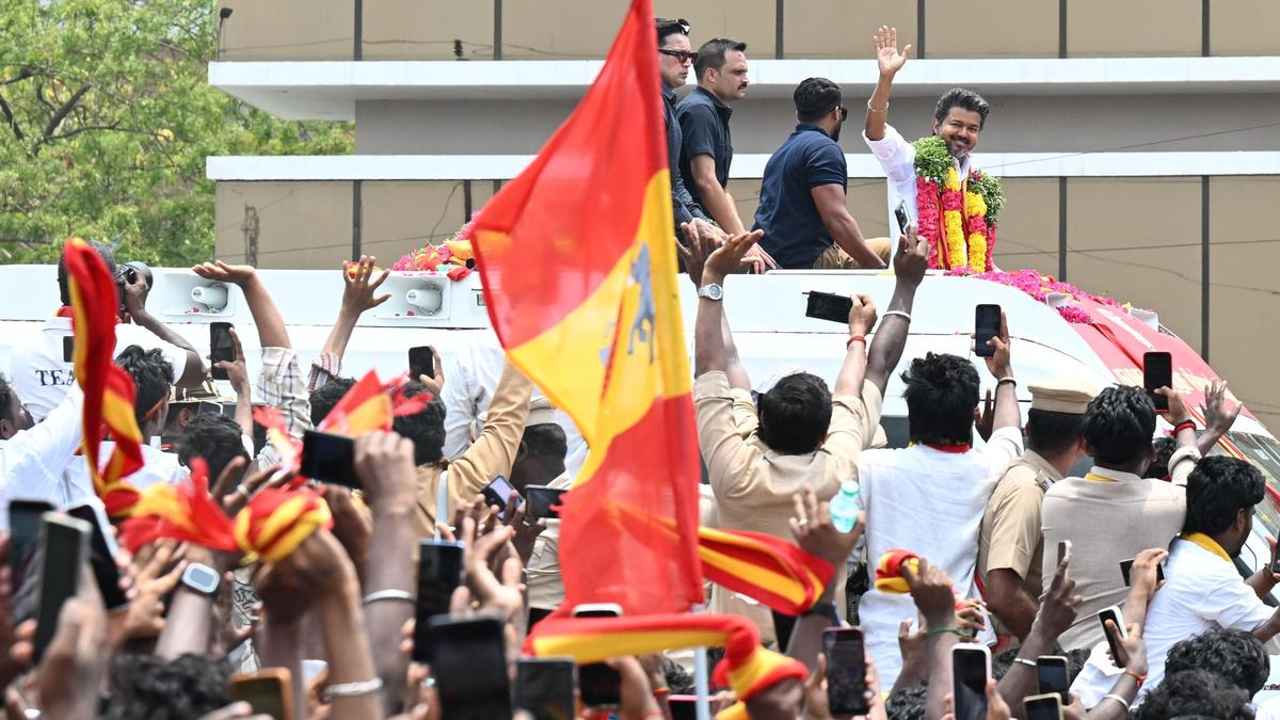
The DMK led Secular and Progressive Alliance (SPA) faced a major defeat by winning only 70 seats. But, its difference in vote share compared to the victorious TVK (Tamilaga Vetri Kazhagam – Tamilnadu Victory Party) is only 3.5 percent. The anti-incumbency votes of five years of DMK rule has gone over to TVK instead of AIADMK. By winning over 14 percent votes from DMK, 15 percent from AIADMK, 4 percent from NTK (Naam Tamilar Katchi led by Seeman) and the remaining from others, the TVK has emerged as a single largest party, albeit without independent majority, by securing around 35 percent votes.
The elections are not merely about voting percentages and statistics but also about the realities, expectations, quests and pulse of the people. In the last 5 years of DMK rule, the state economy grew in double digit, corporates amassed wealth and simultaneously the problem of unemployment, unaffordability of education and anger among youth also scaled up. The casteist attacks on dalits and honour killings reached unprecedented levels. This period also witnessed endless number of agitations, right from sanitation workers and scheme workers to part time teachers and differently abled, for permanency and wage increase. The promise of restoration of the Old Pension Scheme was not honoured. In popular perception, the officials were controlling the affairs of the state more than the Chief Minister himself, which in turn, fuelled the dissatisfaction among government employees and teachers. The DMK government was unwilling to pass a resolution in the floors of the assembly against the four anti-labour Codes of the Modi government. In this backdrop, the anti-incumbency, coupled with the people’s long drawn quest for a change and omissions and commissions of the state government together led to the fall of the DMK alliance in the elections.
The pro-RSS and right wing forces are in a jubilant mood that the rise of Vijay and TVK signifies the end of Dravidian movement in the state, which is far from the truth and reality. Interpreting the rise of Vijay as an end of Dravidian movement in itself is fundamentally flawed because neither the limited victory of Vijay nor the vote share of DMK and AIADMK conform to such an interpretation. The fact that Vijay is upholding Periyar and Ambedkar as his ideological icons and the socio-economic realities of the state do not corroborate to any end of Dravidian movement in the state.
Some others call it a beginning of a post-Dravidian era in state politics and they also append it saying that the post-Dravidian is not necessarily anti-Dravidian but not much of discussions about various facets and dimensions of such an era. The vote percentages of so-called Dravidian parties and the proclaimed nature of TVK do not corroborate such an analysis. Moreover, we should not hurry to offer such labels and should not forget that the communist movement and Ambedkarite movement too, have their roots in the legacy of the movements for self-respect, social justice and equality.
The people of the state were fatigued with alternatively voting for two Dravidian parties, DMK and AIADMK. The entry of Vijay only facilitated such a long drawn quest of the people.
Sensing such a mood for change, various forces, including Vijayakanth, Kamalahasan and also Seeman, have attempted to exploit it in various ways and at various phases. Seeman has not yet given up. The communist parties too try their level best to emerge as an alternative. The BJP is making herculean efforts to transform the political landscape and ideological moorings of the state.
The present quest for a change does not really indicate any quest for an alternative politics and remains only at the level of a regime change and change of guards. It should not be misconstrued as a quest for any fundamental change in the left or right direction. In the era of technological advancements, the growth in the economy also leads to growth in unemployment and other associated problems. Vijay has emerged victorious mainly in this backdrop. Various studies and pollsters suggest that 70 percent of youth and women below 40 years and 30 percent above 40 years have preferred Vijay. TVK has predominantly won more seats in urban areas all over the state, in districts surrounding metropolitan cities like Chennai and in sweeping some southern districts. TVK is successful in mustering the support of not only the urban elites and middle classes but also dalits and the poor across the state.
It is completely unfair to mock the victory of Vijay as the victory of illiterates (‘Tharkuri’ is the popular slang being used in Tamil) and de-politicised youth. The aggressive implementation of neo-liberal policies and the emergence of all pervading world of social media have led to the emergence of a section of youth and people who display a value system different from conventional perceptions, whose needs and expectations do not conform to the established norms. It should be understood in the context of changing expectations of social justice beyond reservations, changing issues of women safety with the rise of women workers, against the normalisation of all pervading corruption, etc. We should be able to comprehend it as a departure from conventional value systems to the quest for new political values in the changing objective situations. It is such a quest for change that has taken the shape of the politics of anti-corruption, anti-narcotics and for women safety in new conditions. It has also taken shape against the increase in electricity tariff, which is a fallout of privatisation. Vijay, after assuming the mantle of Chief Ministership, first inked the orders of 200 units of free electricity in 2 months, the force of Lioness (for women safety) and anti-Narcotics force.
It is a very important, unavoidable, question whether Vijay can be a real answer to all those problems. Only time can provide an answer to this question. Vijay wants to replace DMK with TVK by staking claim for another Dravidian party in the state. His first visit to Periyar memorial to pay respects, immediately after becoming the Chief Minister, signifies such a narrative.
The foremost objective and a considered political tactic of the BJP is to destroy the progressive tradition and values of the state in order to make the soil fertile for the growth of right-wing politics. The BJP will never relent in its efforts to exploit all mass based political forces – Vijay’s TVK to DMK/AIADMK - in the state to achieve its own ends. The role of Governor in the government formation in the post-poll scenario amply demonstrates the intentions of the BJP. Even the so-called rumours of DMK backing a government of its arch rival AIADMK in order to halt the onward march of Vijay also points to the same. We cannot conclusively assess the probable direction of the journey of Vijay and TVK in the coming days as it is too premature now.
The politics of TVK is yet to take a comprehensive shape. If we look at their election promises, they are keen in continuing the welfare policies and are engaging in competitive populism like all other parties in the state, including BJP. But, Vijay’s maiden speech, as a Chief Minister, about empty treasury, report on state’s finances and seeking time for implementing promises raises questions and suspicions. He says, “an era of real secular social justice starts now”. But, pertinent questions are still crying for an answer: Whether Vijay will rise as an anti-BJP force or will choose the opposite or any other different direction? Whether the TVK will uncompromisingly fight or choose a different path to secure its proclamations on safeguarding Tamil interests, Tamil pride and federalism? TVK will definitely work for the economic and industrial development but what could be its approach towards workers’ interests and their rights is yet to be seen. Overall, TVK is a party in transition.
The responsibility of the opposition, including us, is to point out, criticise and fight against the mistakes of the incumbent government as a part of democracy. We fought against DMK too while in power, despite DMK being part of the INDIA bloc.
In the changed political situation, our decisions will be compatible with the strategy of anti-fascist, anti-BJP resistance and with our consistent struggle against the anti-people measures of the ruling party.
We expect TVK to articulate its voice against the politics of hate and communalism, against the denial of rights of toiling masses, against caste discrimination and domination and for state’s rights, genuine federalism, social justice and equality. CPIML Liberation will be the first to join hands with the left, democratic and progressive political forces to wage a determined struggle if the expectations are belied.