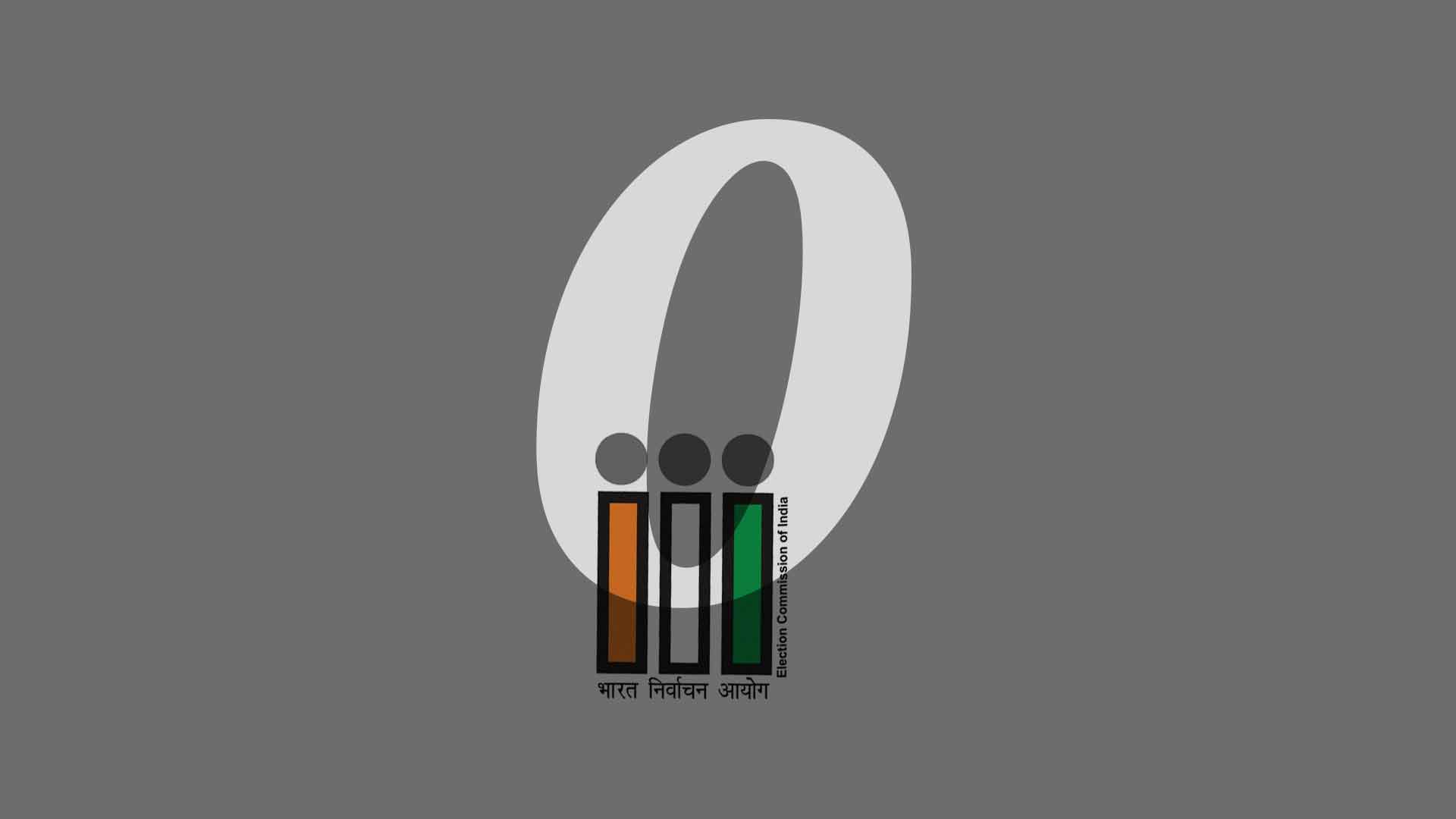
The Election Commission of India (ECI) seems to be a devout disciple of Aryabhata, particularly enamoured with his celebrated contribution to mathematics, the invention of the number zero. Aryabhata is believed to have lived in Pataliputra, and the ECI appears to be honouring him by deploying the number “0” liberally in the Bihar State Intensive Revision (SIR).
At least 2,92,000 entries in the draft electoral rolls carry house number “0”. The other major application of “0” concerns objections submitted by Booth Level Agents (BLAs) appointed by political parties regarding the draft rolls. For three whole weeks, despite persistent efforts by CPI(ML) BLAs, the ECI refused to acknowledge any of these objections. Finally, on 22 August, it admitted to receiving two complaints from the party.
This claim by the ECI is puzzling. CPI(ML) BLAs have been actively submitting complaints and facilitating the filling of Form 6 by first-time voters, as well as for electors who were wrongly deleted from the rolls. (Form 6 is intended for the inclusion of new voters, while Form 7 is meant to raise objections to names wrongly included.) In Bihar, however, the bulk of complaints concern erroneous deletions, deliberate or otherwise. Yet there has never been a specific form for such complaints, nor even a column for BLAs to record their names when submitting them.
For weeks the ECI had no prescribed format for political parties or their BLAs to file objections. Only recently did it introduce one, as noted in its daily press release of 18 August 2025. In practice, the Commission demands a ‘declaration form’ signed by the BLA and duly acknowledged by the concerned BLO before treating a Form 6 as an official complaint. It was only after navigating this elaborate ‘complaint challenge’ that Viswakarma Paswan, one of the CPI(ML) BLAs in Ara, finally succeeded in getting two cases formally recorded, those of Mintu Paswan and Munna Paswan, both wrongfully struck off the rolls, the former declared “dead” and the latter marked as “permanently shifted.”
According to the ECI, CPI(ML) has around 1,500 BLAs. Yet the Bihar CEO’s own dashboard puts the “approved number” at 2,265, with a further 1,168 still pending approval, two months after the SIR began on 25 June.
During the Supreme Court hearing on the Bihar SIR case on 22 August, political parties were criticised for their supposed “inaction”. The ECI claimed that, apart from two CPI(ML) complaints, not a single one of the more than 1.6 lakh BLAs appointed by recognised parties in Bihar had lodged objections.
If it has taken a committed party like CPI(ML), with its team of dedicated activists, nearly three weeks to get just two complaints “officially acknowledged”, the issue lies not with party inaction but with the opacity and lack of clarity in the functioning of the Election Commission.