What is Karnataka’s menstrual leave policy?
On 9th Oct. 2025, the Karnataka Government’s Cabinet cleared the decision to implement the Menstrual Leave Policy, 2025 (“policy”) in all sectors including all government offices, garments, MNCs, IT and other private industries across the state. The policy mandates 1 day of paid leave per month for women. The Cabinet decision details the intention of the policy to recognize the importance of health as a fundamental part of women’s rights as well as their workplace welfare, in addition to creating an environment where women can prioritize their health without fear of repercussions or stigma. This policy comes after an 18-member Committee headed by Dr. Sapna S. had recommended 6 days leave per year.
A comprehensive government order is yet to be issued to implement the policy. It has also been reported that the Karnataka Government is considering introducing a Bill to enforce the policy. The Law Commission of Karnataka had earlier drafted a bill called the Karnataka Menstrual Leave and Hygiene Bill, 2025. However, the said Bill has yet to be publicly released in the Karnataka Gazette to call for comments. News reports regarding the Bill claim it contains the following:
- The definition of “menstruating person” includes girls, women, and transgender persons.
- The Bill mandates menstrual leave for working women as well as menstruating students.
- Menstruating persons studying or employed can take upto 2 days leave per month either consecutively or intermittently, provided it does not exceed 12 days a year.
- The Bill proposes a Karnataka Menstrual Leave and Hygiene Authority to redress grievances.
- Denying menstrual leave attracts a penalty of Rs. 5,000 for each contravention.
However, as an official version of this Bill is yet to be released, it may be modified or entirely changed by the Karnataka Government.
Karnataka’s menstrual leave policy a welcome move, but leaves much to be desired, for reasons discussed below.
Why do we need menstrual leave?
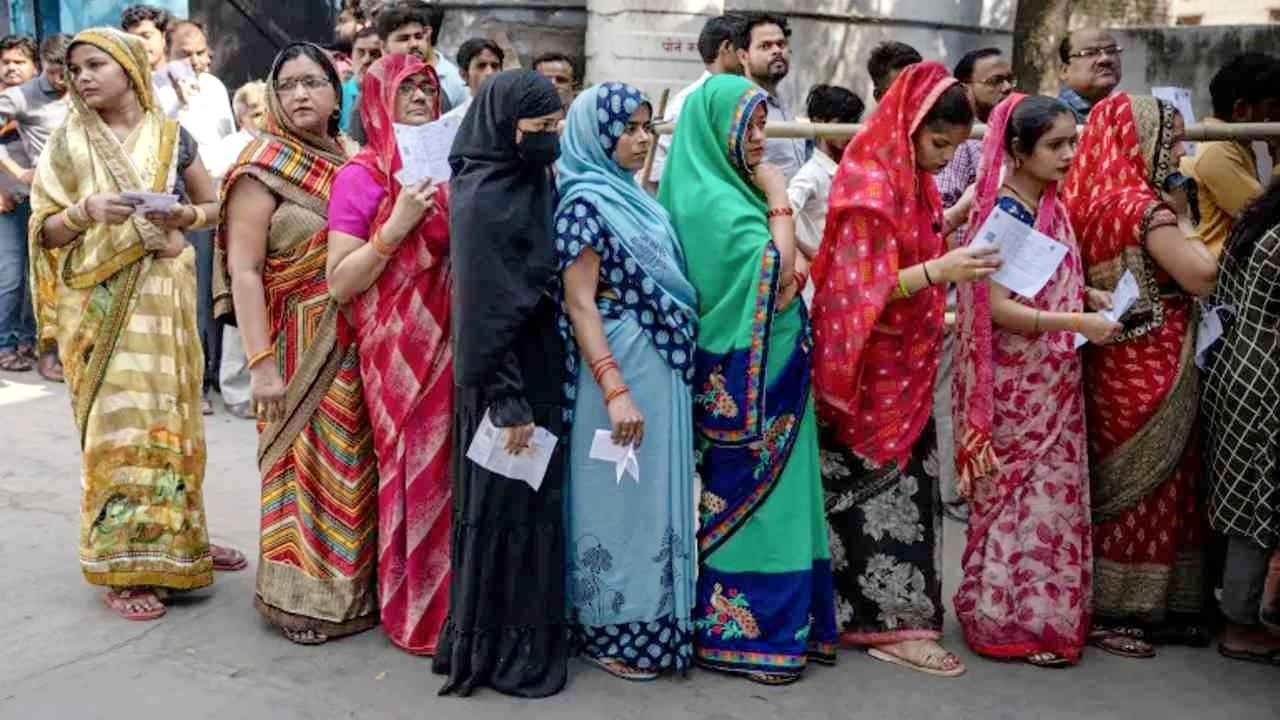
According to the latest Periodic Labour Force Survey’s Annual Report for 2023-24, in rural Karnataka, the labour force participation rate was 83.7% for males, 49.9% for females. In urban Karnataka, the rate was 81.4% for males and 33.5% for females. Of this, a staggering 51.8% of females were self-employed (own account, helper in household enterprise), 24% were regular wage / salary workers, 24.2% casual labour. An even deeper dive shows that of this population, 43.4% females were not literate. It is evident though that the nature of this employment is insecure, informal, and unorganized
First, given the overwhelming participation of women in the workforce, a menstrual leave policy was a necessary move to achieve substantive equality. Substantive equality requires that equals should be treated equally, and where there is inequality, there must be differential treatment. To this end, a menstrual leave policy is pursuant to implementing the right to equality in Article 14 of the constitution.
Second, a large portion of females suffer pain during menstruation. This pain can range from mild to severe to chronic. This pain is often exacerbated by stress, physical health, nutrition, and access to medical help. It must also be remembered that access to nutrition and a health is also inherently inequal, with marginalized and Dalit communities lacking equal access. Given this, there is a real association between absenteeism and menstrual pain. Concurrently, there is also a real association between women being forced / required to work despite the pain. This has a serious impact on their physical as well as mental health.
Even so, menstruation need not be painful to justify menstrual leave, as the workplace cannot be gender blind and must adjust to the physical needs of women.
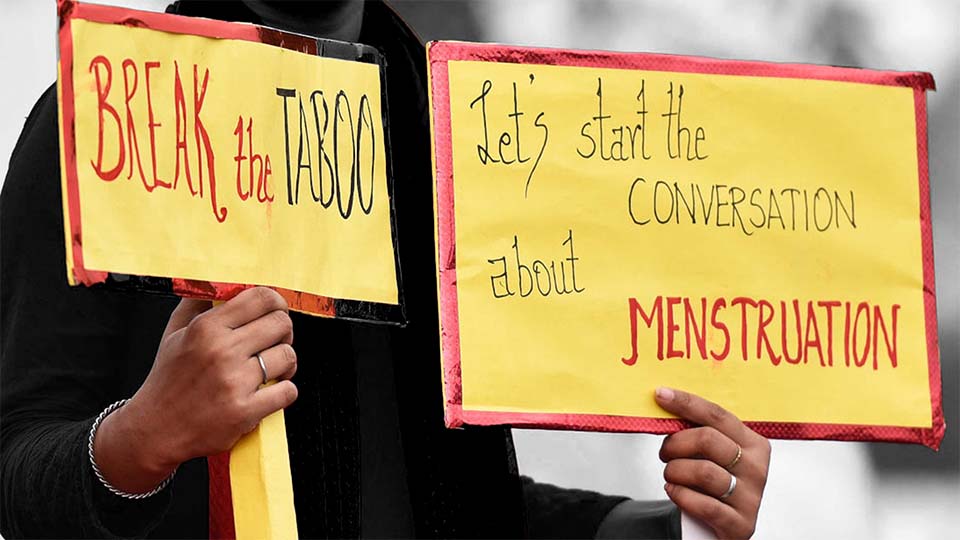
Third, a legal mandate of menstrual leave may break the taboo surrounding menstrual health and create scientific information regarding the causes, effects and circumstances surrounding menstruation.
Fourth, India has ratified the Convention on the Elimination of All Forms of Discrimination Against Women on 9th July 1993, under which Article 11(e) recognizes the right to social security for sickness and other incapacity to work, as well as the right to paid leave. Article 11(f) also recognizes the right to protection of health and safety in working conditions, including safeguarding the function of reproductivity. Reading this with Article 253 of the Constitution which grants parliament the power to make any law to implement an international convention, India has a responsibility to take all measures to protect health and reproductivity of women in the workplace.
Fifth, Article 15(1) prohibits discrimination on the ground of sex, which must be read to include menstrual injustice as a form of workplace discrimination. Article 15(3) then permits the State to make special provisions for women.
There are sufficient constitutional and legal reasons to introduce a menstrual leave policy. However, the question is, is Karnataka policy sufficient?
Is Karnataka’s menstrual leave policy sufficient?
The policy is a step in the right direction towards equality. However, it stops short in the following ways:
First, the policy has not yet been backed by a Government Order or legislation, the latter of which will be required in order to truly enforce a paid menstrual leave policy, especially in private industries. Thus, the question of implementation has been left open right now. A menstrual leave policy must have a clearly defined date for implementation, and a clear manner in which it will be implemented. This may include a mandatory requirement for furnishing reports every quarter by both private and governmental establishments, along with a penalty of imprisonment of the management if the menstrual leave policy is violated.
Second, menstruation occurs in a 21 – 35 day cycle, during which women experience pain from 1-3 days, in some cases even more. Paid monthly leaves of 3 days may have been adequate to truly address menstrual injustice, while a 1 day leave policy may not be sufficient. No scientific study or data has been referenced by the Karnataka Government in its Cabinet decision.
Third, the policy must protect against bias, especially in private industries. This must extend to bias in hiring/firing decisions as well as discrimination against existing female workforce.
Fourth, the policy must specify a district level grievance redressal authority with the power to issue directions, enforce orders, recover fines, and complaints must be adjudicated within a 3 month time-frame.
Fifth, to truly ensure implementation of the policy, the penalty cannot merely be a meagre fine. It is widely known that company Managements do not fear the payment of fines, and to truly hold them accountable, imprisonment may also be provided.
Sixth, the menstrual leave policy is silent on its applicability. It must extend to all classes of menstruating workers, be it permanent, contract, daily wage, casual, part-time, fixed term, etc. It must also apply to all categories of establishments, without exception. The policy must apply also to all menstruating persons, including transgender persons.
Seventh, the policy must contemplate and address how the policy is going to be implemented in the informal & unorganized sector such as for domestic workers. The Karnataka Government must learn from the failure to implement sexual harassment laws in workplaces for domestic workers to ensure that similar failures do not arise in implementing menstrual leaves in informal sectors.
Eighth, in Nov. 2025 in Maharshi Dayanand University, Haryana, women sanitation workers were forced by supervisors to provide “photographs of their private parts and sanitary pads” as proof that they were menstruating. Such dehumanizing demands by the management must be avoided at the outset by a clearly outlined procedure in law to sanction menstrual leaves immediately.
Will it affect employment of women in Karnataka?
It is widely argued that paid menstrual leave will cause private employers to reduce their female workforce and also discriminate in hiring women. However, the possible illegal behavior of employers is no justification for denying women their constitutional rights. If the same argument were to be accepted, no labour laws or reforms could have ever been possible, as any advancement of workers is perceived to prejudice the management in a capitalist society. Similar arguments were also made while introducing maternity benefits.
Much like the arguments regarding laws protecting women against violence such as Section 498A of the Indian Penal Code, 1860 (now repealed) that criminalized cruelty by the husband / his relatives towards a woman, arguments are made that the menstrual leaves will be misused. However, as has been demonstrated regarding Section 498A cruelty cases, these concerns are fictitious, often exaggerating or mischaracterizing acquittals due to high burden of proof in criminal law, as “misuse”.
However, pragmatically, to address real fears of retaliation by private employers, the Karnataka Government must adequately prevent employment discrimination by mandating a percentage of female workforce in the establishment. A similar policy already exists in the public sector, with the Karnataka Government mandating 33% reservation for women in all outsourced jobs of government departments and organizations (within the SC/ST and OBC quota).
Why don’t we have a nationwide policy?
There are staggered menstrual leaves provided across a few states in India. In Bihar, 2 days menstrual leave per month is provided for government employees. In Odisha, women in both govt. and private sectors get one day paid menstrual leave per month. In Kerala, female students have menstrual leave as 2% relaxation in required attendance. Sikkim’s High Court registry allows women staff to take 2-3 days of menstrual leave per month subject to a medical officer’s recommendations. Sikkim University proves 1 day menstrual leave for students and staff. Certain private companies also have menstrual leave policies. Centrally, in 2017, a private member Bill was introduced by Ninong Ering in Parliament to provide 4 days menstrual leave to women in registered establishments. However, this Bill was never tabled for discussion. Another Bill was introduced by Hibi Eden in 2022 providing 3 days paid menstrual leave in a registered establishment for working women and for female students. This Bill was also never taken up.
This lack of uniformity stems in part from the lack of a central menstrual leave policy. Due to this, a worker in Karnataka may enjoy menstrual leave, but if forced to migrate to another State in search of a job, may not get this benefit.
Conclusion
In Kalpana Kannabiran’s article “We Need to Talk About Caste When We Talk About Menstrual Justice”, she notes (quoting Inga T. Winkler) that menstruation is fundamentally about power relations – be it the power of the prison guard to dispense menstrual products, the judges to authorize sterilizations, parents/relatives to force girls to marry, and religious authorities to expect conformity. Kannabiran finds that caste is deeply linked to menstrual injustice, which does not merely have to do with menstrual health, or menstrual hygiene, or its management. Deepthi Sukumar in her article “Personal Narrative: Caste is My Period” notes that menstrual taboos are part of the caste & patriarchal design to maintain caste hierarchy, and any attempt to address this cannot be blind to this reality.
The Karnataka Government’s decision to introduce menstrual leave is laudable. However, in order to truly address menstrual injustice, its implementation will have to account for caste as well as genders. Only then will it truly be able to make the change it seeks to achieve.
(First published in Workers Resistance (AICCTU), November- December Issue)