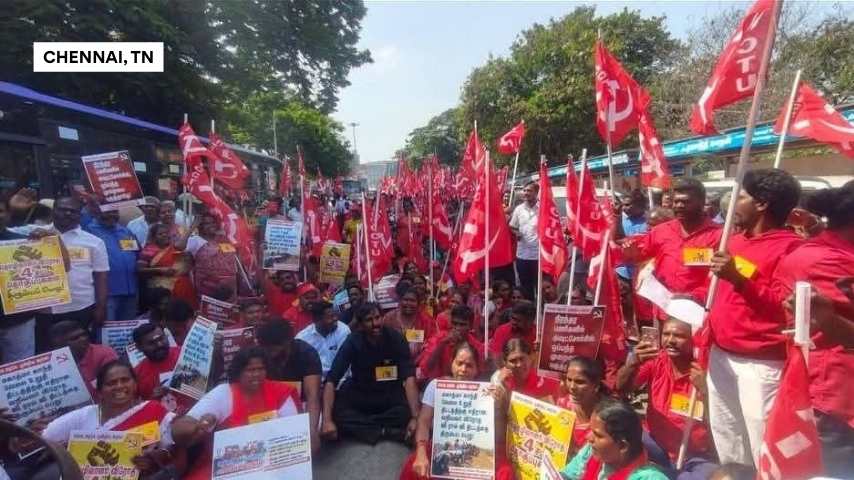

From coal mines to banks, steel plants to postal services, industrial areas to rural worksites, participation was widespread across both formal and informal sectors. Women workers from ICDS, ASHA, Mid-Day Meal, beedi and other unorganised sectors were at the forefront of Rasta Roko (road blocks) and Rail Roko (rail block) actions. Students and youth joined with slogans demanding employment and the defence of public education. The strike strongly opposed the four Labour Codes, privatisation, India-US trade deal, 100 percent FDI in insurance, anti-farmer measures, attacks on MGNREGA, and policies that surrender national interests to corporate and foreign capital.

In a joint statement, central trade unions including CITU, AICCTU, AITUC and others congratulated the workers and farmers for making the 12 February nationwide general strike a grand success and noted that: This strike action took place in the background of fast deteriorating economic situation when the union government, in order to contain and weaken the trade unions in face of the onslaught of capital, have notified the four labour codes and rules thereafter, without due process of law, no consultations with stake holders, not holding Indian Labour Conference defying international labour standards to which India as the Nation state is signatory. The codes were passed in the Parliament with brute force and in case of three codes even in absence of whole opposition from the Parliament and during Covid 19 period with Disaster Management Act which prevented gatherings.
The attempts of the government to cripple the democratic movements through various means has further angered the working class and the farming community. The Unions have called for intensifying the united struggle against anti-worker and pro-corporate policies of the Union Government.